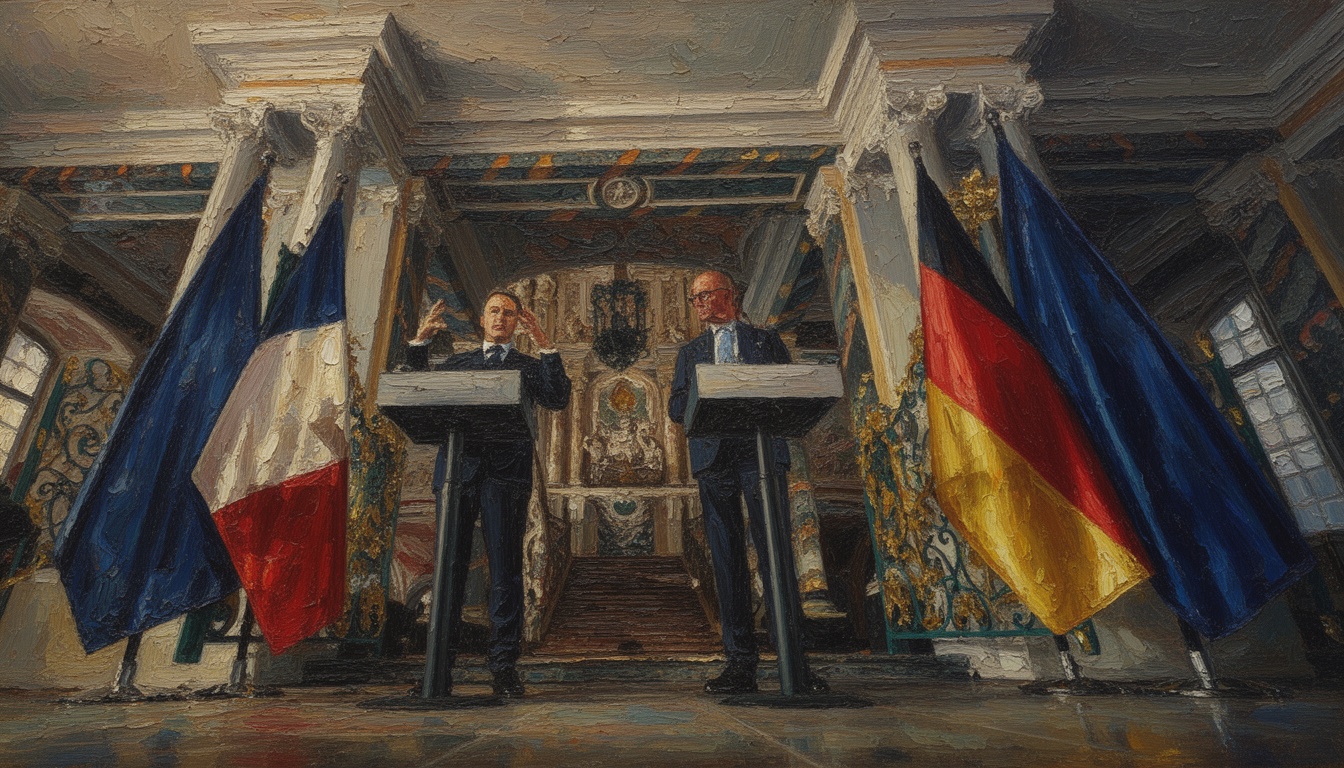
France and Germany Agree on Nuclear Exercise for European Defense
A new agreement between France and Germany enhances nuclear cooperation, reflecting Europe's push for greater defense autonomy. This collaboration raises strategic implications amid uncertainties around US security guarantees.
On Friday, French President Emmanuel Macron and German Chancellor Olaf Scholz announced a significant agreement aimed at fostering nuclear collaboration between their nations. As part of this initiative, the German military is set to participate in a nuclear exercise coordinated by the French armed forces. This decision is part of a broader strategy to bolster European defense mechanisms amidst increasing concerns about the reliability of US security commitments to Europe.
The recent commitment by France and Germany symbolizes a crucial shift towards greater European defense self-reliance. With NATO's role still debated and the geopolitical landscape shifting, European leaders are focusing on strengthening their military capabilities independently. The involvement of the German military in nuclear exercises reflects a growing emphasis on integrating various defense strategies across European nations.
This agreement comes at a time when the European Union is keen on solidifying its defense posture in response to external threats. The exercise is expected to include German conventional forces working alongside their French counterparts, aiming to enhance operational robustness and interoperability in nuclear scenarios. Such collaborative efforts signify a long-term commitment to advancing collective security measures within Europe.
The technical details around the nuclear exercise remain confidential, but it likely involves advanced weapon systems and strategies that align with NATO protocols. France’s nuclear arsenal includes systems such as the ASMP-A missile, while Germany possesses a variety of sophisticated platforms that may also be integrated into this training.
In the longer term, this collaboration between France and Germany may lead to a reconfiguration of defense partnerships across Europe, prompting other countries to consider similar arrangements. Expectations are that enhanced nuclear cooperation could serve as a deterrent to potential aggressors, while simultaneously addressing the evolving dynamics surrounding US involvement in European security matters.