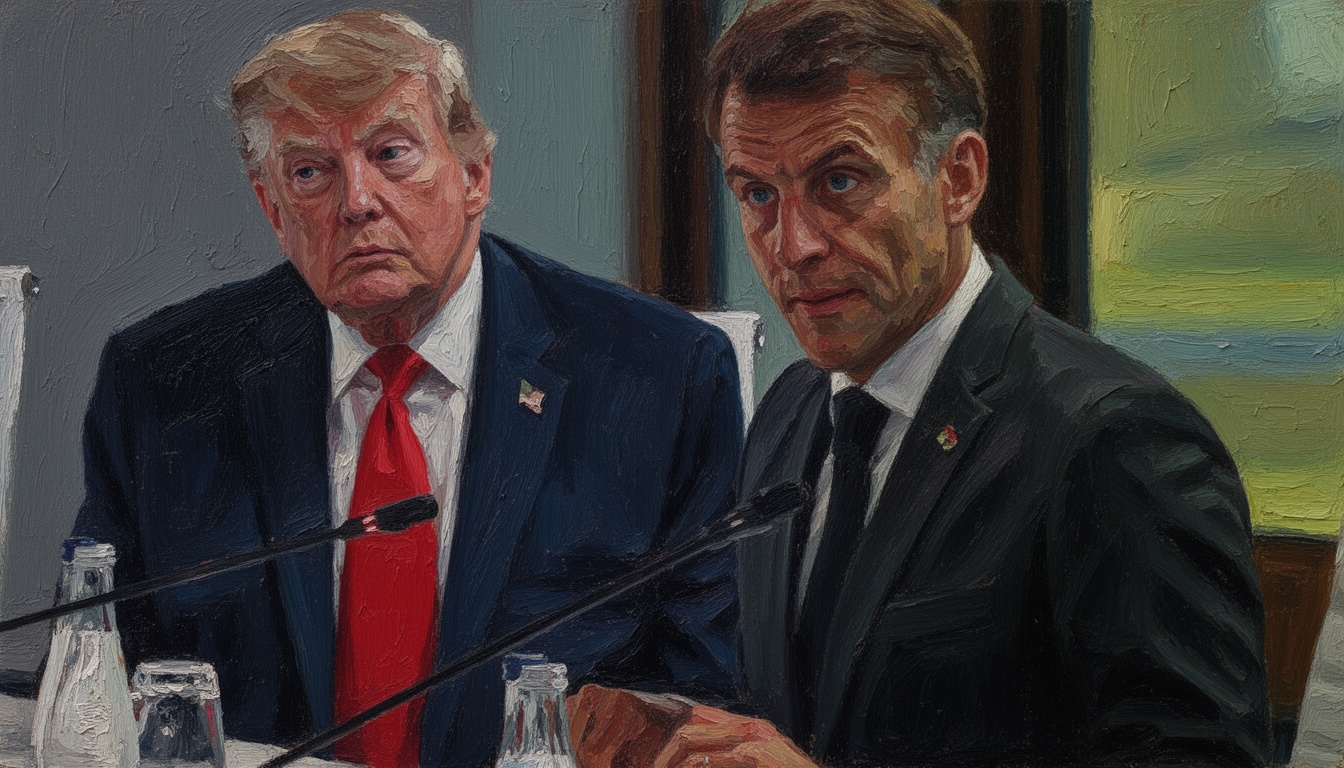
France Seeks US Support for Ukraine in Exchange for Iran Deal
France aims to leverage US assistance for Ukraine while altering its stance on Iran. A key dinner in Versailles on June 17 is expected to facilitate this strategic exchange.
France is engaging in a diplomatic initiative to enhance its military and political ties with the United States, specifically seeking increased support for Ukraine. French President Emmanuel Macron is looking to leverage this relationship to address both Russian sanctions and the geopolitical dynamics surrounding Iran. The focal point of this endeavor will be a dinner scheduled for June 17 at the luxurious Palace of Versailles.
The context surrounding this initiative involves ongoing tensions between Western nations and Russia, particularly following Russia's invasion of Ukraine. France has actively participated in European diplomatic efforts to strengthen Ukraine's defense capabilities against Russian aggression. By potentially offering concessions regarding Iran, France hopes to recalibrate its strategic partnerships with key allies, notably the United States.
Strategically, this move carries significant implications. If successful, France could reinforce NATO's unified front against Russia, while also restraining Iran's influence in the region. This initiative reflects President Macron's attempt to position France as a central player in transatlantic security discussions, particularly in light of the shifting geopolitical landscape.
Details surrounding the specifics of France's proposal to the United States remain undisclosed. However, the dinner at Versailles is expected to serve as an opportune moment for Macron to present tangible commitments that align with US interests in the Ukraine conflict. France's current military support includes the provision of arms and logistics, but as Macron seeks to ramp up contributions, he may need to navigate complex diplomatic waters to find common ground.
Should this initiative materialize, it could have far-reaching consequences for both NATO's cohesion and the broader Middle Eastern geopolitical framework. France's strategic recalibration could lead to a more robust response to Russian aggression, while also potentially revising its approach to diplomatic relations with Iran, illustrating the multidimensional challenges of contemporary international politics.