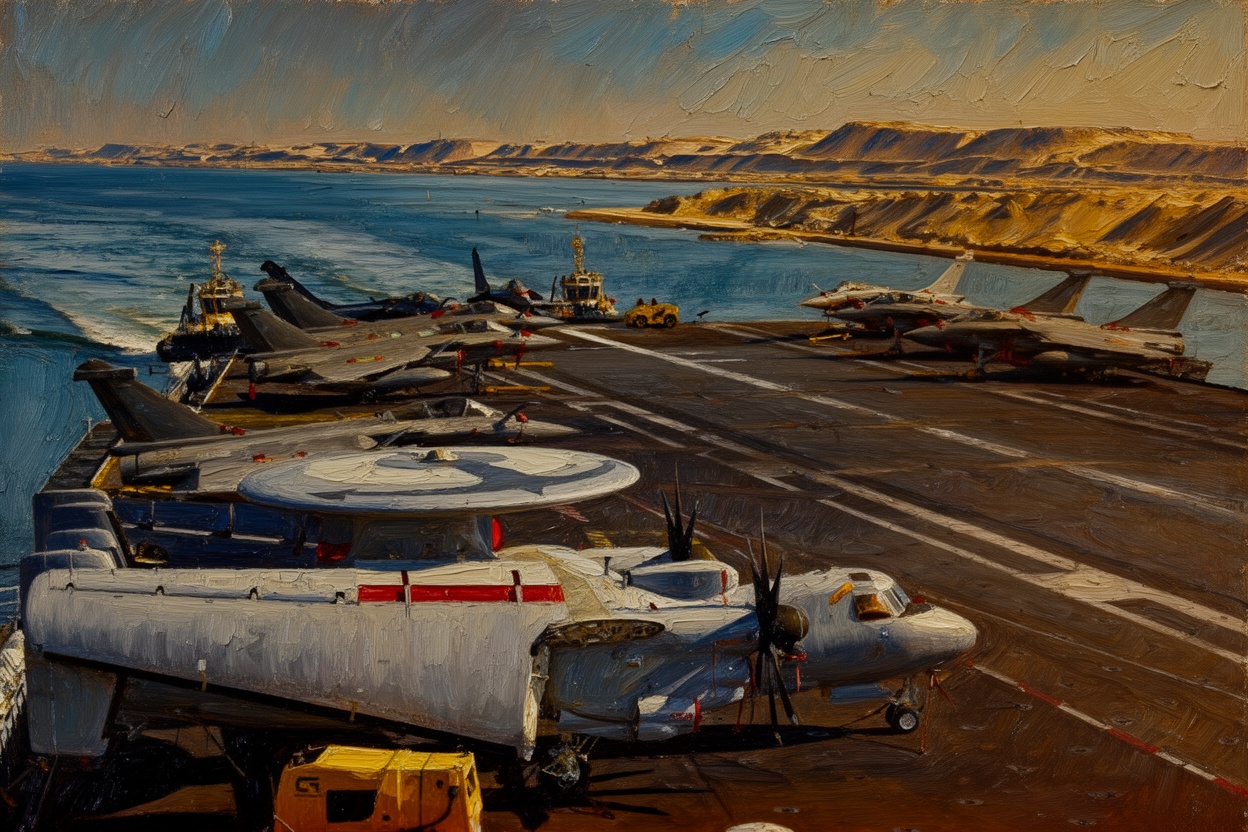
French Carrier Strike Group Enters Suez Canal Amid Rising Tensions
The movement of the French carrier strike group underscores security concerns in the Gulf region. This deployment signals France's commitment to addressing international maritime stability.
The French Navy's Charles de Gaulle aircraft carrier strike group has successfully transited the Suez Canal and is now proceeding toward the Red Sea and the Gulf of Aden. This operational maneuver has been linked to escalating tensions surrounding the Strait of Hormuz, a critical maritime route.
The strategic significance of this deployment is notable, as the Strait of Hormuz accommodates approximately 20% of the world's oil trade. France's actions may be interpreted as a direct response to the shifting geopolitical dynamics in this crucial region, highlighting their role in ensuring maritime security.
The carrier strike group comprises the Charles de Gaulle, which is equipped with Dassault Rafale M fighter jets and E-2C Hawkeye early warning aircraft. Such capabilities enhance France's operational flexibility and deterrent posture in the sensitive Gulf region.
The transit through the Suez Canal follows recent threats and heightened maritime risks in the Persian Gulf, prompting France to reaffirm its commitment to collaborative security efforts in the area. Analysts suggest this could lead to greater naval activity from other major powers in the region.
As tensions remain high, France's continued presence in the waters surrounding the Gulf of Aden may serve to bolster its strategic partnerships and reassure allies of its maritime intentions. The long-term implications of this deployment are still unfolding as the international community closely monitors developments in the Gulf.