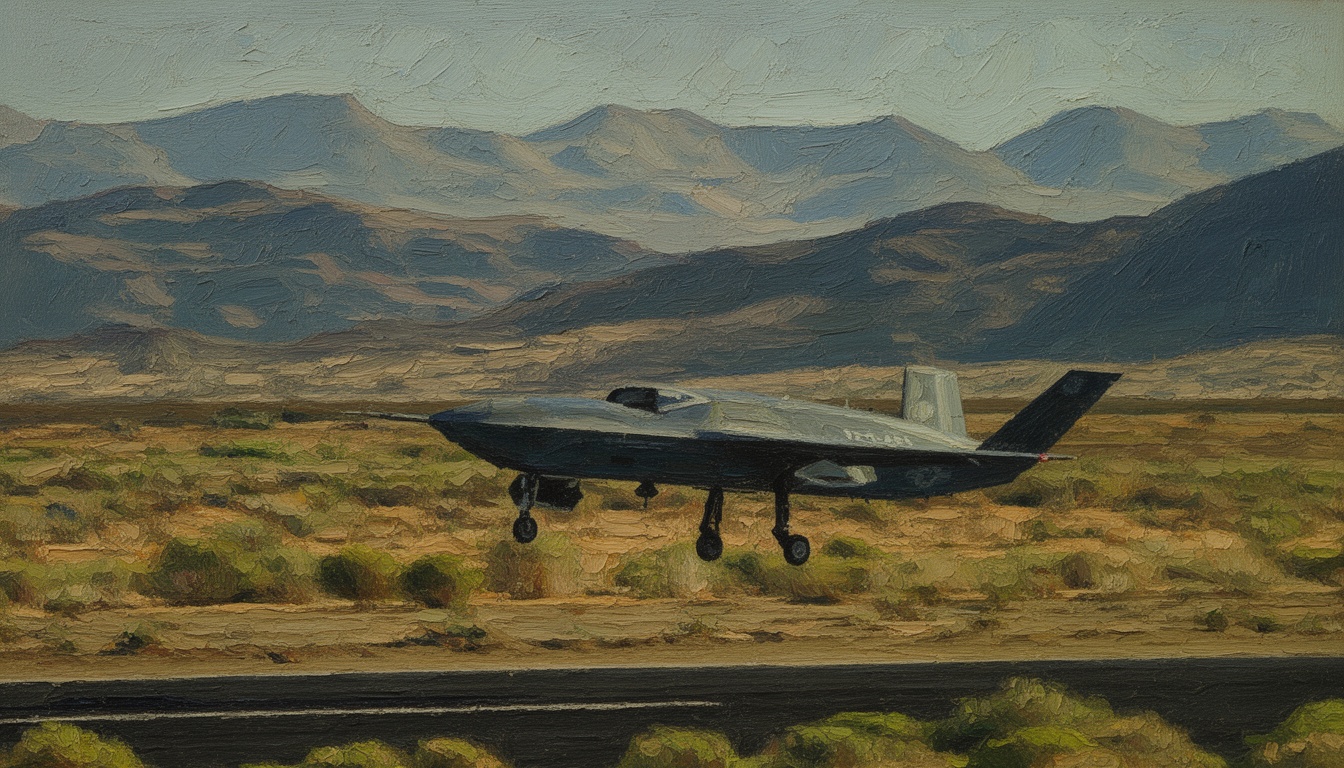
General Atomics CCA Drone Resumes Flight After Crash
The General Atomics CCA drone returned to flight following an April 6 crash. This incident has highlighted the Air Force's approach to balancing acquisition risks with operational readiness.
The General Atomics CCA drone has successfully resumed flight operations following a crash on April 6. Air Force Colonel Timothy Helfrich stated that the response to the incident "validates our approach to accept acquisition/test risk instead of operational risk, allowing us to accelerate the program towards fielding." This approach indicates a shift in the Air Force's willingness to prioritize development speed over conservative operational safety.
The CCA drone, which is part of the U.S. Air Force's broader strategy to enhance unmanned aerial capabilities, is designed to perform various missions, including intelligence, surveillance, and reconnaissance (ISR). The incident on April 6 did not result in any injuries but raised questions regarding the drone's operational resilience and readiness for deployment in potential combat scenarios.
Strategically, the successful return to flight for the CCA drone reflects the Air Force's commitment to adaptive risk management in defense technology. By accelerating the program, the Air Force aims to meet emerging threats more rapidly, showcasing a shift towards more aggressive timelines for fielding new capabilities against potential adversaries.
The technical specifications of the CCA drone include advanced sensors and the ability to operate in contested environments, making it a critical asset in future conflict scenarios. The Air Force continues to push for advancements in drone technology, as unmanned systems play an increasingly vital role in modern warfare.
The consequences of resuming flight operations for the CCA drone could bolster the Air Force's strategic posture. As tensions rise in various theaters, the ability to quickly integrate and deploy advanced drone capabilities will be essential in maintaining operational superiority and deterring potential adversary actions.