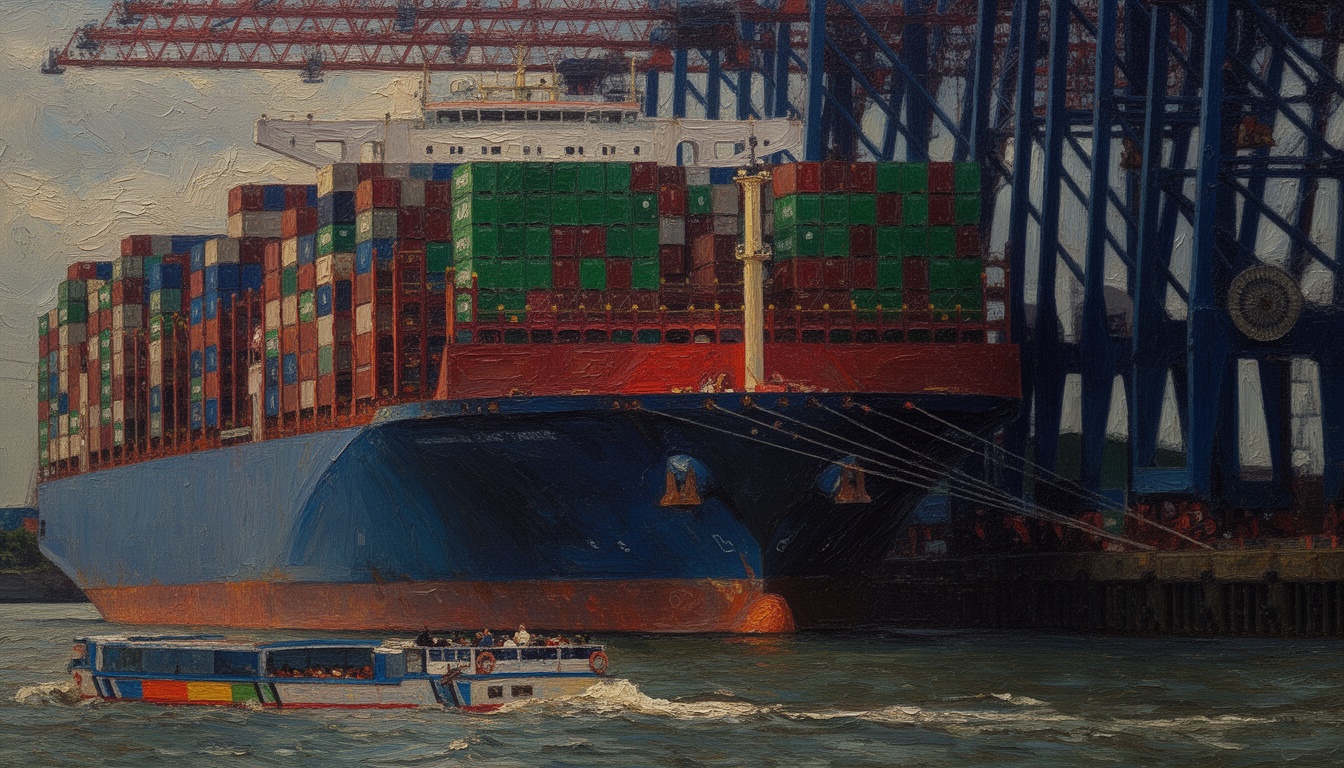
Germany's Industrial Slump Attributed to China Trade Shock
A new report identifies China's trade impact as central to Germany's economic struggles. Calls are made for stronger EU policies to counteract this effect.
Germany has received a stark warning regarding its trade economy, with a new report stating that a 'China shock' is the largest factor contributing to its industrial decline. This warning comes as the German government grapples with stagnation and seeks to revitalize its economy through deregulation.
The report, produced by the prestigious Centre for European Reform, outlines the significant negative consequences of reliance on Chinese trade. It argues that Germany's economic woes are deeply intertwined with its trade practices with China, urging a reevaluation of the current strategy. The reliance on Chinese imports has created vulnerabilities evident in the industrial sector's struggles.
Strategically, this situation threatens not only Germany’s economic stability but also the broader equilibrium of the European Union. As Germany is one of the EU's largest economies, its decline may have ripple effects across the continent. The report recommends that Berlin advocate for more robust European Union measures to counteract the dominant influence of China in trade.
From a technical standpoint, the report highlights key metrics indicating a decline in German manufacturing output and industrial productivity. Over the past few years, German industrial production has experienced a downturn of approximately 15%, attributed largely to external pressures, notably from trade dependencies on China. The Centre for European Reform emphasizes that the solution lies in harmonizing EU policies to enhance collective bargaining power against external economic shocks.
In conclusion, if Germany does not adapt and implement stronger measures within the EU framework, its industrial malaise may continue, weakening its position in the global market. The recommendation to strengthen EU policy could lead to greater resilience among member states against future economic pressures from dominant economies like China.