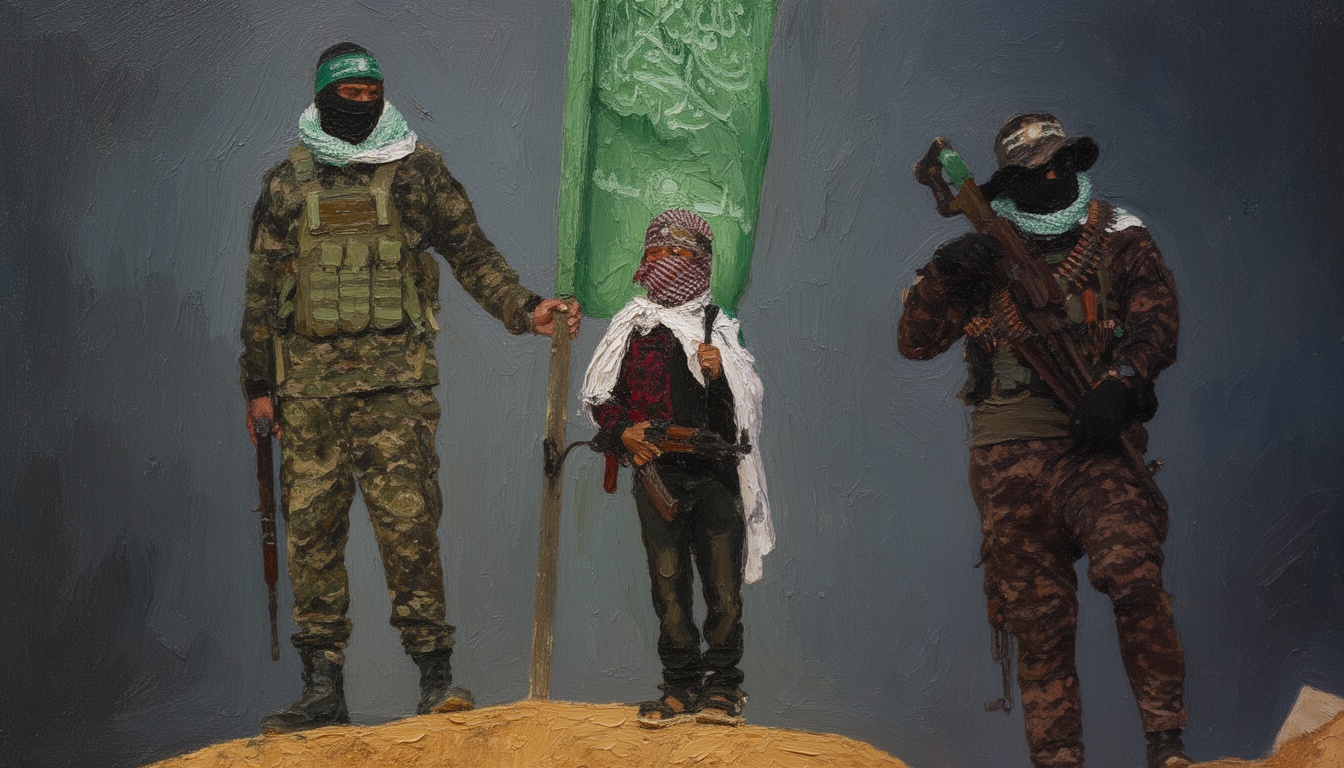
Hamas Agrees to Disarm in US-backed Ceasefire Deal
The agreement involves Hamas relinquishing weapons to a Palestinian committee as part of a broader US roadmap. However, Israel maintains it will not withdraw until full disarmament is achieved.
On Friday, Hamas announced its agreement to disarm as part of a ceasefire deal supported by the United States. The militant group stated that it will hand over its weapons to a newly formed Palestinian governing committee. This development is linked to a broader US-backed roadmap aimed at achieving lasting peace in the region.
The context of this agreement stems from ongoing tensions and escalations between Hamas and Israel. The potential Israeli military withdrawal from Gaza is contingent upon Hamas's compliance with the disarmament phase outlined in the roadmap. Israel has expressed its skepticism, insisting it will not begin its withdrawal until it is assured that Hamas has completely relinquished its weapons.
Strategically, this development has significant implications for regional security dynamics. If implemented, the disarmament of Hamas could lead to a decrease in hostilities in Gaza and improve the prospects for renewed peace negotiations. However, the skepticism from Israel raises questions about the agreement's viability and enforcement mechanisms.
Operationally, the weapons that Hamas is expected to officially hand over include small arms, rockets, and other military equipment utilized in previous conflicts. While the details of the disarmament process remain unclear, it reflects an attempt at establishing a more stable security environment through international mediation.
The broader consequences of this agreement could reshape the Israeli-Palestinian conflict landscape if it leads to tangible results. Observers are watching closely to see if this disarmament will occur without further escalation, and whether it will facilitate a lasting ceasefire and pave the way for future diplomatic efforts. The complexities of this situation highlight the delicate balance of power and the necessity for sustained international engagement in achieving lasting peace.