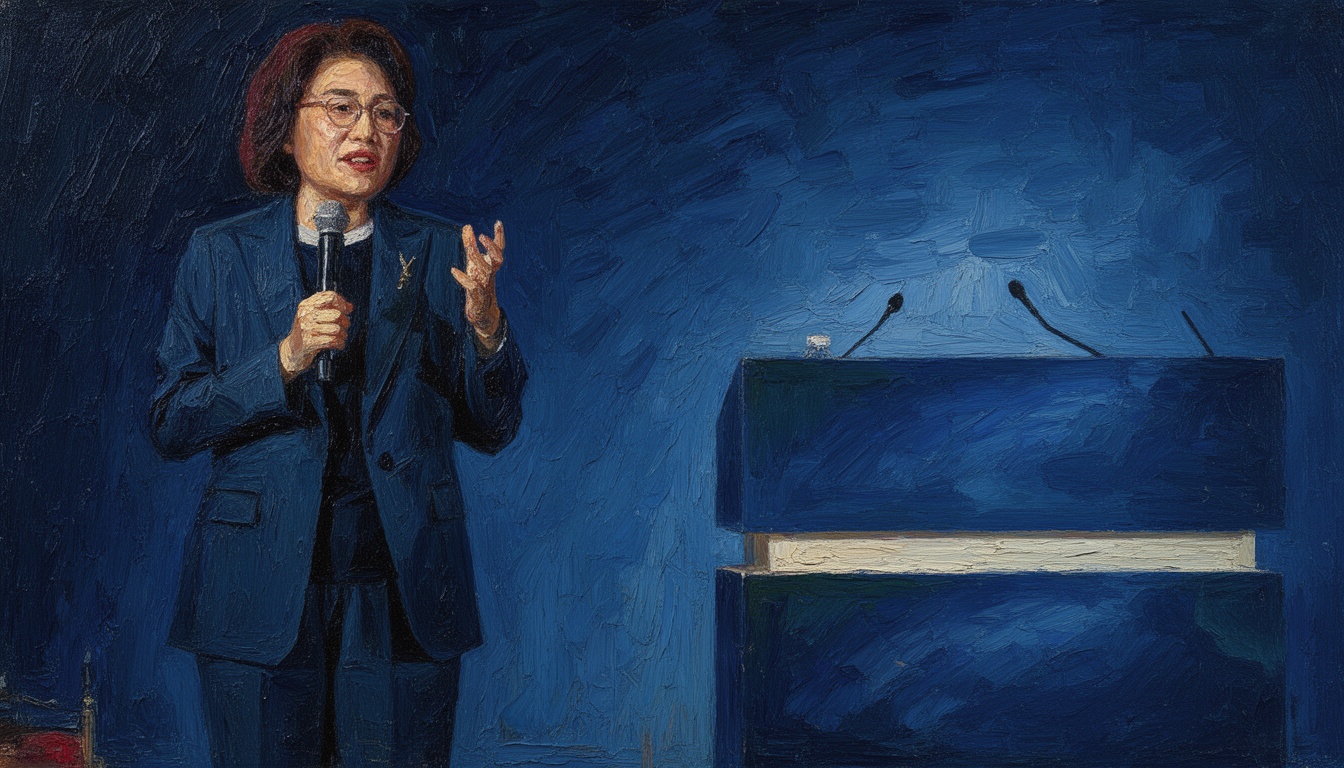
He Tingbo Leads Huawei in Semiconductor Innovation
He Tingbo's presentation signals Huawei's ambition to redefine chip development amid sanctions. The company aims to enhance competitiveness despite restricted access to advanced technology.
He Tingbo, CEO of Huawei Technologies, made headlines this week at an event in Shanghai, unveiling the company’s new Tau (τ) Scaling Law. This initiative is not merely about a novel framework for chip development; it symbolically represents Huawei's determination to pave its own path in the semiconductor sector despite significant challenges posed by US sanctions.
Historically, Huawei has been a leader in tech innovation, but the imposed restrictions have stifled its access to vital chipmaking technologies. The Tau (τ) Scaling Law initiative indicates a strategic pivot towards enhancing in-house capabilities while navigating the complex global semiconductor landscape. The company’s ability to innovate under these conditions is critical as it strives to compete with international counterparts.
The strategic significance of this approach cannot be overstated. Huawei aims to break free from a reliance on shrinking transistors—a decades-long paradigm in chip development. By proposing alternatives to conventional scaling methods, Huawei is potentially setting itself apart from rivals who are still entrenched in traditional semiconductor practices.
Technical details regarding the Tau (τ) Scaling Law have yet to be fully disclosed, but experts anticipate it could lead to breakthroughs that optimize performance while fostering more sustainable materials usage in semiconductor design. As Huawei redefines its strategy, the wider implications for the global semiconductor market will also evolve, impacting industry dynamics as companies adapt to new design philosophies.
The consequences of Huawei’s moves are poised to ripple through the semiconductor market, which is already grappling with geopolitical tensions and supply chain disruptions. If successful, this initiative could not only empower Huawei but also challenge the existing hierarchy within the global chip industry.