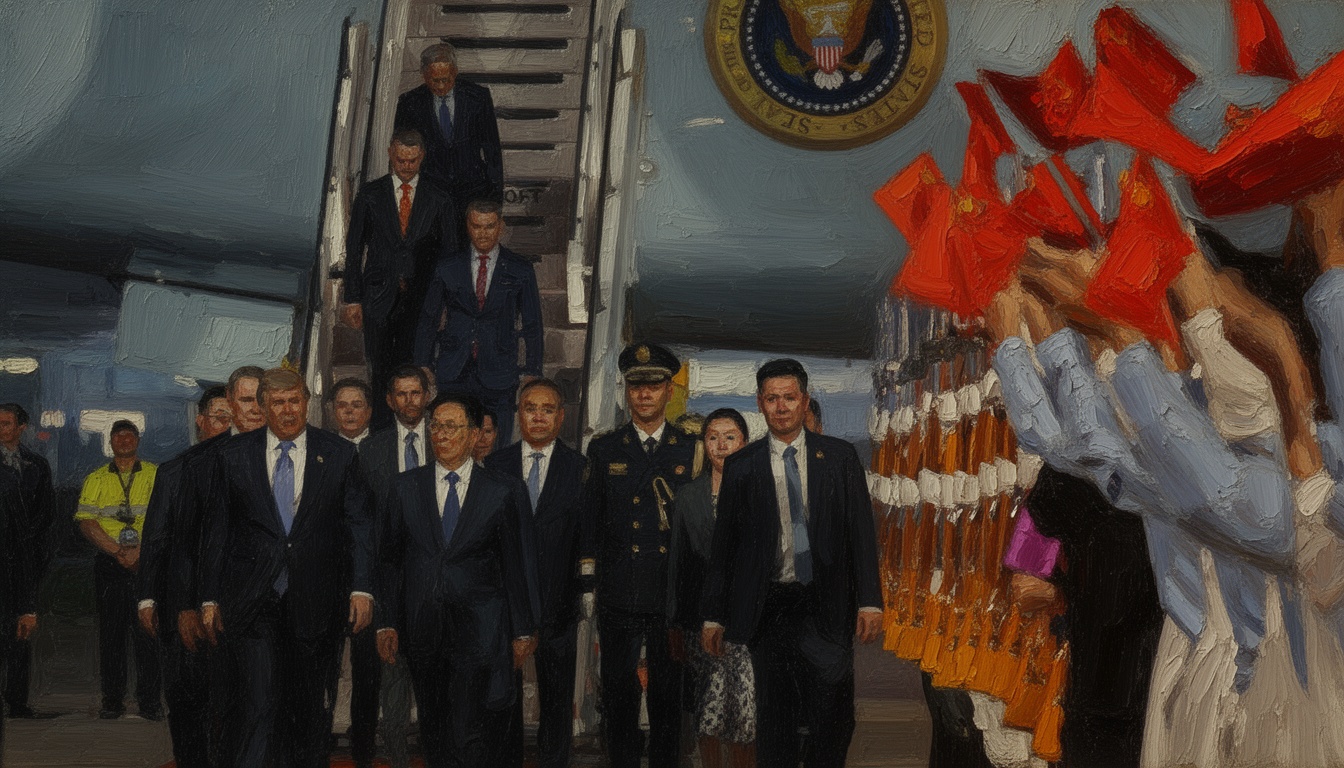
Hegseth’s Visit to China Signals Potential Military Cooperation
U.S. Defence Secretary Pete Hegseth's visit to Beijing may indicate a shift in military relations, focusing on reduced tensions and potential arms sales to Taiwan. Analysts note that this could herald a new phase in U.S.-China military dialogue.
U.S. Defence Secretary Pete Hegseth's presence in Beijing as part of President Donald Trump's delegation underscores a possible thaw in military relations between the United States and China. This visit highlights a mutual interest in enhancing military communication aimed at de-escalating tensions and preventing crises in the region. Analysts speculate that discussions will likely include U.S. arms sales to Taiwan, a contentious issue that often strains U.S.-China relations.
Historically, military engagement between the U.S. and China has been sporadic, marked by periods of intense rivalry and occasional diplomacy. Hegseth's attendance is viewed as a significant gesture, indicating both parties' willingness to commit to stronger ties and open channels of communication. The inclusion of Defence Minister Dong Jun in these discussions is anticipated, emphasizing the importance of high-level dialogue in addressing pressing security concerns.
Strategically, as regional tensions rise, the need for robust military communication becomes increasingly critical. Enhanced relations could lead to greater stability and reduced misunderstandings, which have led to conflicts in the past. The potential for U.S. arms sales to Taiwan will undoubtedly be a focal point, with implications for regional power dynamics and Beijing’s response.
Operationally, the discussions are likely to revolve around mutually beneficial agreements, potentially addressing maritime security and joint exercises. Moreover, the specifics of any arms sales to Taiwan will be scrutinized, as past transactions have prompted reactions from Beijing. Both sides must navigate these sensitive topics with care to avoid exacerbating existing tensions.
In conclusion, Hegseth's visit may serve as a pivotal moment in U.S.-China military relations, with the potential to reshape engagement strategies. Successful negotiations could reduce the risk of miscalculations in the South China Sea and foster a more stable security environment. However, the exact outcomes will depend on the willingness of both governments to collaborate despite historic rivalries.