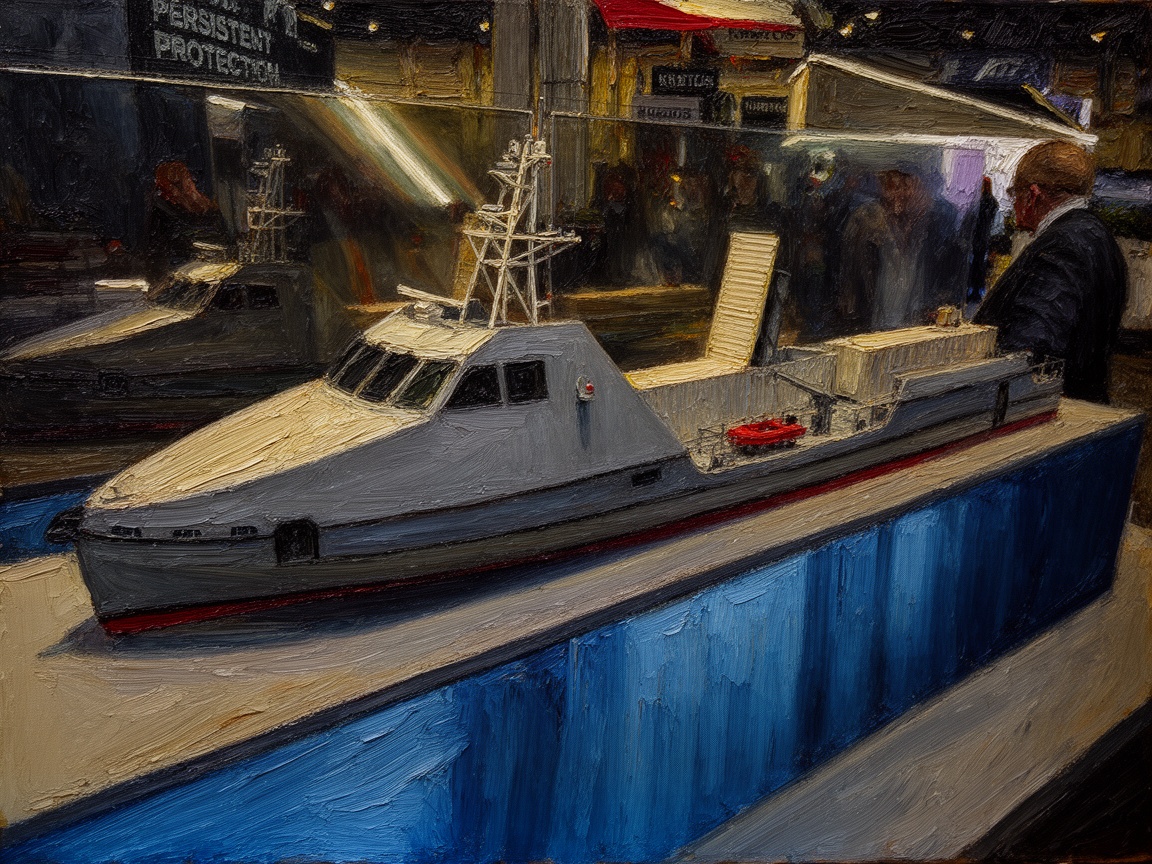
HII's ROMULUS USV Begins At-Sea Testing with U.S. Navy
The advancements of HII's ROMULUS medium unmanned surface vessel signify a crucial milestone in maritime unmanned systems. As it enters sea trials, it reflects growing investments in naval technology and operational capabilities.
Huntington Ingalls Industries (HII) has announced that its ROMULUS medium unmanned surface vessel (USV) commenced at-sea testing on June 1, 2026. This milestone reflects a significant step forward in naval unmanned systems development. The testing phase is designed to evaluate the operational capability and reliability of the ROMULUS USV under various maritime conditions, enhancing its potential for future naval operations.
The ROMULUS USV is designed to carry out a variety of missions, providing tactical advantages in surveillance, reconnaissance, and support for manned vessels. This project aligns with the U.S. Navy's increasing emphasis on incorporating unmanned systems into its fleet to enhance capabilities and operational range. The successful performance of the ROMULUS during testing could lead to further integration into the Navy's operational framework.
Strategically, this development holds importance as it showcases the U.S. Navy's commitment to modernizing its fleet with advanced technology. The inclusion of unmanned vessels like ROMULUS reflects a shift in naval warfare philosophy, prioritizing systems that enhance situational awareness and force multiplier effects without risking human lives.
The ROMULUS is part of an ongoing effort within U.S. defense initiatives, aimed at improving maritime security and operational readiness. The vessel's specifications, including its payload capabilities and autonomous operational functions, are expected to define new standards within the unmanned vessel segment, offering significant advancements over older systems.
In the long term, the successful testing and integration of the ROMULUS may reshape naval engagements, offering versatile options to commanders. As the U.S. Navy continues to adapt to evolving maritime threats, the role of unmanned vessels will be pivotal, potentially changing the dynamics of naval strategy and operations globally.