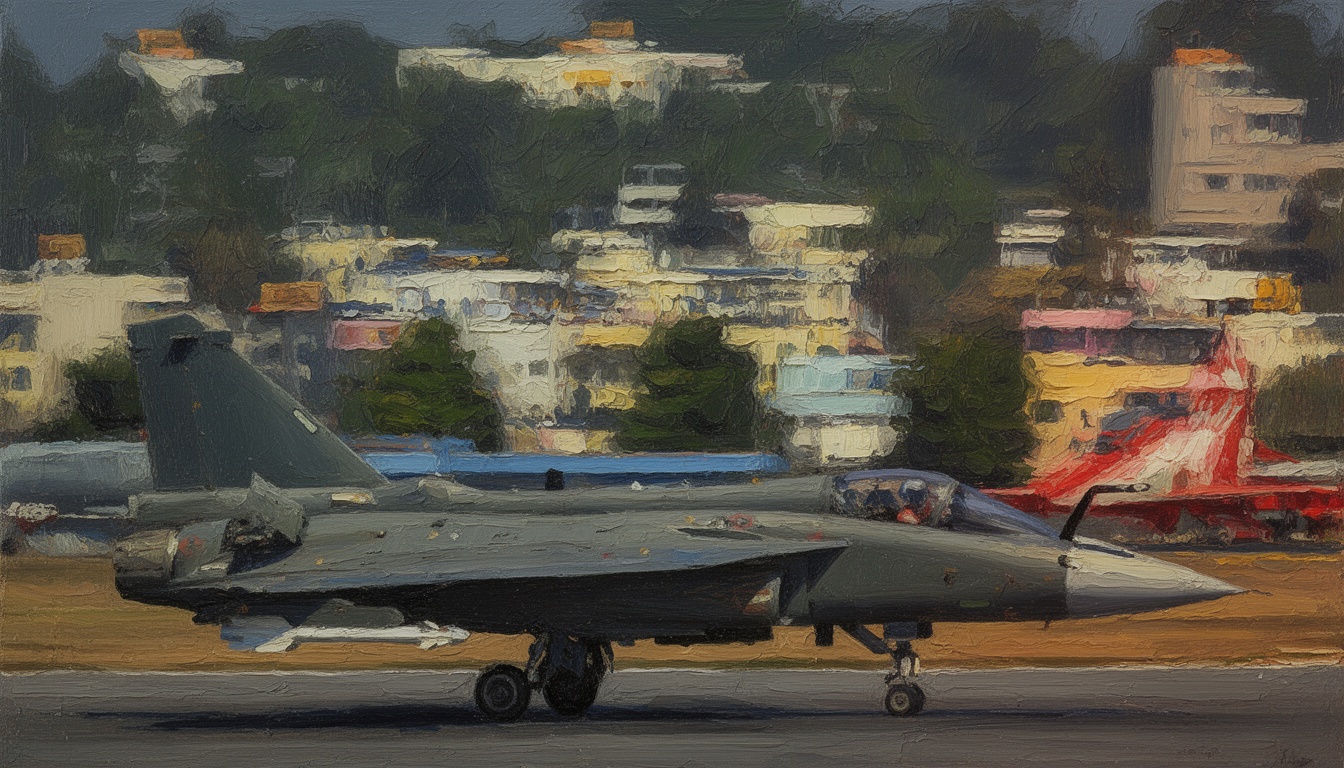
India Acquires Nine Retired Jaguars for Air Force Sustainment
India's air force struggles to replenish its depleted fighter fleet, prompting the acquisition of retired aircraft for spare parts. This strategy highlights underlying weaknesses in its military aviation capabilities.
India has secured nine retired British-built Jaguar ground-attack jets as a temporary solution to support its operational Jaguar squadrons. These jets will not be brought back into service with the Indian Air Force (IAF) but will instead be dismantled to provide necessary spare parts to sustain approximately 120 aircraft currently in operation across six squadrons.
The Indian Air Force has faced significant challenges in replenishing its fleet of fighter jets, with delays in new aircraft procurement contributing to a gradual decline in available air power. The decision to acquire retired Jaguars underscores a critical moment for India, which is one of the world's largest defense spenders yet struggles to maintain its aviation strength amidst rising regional tensions.
This acquisition is seen as a pragmatic stopgap measure, meant to bolster the existing Jaguar strike force. However, it also raises questions about the long-term strategy of the IAF regarding modernization and combat readiness in an increasingly competitive security environment, particularly concerning India's geopolitical challenges with neighbors.
The Jaguar aircraft, originally designed for ground-attack roles, were introduced to the IAF decades ago and have undergone various upgrades. Although the recent acquisition will serve as a source of spare parts, it highlights the urgent need for India to expedite the process of acquiring new, state-of-the-art combat aircraft to adequately address its strategic needs.
Looking forward, the reliance on retired aircraft may be a short-lived solution. As geopolitical tensions remain high, India's ability to project air power through a modernized fleet will be essential for national security. A continued lack of operational readiness could prompt further strategic challenges in the Indian subcontinent and affect regional stability.