India Plans 200-Ship Navy to Counter China, Pakistan
India's naval expansion aims to address growing strategic threats from China and Pakistan. The commissioning of new warships underscores New Delhi's commitment to enhance its maritime capabilities.
India's ambition to expand its naval fleet to over 200 ships within the next decade has intensified due to China's rapid naval expansion and Pakistan's acquisition of advanced Chinese-built attack submarines. This urgent initiative comes amid rising tensions in the Indian Ocean region, where New Delhi seeks to reinforce its maritime dominance.
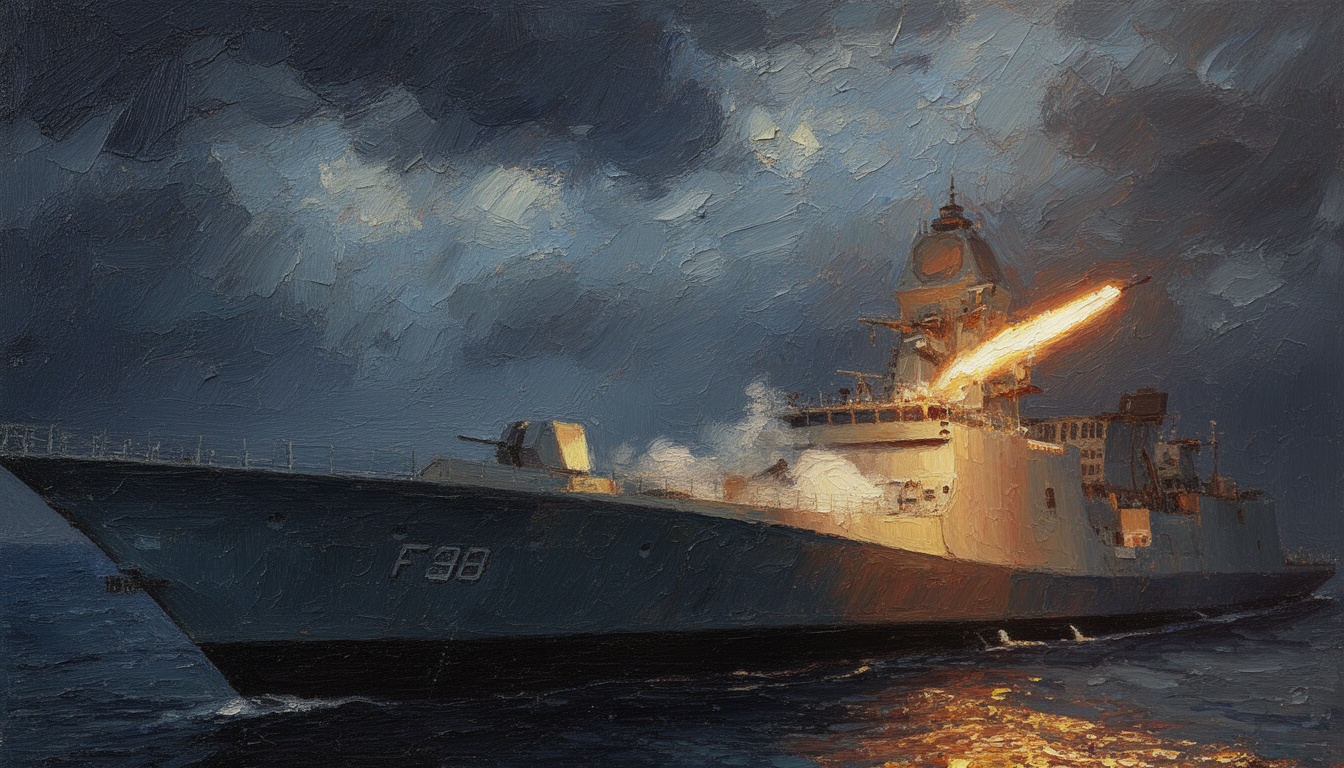
The commissioning of the stealth frigate INS Mahendragiri and the anti-submarine warfare vessel INS Malvan this month marks a significant milestone in India's naval capability enhancement. Both warships, produced domestically, symbolize India's technological advancement and commitment to achieving self-reliance in defense manufacturing.
Strategically, the increase in naval strength is aimed at countering the growing might of the People's Liberation Army Navy (PLAN) and the Pakistan Navy, which has been enhancing its fleet with modern vessels. Analysts believe that a robust Indian Navy is crucial for maintaining stability in the Indian Ocean and deterring potential adversaries.
Technically, the INS Mahendragiri is a stealth frigate designed for multi-role operations, while the INS Malvan serves as an advanced submarine hunter, equipped with state-of-the-art surveillance systems. The expansion plan also includes increased investments in indigenous shipbuilding initiatives, signifying a shift towards modernizing the fleet with cutting-edge specifications.
The implications of this naval expansion are profound, as India seeks to bolster its maritime security and ensure freedom of navigation in vital trade routes. By building a formidable naval presence, New Delhi aims to deter adversaries and assert its influence across the Indo-Pacific region, thereby reshaping the strategic balance of power in its favor.