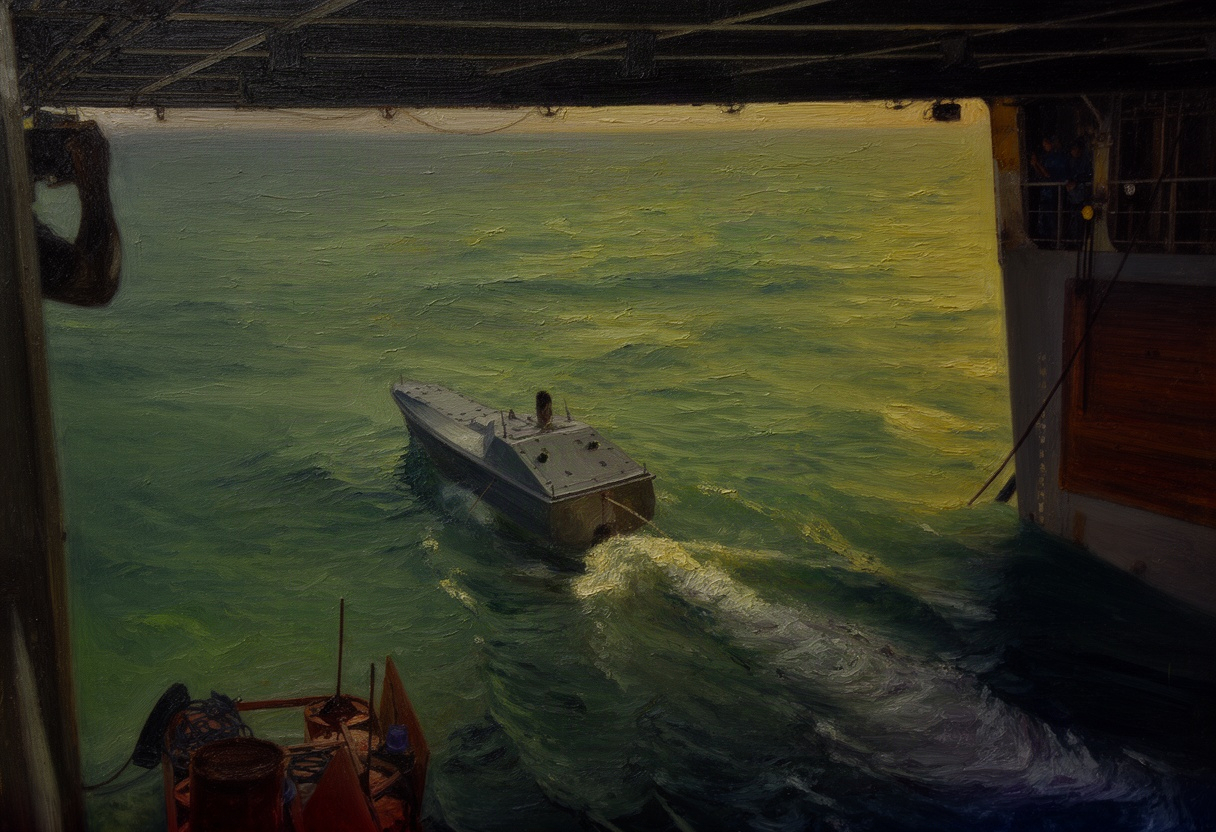
Indonesian Navy Unveils Kamikaze USV in Major Exercise
The deployment marks a significant advancement in Indonesian naval capabilities. The introduction of the kamikaze unmanned surface vessel (USV) highlights Indonesia's evolving defense strategies in maritime security.
The Indonesian Navy (TNI AL) has made a notable leap in its operational capabilities by deploying a kamikaze unmanned surface vessel (USV) for the first time during a significant inter-service military exercise in Dabo Singkep, Riau Islands. This event not only showcases the USV but also illustrates the Navy's commitment to embracing advanced technological solutions for modern warfare.
This major exercise involved a series of complex maneuvers that saw the Indonesian Navy not only deploying the kamikaze USV but also launching a loitering munition from a warship. Furthermore, the navy successfully fired two C-705 anti-ship missiles, enhancing its strike capabilities against potential threats in the maritime environment. These developments indicate a proactive approach towards enhancing the navy's deterrence and response capacity in the region.
The strategic significance of integrating the kamikaze USV into naval operations cannot be understated. As tensions rise in various maritime domains, Indonesia's advancements could serve as a deterrent to adversaries and add a new dimension to its naval strategy. This aligns with the country's broader defense initiatives aimed at ensuring sovereignty and security in its territorial waters.
In terms of technical details, the kamikaze USV features an angular grey hull, which enhances its radar profile for stealth operations. An investment in such unmanned systems reflects Indonesia's ongoing modernization efforts within its naval forces. Moreover, the successful test of the C-705 missiles adds to Indonesia's naval arsenal, bolstering its offensive capabilities.
The implications of this exercise indicate a shift in regional power dynamics and bolster Indonesia's defensive posture. As the country continues to develop and integrate advanced technologies within its navy, it can expect to enhance its operational effectiveness and deterrent posture in the face of emerging maritime challenges.