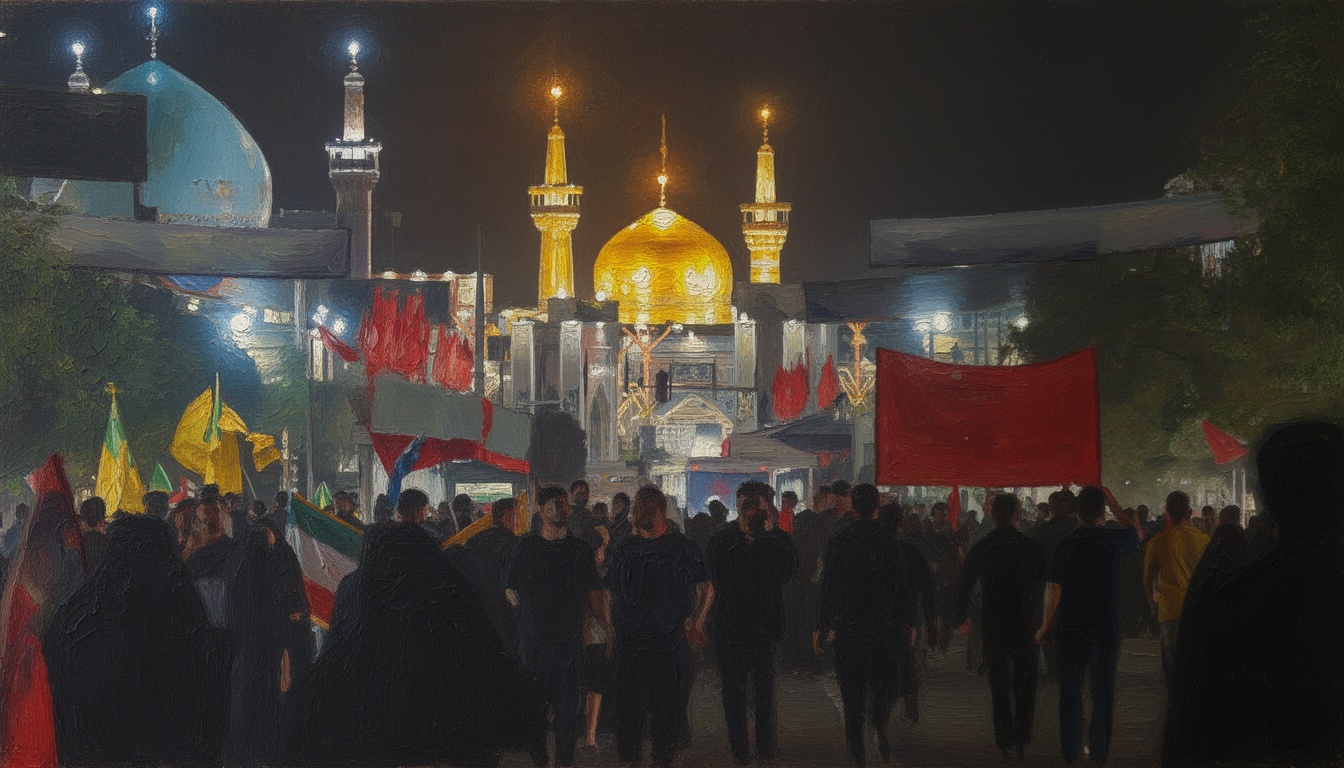
Iranian Mourners Call for Revenge at Khamenei's Burial
Iran's loyalty to the Islamic Republic strengthens amid tensions with the US following Khamenei's death. Calls for retaliation suggest an escalation of conflict in the region.
Iranian loyalists to the Islamic Republic demonstrated a defiant stance during the burial of Supreme Leader Ali Khamenei in Mashhad this past Thursday night. The mourners expressed their grief openly, chanting for revenge against perceived enemies, particularly the United States and its allies, following Khamenei's assassination by an Israeli strike in late February, marking a significant turning point in the ongoing hostilities.
Khamenei had ruled for over three and a half decades, and his death has invoked fierce loyalty among his supporters as they reject any form of compromise with the West. This aggravation in sentiments comes at a time when tensions between Iran and the US are markedly high, and calls for retaliation signal an increasingly confrontational atmosphere.
The strategic implications of Khamenei's assassination are profound. His leadership was synonymous with Iran's resistance strategy against foreign intervention, especially from the USA and Israel. With the Iranian regime's hardline rhetoric against any negotiation with Western powers, the chances of a diplomatic resolution appear slimmer than ever.
Following the strike that killed Khamenei, Iran's military posture is expected to intensify. The country has already engaged in a pattern of aggressive responses towards US interests, indicating further escalations could occur in the region. This loss may embolden hardliner factions within Iran's leadership to pursue retaliation more vigorously.
The likely consequences of these developments suggest a continued cycle of violence. The funeral itself became a rallying point for those who support an aggressive stance against those they perceive as aggressors, indicating further unrest and potential military action in response to perceived provocations from outside forces. Iran's internal dynamics may further shift as the regime seeks to consolidate power and rally support in a time of heightened existential threats.