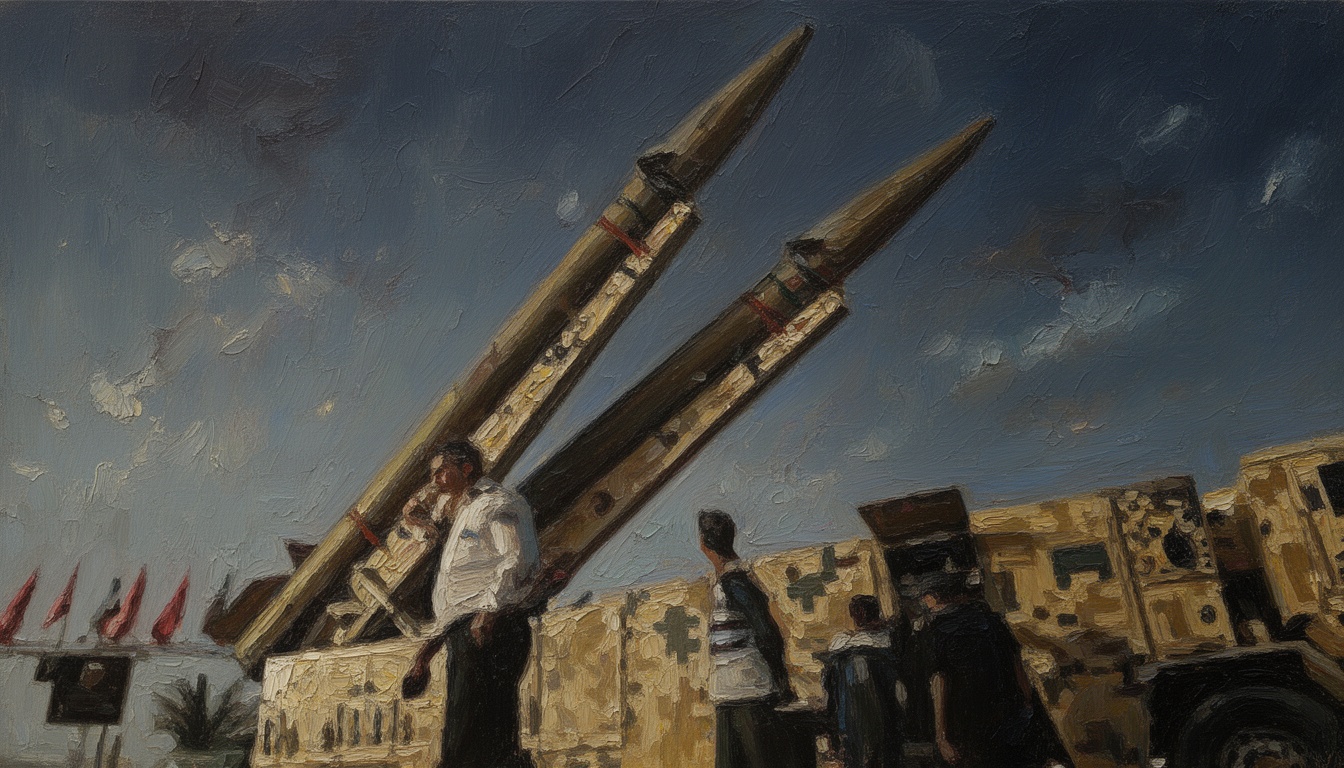
Iran's Strategy: Limited War Over Peace with US
Iran aims to maintain pressure on the US through limited conflict rather than pursuing peace. This approach could provide Iran with strategic advantages while avoiding broader confrontation.
Iran's leaders are reportedly considering a strategy of limited warfare against the United States, believing they can manage the escalation without sparking a full-scale conflict. The motivation behind this strategy appears to be an effort to keep the US under constant pressure while maximizing their own regional influence. By engaging in smaller, controlled conflicts, Iranian authorities may aim to assert their power without the risks associated with a prolonged war.
Historically, Iran has navigated conflicts in a way that minimizes the risk of drawing the full force of US military capabilities. This careful approach has allowed Iran to engage in asymmetric warfare, utilizing proxy forces throughout the Middle East, such as Hezbollah in Lebanon and various militias in Iraq and Syria. The recent tensions in the region reflect this strategy, as Iran seeks to demonstrate its resilience and capability to confront perceived threats while avoiding direct military confrontation with the US.
The potential implications of this strategy are significant, as a limited conflict could shift the balance of power in the region. The US might find itself forced to reevaluate its position and strategy in the Middle East if Iran successfully executes this approach. Additionally, other regional players may feel encouraged to take more aggressive stances if they perceive that Iran can effectively confront US forces without facing devastating consequences.
Operationally, Iran's use of asymmetric tactics, such as cyber warfare and drone strikes, allows for a flexible military response while minimizing exposure to direct retaliation. Iran is likely to continue developing its capabilities in precision-guided munitions and drone technology, enhancing its deterrent posture. These advancements may lead to a more precarious security environment in the region, increasing the likelihood of miscalculations and unintended escalations.
As Iran pursues this limited warfare strategy, it will be crucial for the US and its allies to closely monitor developments and adjust their own military and diplomatic strategies accordingly. The balance of power in the region could be at stake if Iran successfully imposes its will through calculated conflicts rather than pursuing diplomatic resolutions.