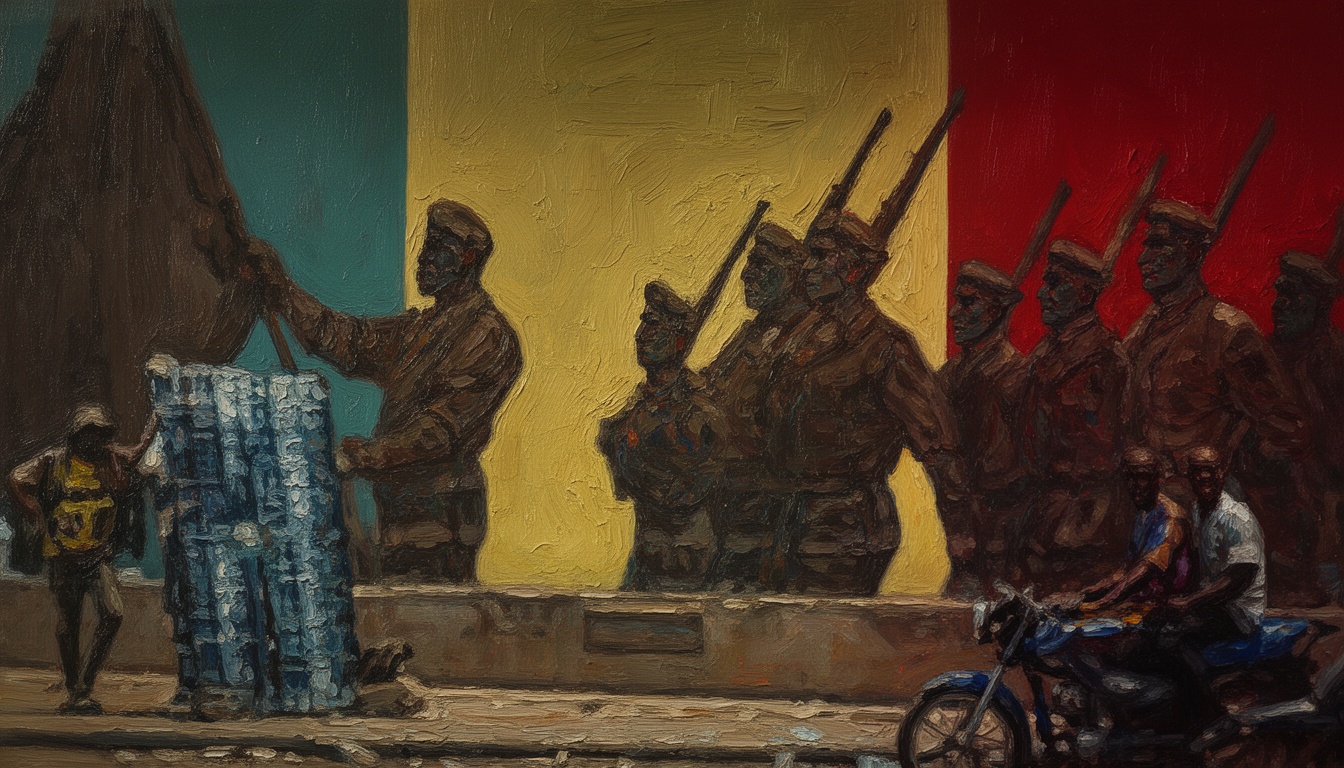
Islamist Group Tightens Blockade Around Mali's Capital
Mali faces increased tensions as a blockade intensifies following recent attacks. The assassination of the defense minister heightens security concerns amid a troubled political landscape.
An Islamist group has intensified its blockade around Mali's capital, Bamako, leading to rising tensions within the region. This development follows a series of nationwide attacks, including the assassination of Mali’s defense minister. Such escalations in violence are alarming and indicate a growing instability in the area.
The recent series of assaults signal a troubling trend in Mali, which has faced significant security challenges since 2012 when jihadist groups began to seize territory in the north. Despite the presence of international forces, including French troops and the United Nations peacekeeping mission, security remains fragile. The assassination of the defense minister is particularly concerning, as it demonstrates the effectiveness of these extremist groups in bypassing government security measures.
Strategically, the blockade poses a significant challenge not just to Mali but to the countries in the surrounding region. The ability of these groups to disrupt governance highlights the ongoing threat of instability in the Sahel, which could spur further militant activity and hinder international efforts to stabilize the area.
Reports suggest that the Islamist group may have received reinforcements and increased funding, allowing for more robust operational capabilities. The blockade affects not only military supplies but also humanitarian aid, exacerbating the plight of civilians already suffering in a deteriorating situation. This could lead to further humanitarian crises as access to essential goods diminishes.
In the foreseeable future, if the blockade persists, it may provoke stronger military responses from the Malian government and its allies. This situation also raises the specter of escalating violence, as extremist elements may feel emboldened to conduct further attacks. Continued international attention and assistance will be critical to addressing the rising threat in Mali and stabilizing the broader Sahel region.