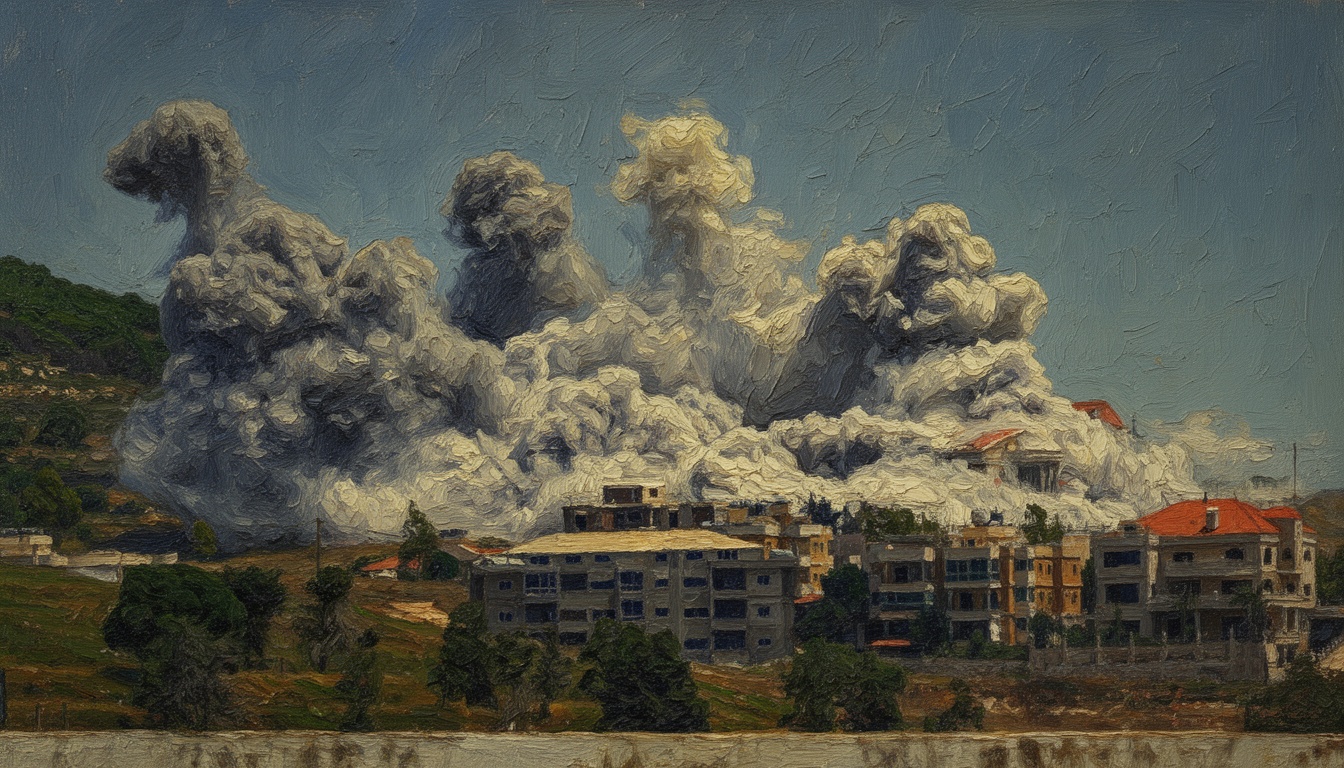
Israel and Lebanon Agree to Renew Ceasefire Amid Hezbollah Tensions
Israel and Lebanon have agreed to implement a ceasefire, contingent on complete cessation of hostilities from Hezbollah. This agreement follows US-led diplomatic talks and aims to enhance regional security.
Israel and Lebanon announced on Wednesday their agreement to implement a ceasefire, explicitly demanding a "complete cessation" of fire from the Hezbollah militia, which is backed by Iran. This decision follows high-level talks in Washington, led by the United States, aimed at reducing tensions between the two nations, which have long been in conflict and lack formal diplomatic relations.
The ceasefire agreement is particularly significant given the ongoing hostilities along the Israel-Lebanon border, which have seen numerous cross-border attacks in recent weeks. The necessity for a ceasefire highlights the fragility of the situation and the potential for escalated violence if negotiations fail. Both parties have recognized the importance of de-escalating the conflict for regional stability.
Under the terms of the agreement, Hezbollah must cease all military activities, while the Lebanese Armed Forces will establish "pilot zones" intended to exercise exclusive control over specific territories. This move aims to limit the influence of non-state actors, such as Hezbollah, and bolster state authority within Lebanon. The effectiveness of this measure will largely depend on the Lebanese military's capability to enforce these zones.
The strategic implications of this agreement are profound. It reflects a shift towards direct negotiations between Israel and Lebanon, particularly in the context of the larger Iranian influence in the region. Stability in Lebanon is crucial for Israel, especially as they attempt to counter Iranian regional ambitions through direct engagement and negotiation, rather than merely military confrontation.
The future of this ceasefire will depend on compliance by Hezbollah and the effectiveness of the Lebanese Armed Forces in maintaining order. Should hostilities resume, it could lead to a severe escalation, challenging the fragile security environment in the region and necessitating renewed international diplomatic efforts to restore peace.