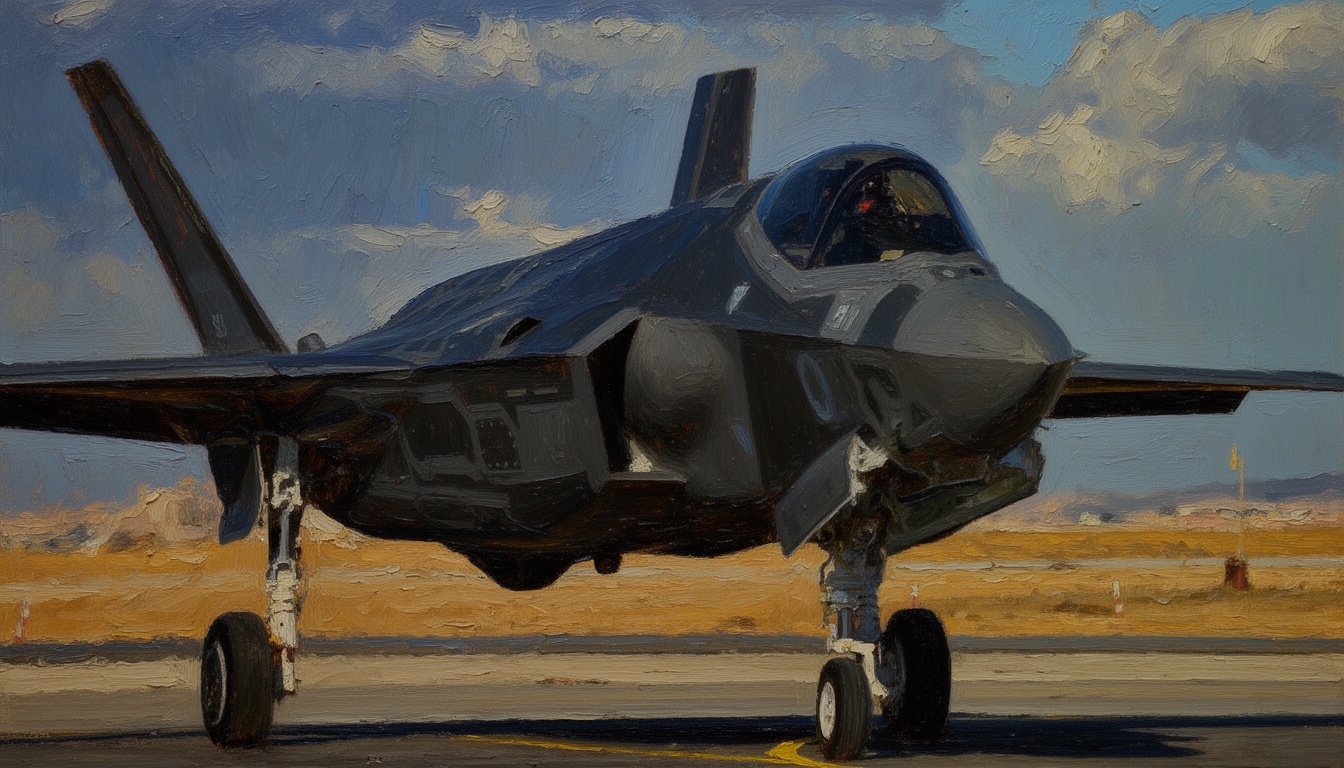
Israel Expands F-35I Adir Range with External Fuel Tanks
Israel is enhancing the operational capability of its F-35I Adir by adding external fuel tanks. This upgrade aims to increase mission endurance and decrease reliance on aerial refueling.
Israel is upgrading its F-35I Adir fighter jets with the addition of external fuel tanks. This move is a strategic enhancement following extensive combat operations against Iranian forces, aimed at improving mission endurance and operational flexibility. The decision comes as part of Israel's ongoing efforts to bolster its air capabilities in the face of regional threats.
The F-35I Adir, a variant of the F-35 Lightning II, has been a significant asset in Israel's military operations. With the integration of external fuel tanks, the aircraft's range will be significantly increased, allowing for longer missions without the immediate need for aerial refueling. This adjustment reflects a broader strategy to maintain air superiority and operational readiness in a complex regional landscape.
Strategically, enhancing the F-35I's endurance is crucial as Israel addresses threats from adversaries, particularly in the wake of heightened tensions with Iran. The F-35I is designed to operate effectively in contested environments, and increasing its operational range through the use of external fuel tanks further strengthens Israel's position in aerial engagements.
The external fuel tanks will provide the F-35I with additional capabilities while maintaining its stealth characteristics. This modification aligns with Israel's emphasis on technological advancements within its air force, aiming to ensure that its fighters remain competitive against emerging threats. The integration is expected to occur in the coming months, enhancing the fleet's overall capability.
In summary, the addition of external fuel tanks to the F-35I Adir reflects Israel's proactive approach to strengthening its air force. This upgrade not only enhances mission capabilities but also allows for more flexible operational planning in response to the evolving security environment in the region.