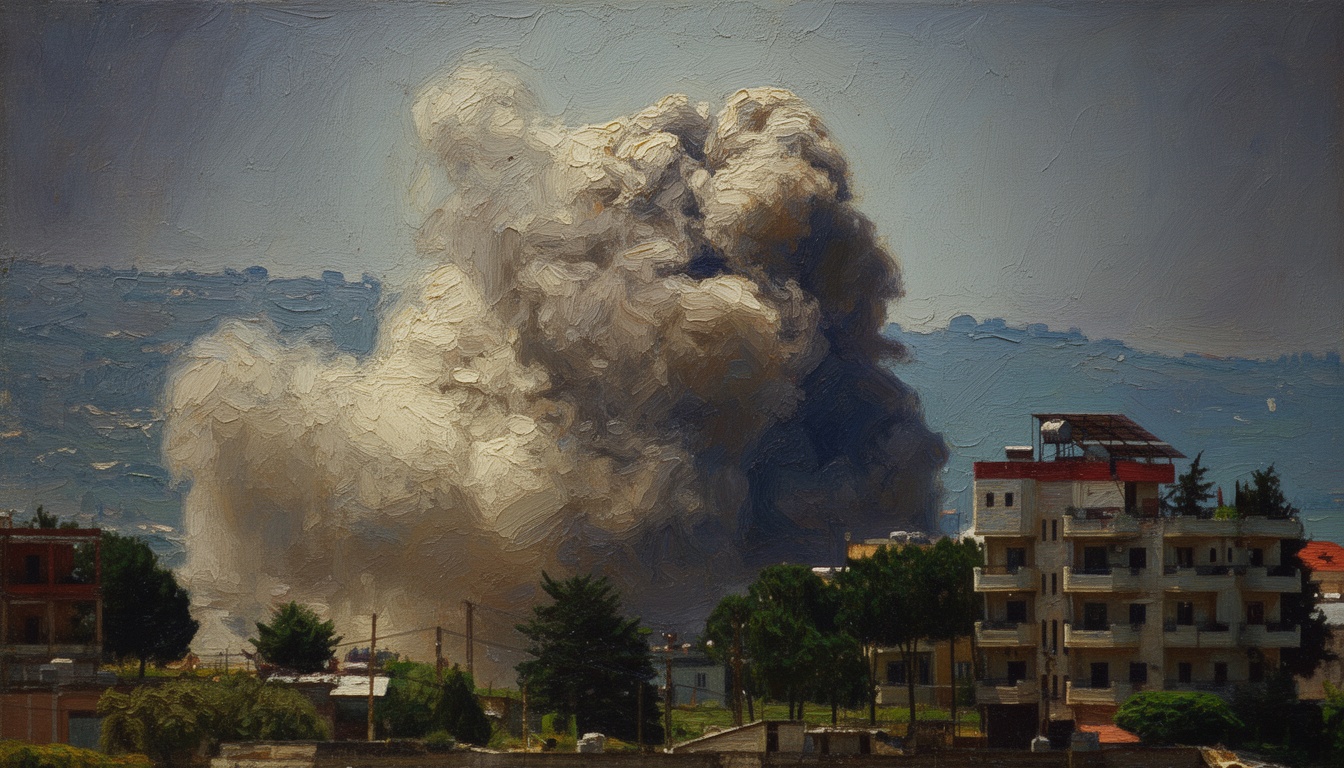
Israel Launches Strikes in Southern Lebanon Despite Ceasefire
Israel has initiated military strikes in southern Lebanon, targeting Hezbollah positions after evacuation warnings were issued to local residents. This escalation raises questions about the stability of the current ceasefire.
The Israeli military has launched aerial strikes against multiple locations in southern Lebanon, specifically targeting Hezbollah positions. This operation comes on Saturday following evacuation warnings issued to residents in several villages, indicating an intense escalation in hostilities. The strikes were reportedly aimed at disrupting Hezbollah's capabilities despite an existing ceasefire between the conflicting parties.
The backdrop to this escalation involves rising tensions between Israel and Hezbollah, a militant group based in Lebanon. In recent weeks, there have been increasing skirmishes along the Israel-Lebanon border, and the situation has remained volatile with intermittent exchanges of fire. The Israeli Defense Forces have stated that their operations are a necessary response to ongoing threats posed by Hezbollah.
From a strategic perspective, these strikes signify a concerning shift in the Lebanese conflict's dynamics, revealing Israel's willingness to act decisively even under the framework of a ceasefire. Obtaining intelligence about Hezbollah's positions in southern Lebanon has likely played a crucial role in informing these military decisions, suggesting a proactive approach to countering perceived threats to national security.
Operationally, the attacks likely involved the use of precision-guided munitions aimed at minimizing collateral damage. The Israeli Air Force is expected to deploy F-35I Adir jets in support of these operations, enhancing the capabilities for rapid targeting. All of these actions come amidst ongoing military assessments and strategic planning within Israeli defense circles.
This escalation raises implications for broader regional security, as it risks triggering a wider conflict involving other state and non-state actors in the region. If the situation deteriorates further, it may result in renewed military engagements beyond southern Lebanon, influencing the delicate balance of power within the Levant region.