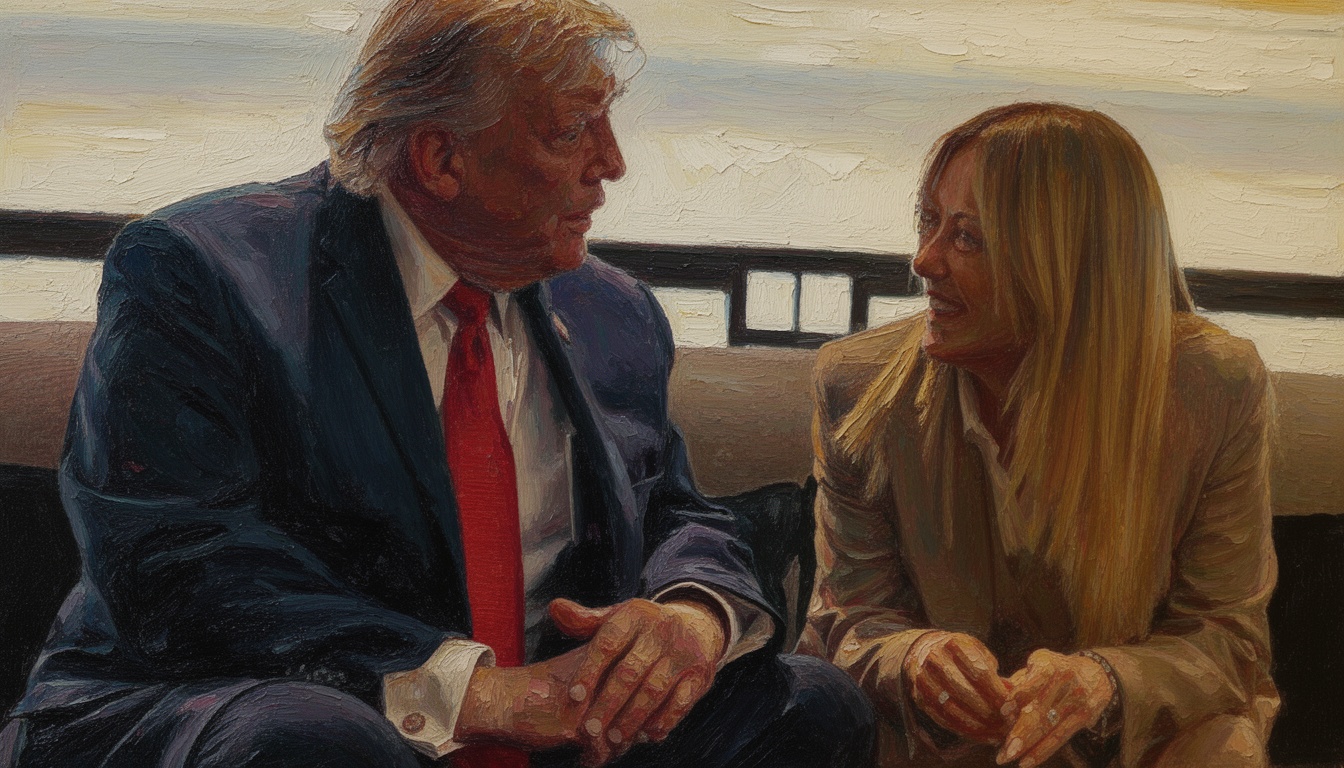
Italian Minister Cancels US Visit Over Trump's Comments
Italy's diplomatic relations are strained after President Trump mocked PM Meloni. This incident may impact Italy's stance within the EU and NATO.
Italy's Foreign Minister Antonio Tajani has cancelled his planned visit to the United States due to remarks made by former President Donald Trump, which were seen as derogatory towards Prime Minister Giorgia Meloni. The visit was set for Sunday and Monday but was abruptly called off following Trump's comments reported in an interview. Tajani took to social media to express his outrage, stating that the "grave and offensive words" from Trump "offend the whole of Italy."
Tensions between the US and Italy, traditionally strong allies, are now strained following this incident. Tajani's decision to cancel the trip could alter the dynamics of discussions regarding defense cooperation and economic partnerships during his time in Washington. Prime Minister Meloni expressed her shock at Trump's comments during the interview with Italian channel La7, which has raised questions about diplomatic decorum.
This situation holds strategic significance as Italy plays a crucial role within the European Union and NATO. The cancellation could hinder discussions about collective defense strategies and Italian contributions to European security initiatives. The Italian government is working to reinforce its global standing amidst shifting alliances.
Additionally, the remarks made by Trump, while in the context of a past administration, could resonate negatively within Italian political circles, potentially affecting Italy's internal political landscape as well. Analysts suggest that this might lead to an increase in nationalist sentiments against foreign influence.
Going forward, the Italian government is expected to carefully navigate the diplomatic waters as it re-evaluates its engagement with the US. The ramifications of this incident might extend beyond just diplomatic ties, impacting Italy's position in the EU and its role in international security frameworks.