Japan and UK Strengthen Defense Cooperation Amid Jet Program Uncertainty
The growing defense ties between Japan and the UK could influence regional security dynamics as both nations approach a potential alliance. Discussions revolve around the future of the Global Combat Air Program (GCAP).
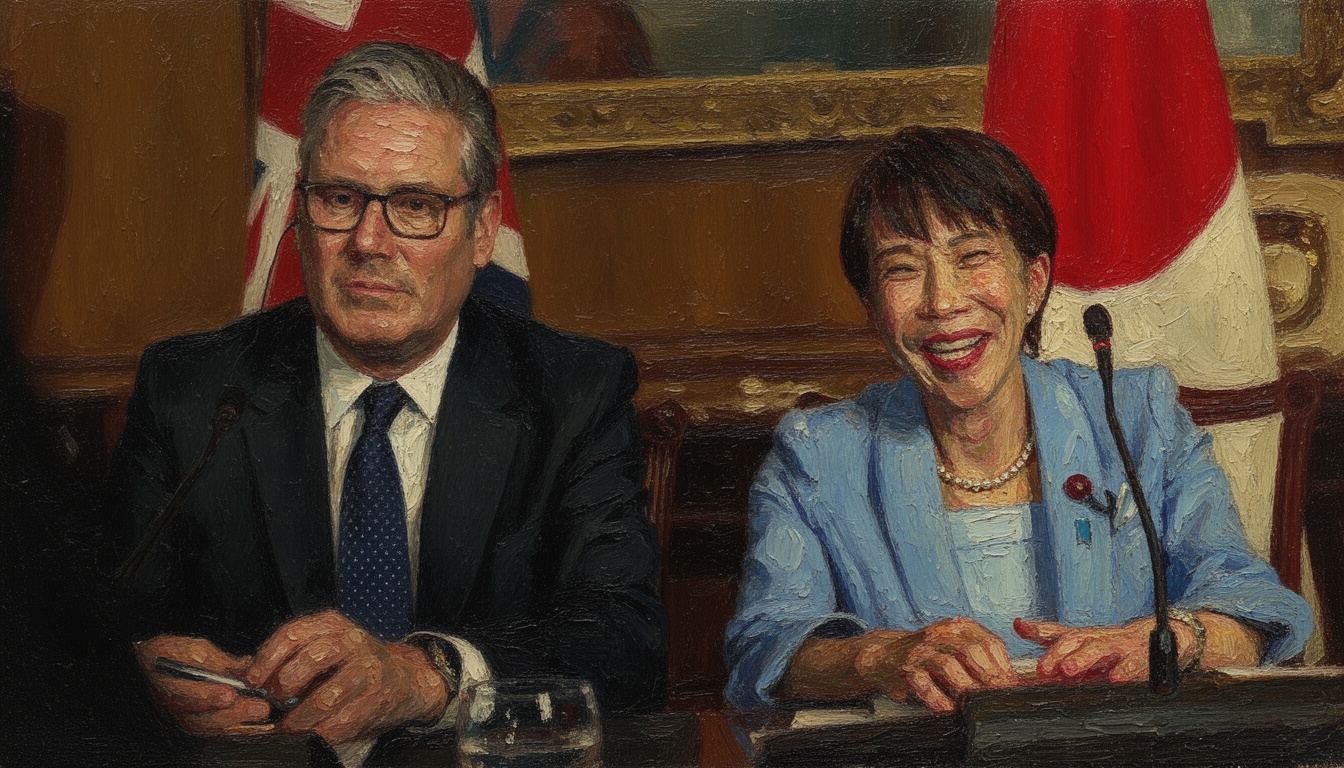
Japanese Prime Minister Sanae Takaichi has emphasized the importance of defense cooperation with the United Kingdom during a meeting with British Prime Minister Keir Starmer in London. This meeting occurred on Sunday and comes at a time when uncertainties surround the Future Combat Air System (FCAS) and the Global Combat Air Program (GCAP). Takaichi stated, 'The UK is a very important partner to Japan given the deepening of ties across a wide range of fields, including security and defence.'
Both leaders discussed their commitment to enhancing bilateral defense initiatives, which are particularly crucial as tensions rise in the Indo-Pacific region. The potential for a near-alliance was cited as an important step forward in collaboration, particularly with the development of next-generation fighter jets. Takaichi remarked, 'Given the GCAP project, I think we have reached a level that we can call a near-alliance.'
Strategically, this partnership could reshape security policies not only within Asia but also influence NATO's stance towards threats in the region. With increasing geopolitical instability, the collaboration between Japan and the UK signifies a shift towards a more integrated defense strategy among allies.
The Global Combat Air Program, aimed at developing advanced military aircraft, remains a topic of debate, especially concerning budget allocations and technological advancements. The UK and Japan are expected to funnel considerable resources into this endeavor, which may include projects like upgraded fighter technologies and joint exercises.
As defense cooperation solidifies, the implications for regional security are noteworthy. A successful collaboration on the next-generation fighter jet program could lead to stronger military interoperability and strategic alignment, reinforcing both nations' positions amidst global tensions.