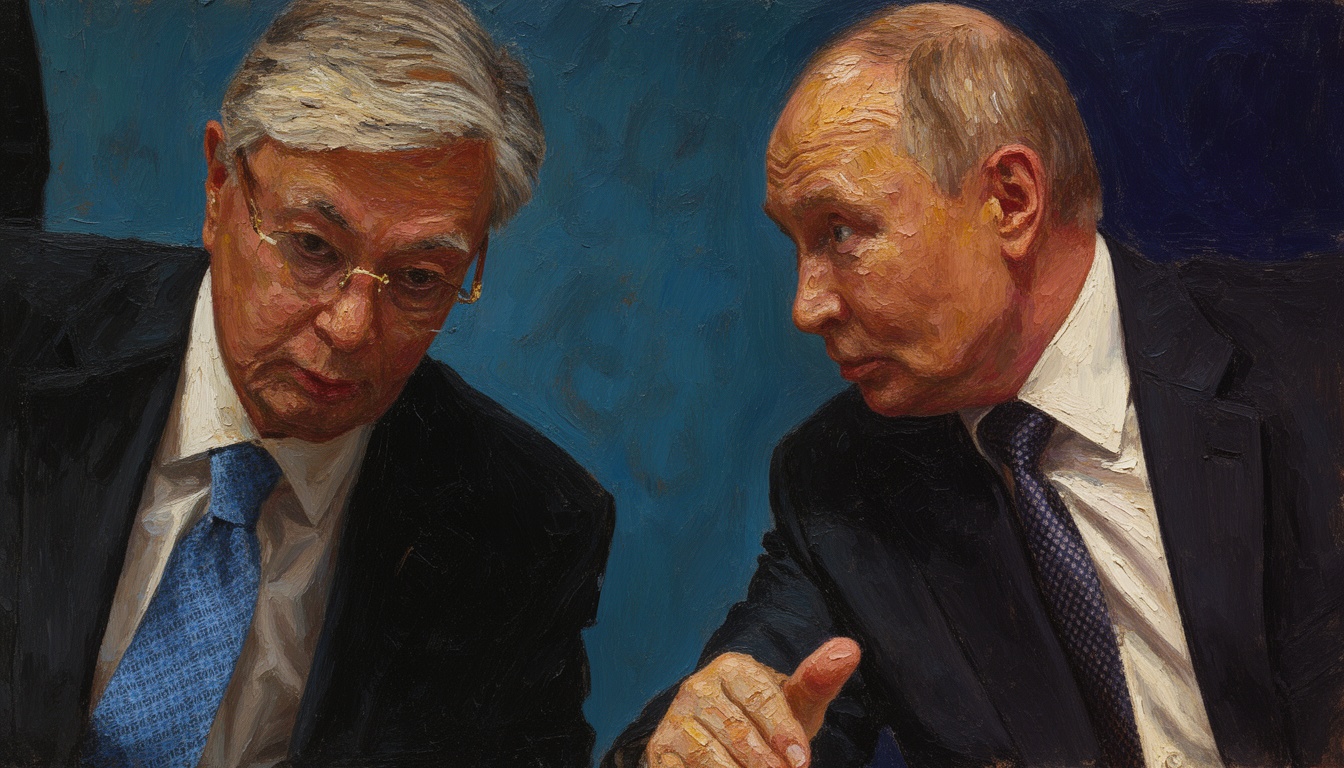
Kazakh President Urges Putin to End War as Drones Strike
Kazakhstan's President Kassym-Jomart Tokayev has called on Russian President Vladimir Putin to end the ongoing conflict between Russia and Ukraine. This statement coincides with Ukrainian drone strikes targeting an oil refinery in Siberia, marking a significant escalation in their military operations against Russian territory.
Kazakhstan's President Kassym-Jomart Tokayev urged Russian President Vladimir Putin to bring an end to the ongoing conflict during discussions held in Omsk, Siberia. This appeal came amid heightened tensions between Russia and Ukraine, as Tokayev emphasized the need for dialogue to resolve the war that has caused widespread distress in the region.
The talks in Omsk, which took place on Saturday, underscored Kazakhstan's strategic position as a neighbor and ally to Russia while also navigating its relationships with Ukraine and the West. Tokayev's call for peace highlights a crucial moment for Kazakhstan, which has maintained a balanced foreign policy amidst the ongoing conflict.
On the same day, Ukrainian drones successfully targeted an oil facility located in Siberia, representing one of Kyiv's deepest incursions into Russian territory since the conflict began. This operation serves to not only disrupt Russian energy supplies but also signals Ukraine's increasing capability and willingness to extend its military reach.
The attack on the Siberian oil refinery illustrates the shifting dynamics of the conflict, as Ukraine demonstrates its ability to carry out significant strikes deep within Russian territory. Reports indicate that the refinery may have sustained substantial damage, though specific casualty figures from the attack have yet to be confirmed.
The ramifications of these developments could be profound. Tokayev's diplomatic overtures to Putin may influence regional stability while Ukraine's drone strikes could escalate further military responses from Russia. How this scenario unfolds will be critical to future relationships and the potential for a resolution to the ongoing conflict in the region.