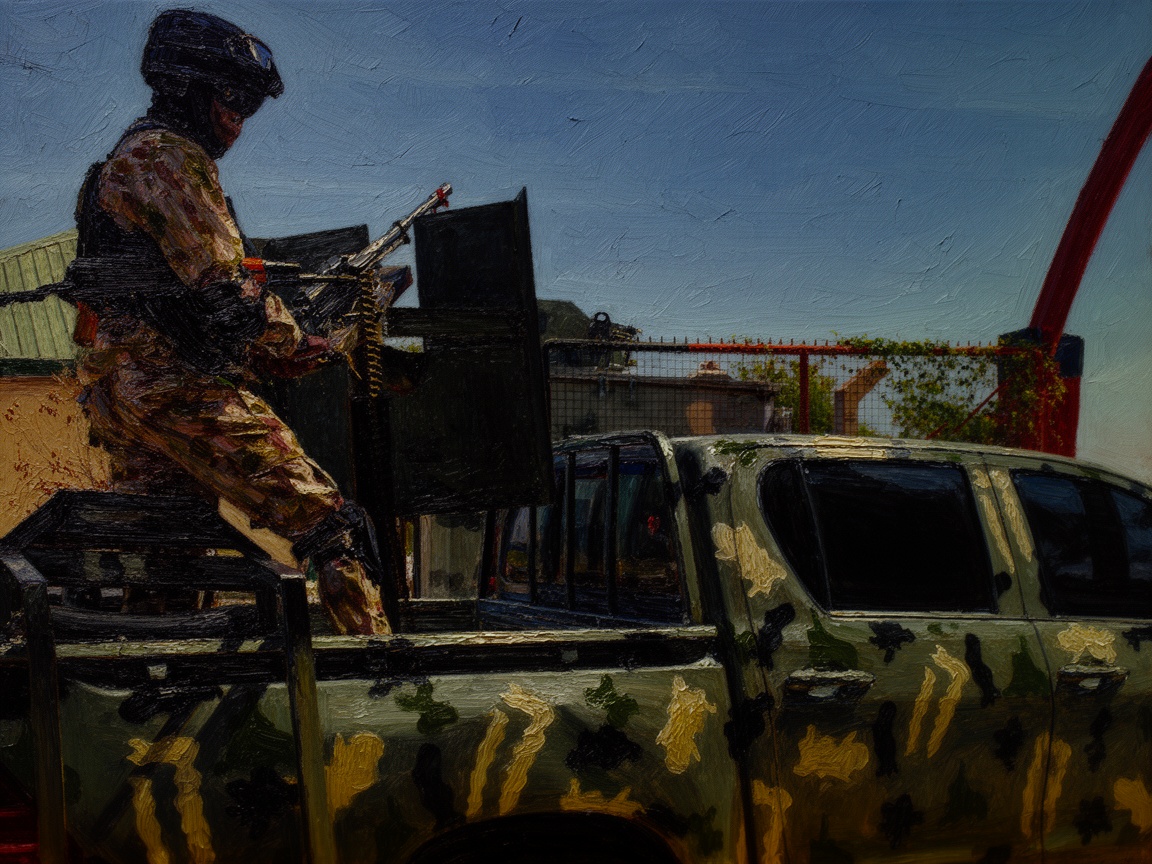
Key ISIL Commander Killed in Borno, Nigeria
A senior leader of ISIL, identified as Abu-Bilal al-Minuki, was reportedly killed during a joint military operation conducted by Nigerian and US forces in Borno state. This development may have significant implications for ISIL's operational capabilities in West Africa.
Abu-Bilal al-Minuki, a prominent commander of the Islamic State in Iraq and the Levant (ISIL), has been reported dead following a coordinated operation involving Nigerian and US military forces in Borno state, Nigeria. The operation took place on [insert specific date], and details about the raid have not been fully disclosed, but officials have characterized it as a significant achievement in combating ISIL in West Africa.
Al-Minuki was believed to be a pivotal figure in ISIL's operations in the region, overseeing strategic planning and execution of attacks. His leadership had been instrumental in the group's efforts to expand their influence in West Africa, specifically targeting Nigerian territories plagued by violence and instability. The killing of such a key figure is expected to impact ISIL's network and operational structure across the region.
The strategic significance of this development cannot be overstated. The removal of al-Minuki as a leader may create a temporary setback for ISIL, complicating their command structure and potentially disrupting planned attacks. In a region where the group has sought to establish a foothold, this success may bolster the security posture of Nigerian forces while collaborating with US military interests aimed at curbing extremist threats.
Details regarding the operation itself remain scarce, but the collaboration between Nigerian and US forces highlights an ongoing partnership in counter-terrorism efforts. The United States has previously committed significant resources to support Nigeria’s military in combating ISIL and other extremist groups in the Sahel region. AS of [insert relevant timeframe], Nigeria has been actively engaging in operations designed to dismantle ISIL cells in both rural and urban areas.
The likely consequences of this operation are manifold. Without al-Minuki's leadership, ISIL may face organizational challenges while attempting to regroup. However, previous experiences suggest that insurgent groups can quickly adapt, and vigilance will be required to ensure that this victory does not lead to a resurgence. Future operations in the area may focus on a comprehensive strategy to eliminate remaining ISIL operatives and prevent the re-establishment of command capabilities.