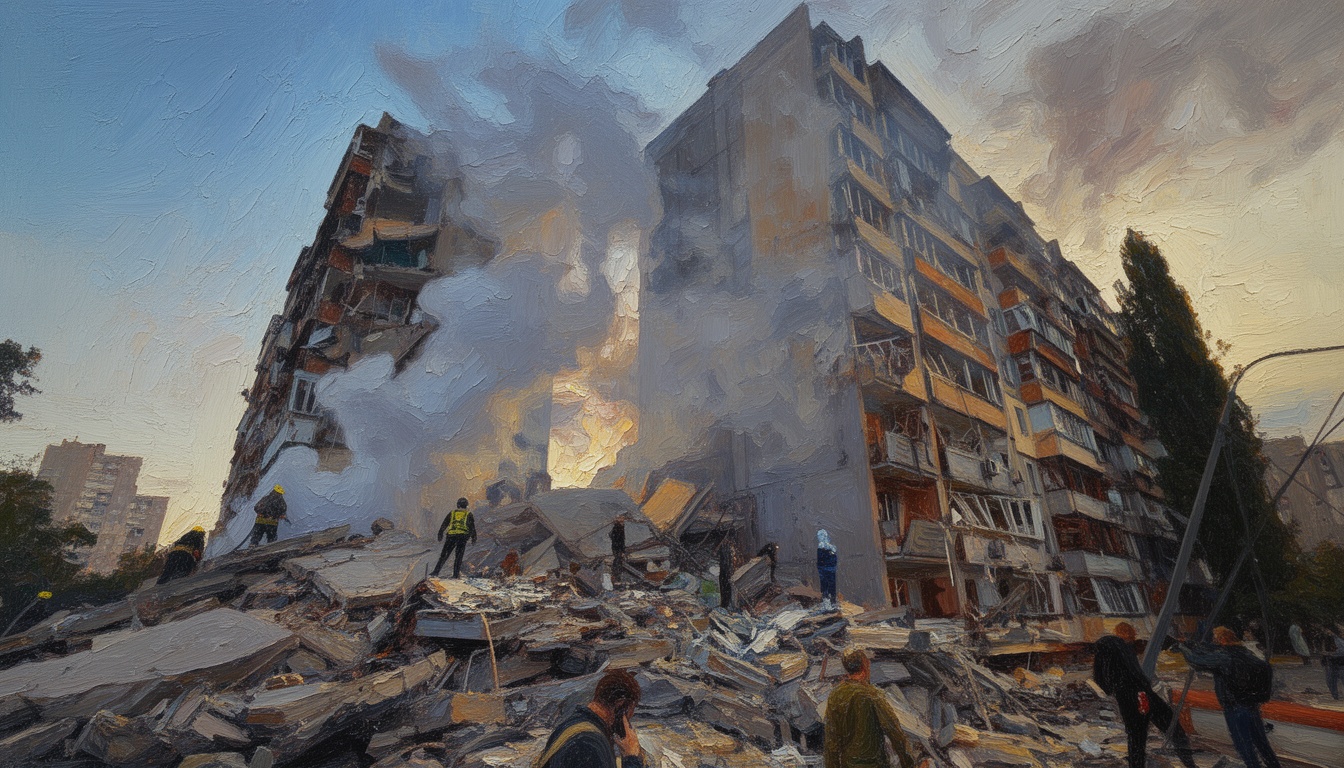
Kyiv Building Collapses Following Russian Drone Strike
A Russian attack on Kyiv with drones and missiles has caused significant damage, including the collapse of a building. This escalation raises concerns over the safety of civilians and infrastructure in Ukraine's capital.
On a recent date, a building in Kyiv collapsed following a Russian drone and missile strike on Ukraine's capital. Reports indicate that multiple buildings sustained damage due to the aerial assault, which is part of an ongoing pattern of aggression against urban centers in Ukraine. Emergency services have been deployed to search for trapped residents, with initial reports suggesting several individuals may be trapped beneath the rubble.
The attack on Kyiv represents a disturbing escalation in the conflict between Russia and Ukraine, as drone strikes have become a more frequent method of assault. Russian forces have increasingly targeted civilian infrastructure, causing widespread fear among residents and raising questions regarding the strategic objectives of such a campaign. These incidents contribute to further deterioration of the security situation in the region.
Given the strategic significance of Kyiv, the capital's stability is crucial for the Ukrainian government's defense capabilities. The psychological impact on the civilian population is profound, with ongoing attacks likely to diminish public morale and disrupt daily life. Observers note that such violence may garner increased international support for Ukraine as calls for aid and defense resources grow.
Operationally, the use of drones presents a challenge for Ukrainian air defenses. Russian drone technology has reportedly improved, allowing for more precise strikes against urban targets. Kyiv's defenses will need bolstering to mitigate the risk of further attacks in the future.
The humanitarian consequences of this strike are dire. As rescuers work to locate any trapped individuals, the need for immediate support and assistance for those affected will become increasingly urgent. The international community's response to these escalating threats will likely shape future engagements in the region.