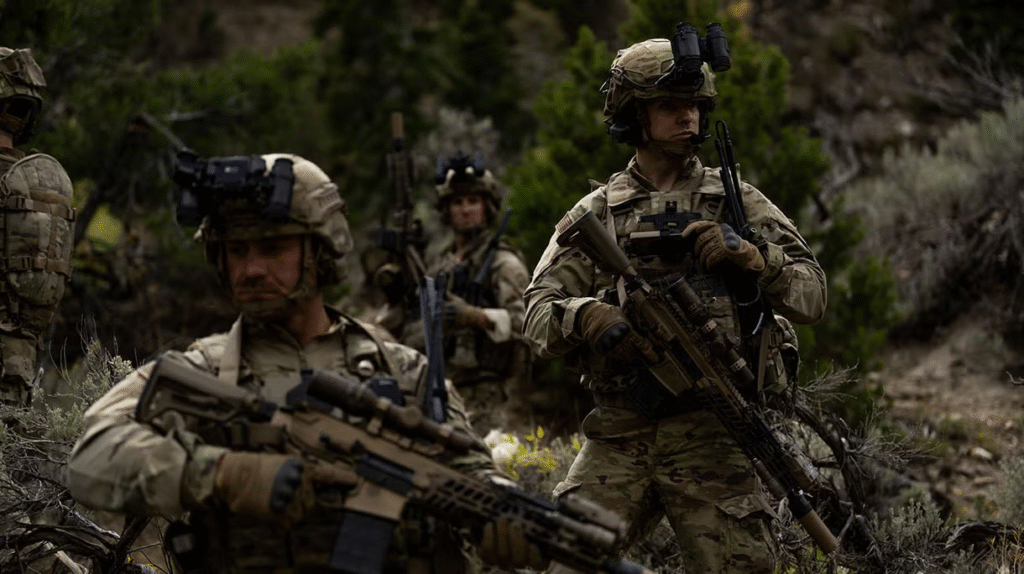
L3Harris Develops Handheld Radios with Counter-Drone Jamming Capability
L3Harris introduces a software update to enhance handheld radios for drone signal jamming. This technology represents a significant step in counter-drone capabilities.
L3Harris has announced a groundbreaking software update for its handheld radios, designed to transform them into counter-drone jammers. The upcoming Wraith Shield software update will utilize the device's existing antenna to detect drone control signals, differentiating between friendly and enemy signals to effectively jam the latter. This new capability is positioned to enhance operational effectiveness against drones in various conflict scenarios.
Background context reveals the increasing trend of drone usage on the battlefield, prompting defense technology firms to develop advanced countermeasures. L3Harris has consistently been at the forefront of communications technology and is leveraging its expertise to address the growing aerial threat posed by unmanned aerial vehicles (UAVs). The Wraith Shield software aims to provide tactical advantages to ground forces who are facing this modern challenge.
The strategic significance of this development cannot be overstated. As military forces around the globe contend with the proliferation of drones in combat environments, the ability to neutralize enemy UAVs is becoming crucial. L3Harris's approach provides a cost-effective solution by repurposing existing radio technologies that military units are already employing, rather than requiring additional investment in dedicated counter-drone systems.
From a technical standpoint, the Wraith Shield software utilizes advanced algorithms to identify and classify different drone signals, prioritizing enemy transmissions for jamming. By operating through existing handheld units, the update represents an efficient use of resources, enhancing the jamming range and effectiveness without necessitating new hardware deployments. This innovative integration highlights L3Harris's commitment to enhancing the capabilities of military communications systems.
Looking ahead, this update could reshape the dynamics of small-scale conflicts where drones play a prominent role. The potential for widespread deployment of these upgraded radios could lead to increased effectiveness in counter-drone operations, thereby changing engagement rules on contemporary battlefields. Ground forces equipped with these capabilities might gain a decisive edge against adversaries leveraging drone technology.