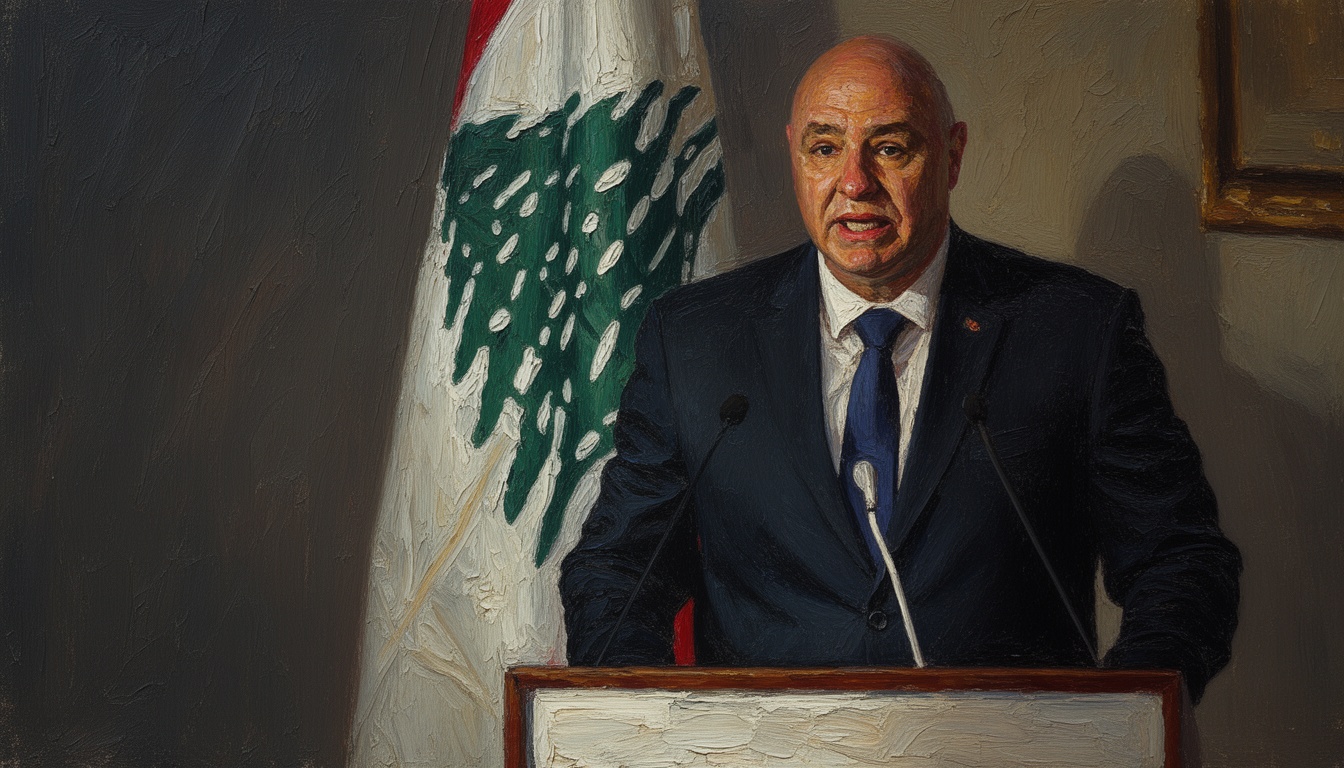
Lebanese President Calls for US Solidarity Amid Occupation
Lebanese President Joseph Aoun demands US support following a US-backed framework deal with Israel aimed at halting hostilities after recent conflicts. Hezbollah rejects the disarmament terms under the agreement.
On Saturday, Lebanese President Joseph Aoun appealed to the United States for solidarity with Lebanon, citing a recently negotiated framework deal with Israel. This agreement, supported by the US, aims to permanently end hostilities following the latest conflict between Israel and Hezbollah. Notably, the current situation includes the occupation of southern Lebanon by Israeli forces, raising regional tensions.
The framework deal, finalized in Washington, outlines a path for the disarmament of Hezbollah, an Iranian-backed militant group operating within Lebanon. Additionally, it specifies a gradual withdrawal of Israeli troops from southern Lebanon, paving the way for the deployment of the Lebanese Armed Forces in the impacted areas. This involves a phased approach that will begin with two designated “pilot” areas.
Strategically, the deal represents a significant shift in the balance of power in the region. If implemented, it could reduce Hezbollah's military influence in southern Lebanon, potentially stabilizing the area. However, its success hinges on both political will within Lebanon and support from external actors like the United States.
Hezbollah's outright rejection of the agreement signals potential complications ahead. The group views disarmament as a violation of its resistance role against Israeli incursions, and its inability to agree could lead to renewed military tensions. Should resistance from Hezbollah persist, the security situation may further deteriorate, impacting the delicate balance of peace in the region.
In conclusion, the implications of this agreement, particularly the response from Hezbollah and the level of US support, will be crucial in determining the future stability of southern Lebanon. The unfolding developments warrant close monitoring as they could ripple through the broader Middle Eastern geopolitical landscape.