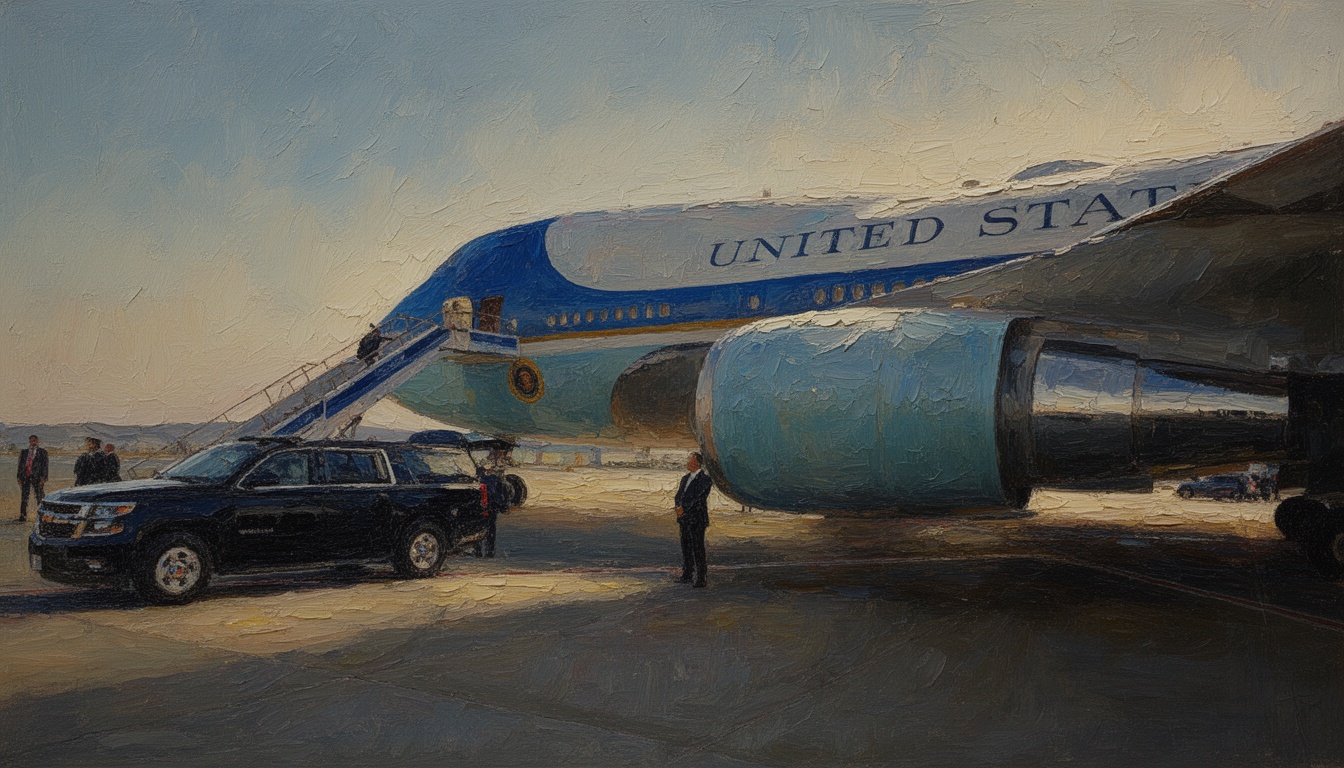
Major Concerns Over Air Force One Capabilities Following Jet Swap
The unexpected replacement of the new VC-25B jet raises alarms about capability deficiencies. This development could reflect deeper strategic issues in U.S. airlift operations.
In an abrupt development, the United States has reportedly switched from the new VC-25B Air Force One jet to an older model during a recent trip to a British military base. The rationale behind this decision remains unclear, but it has sparked significant concern among defense analysts about the operational readiness of the new aircraft.
The VC-25B, which is set to be a modernized version of the iconic Air Force One, has faced scrutiny over its defensive and operational capabilities. Various reports suggest that issues related to its systems might have played a role in the sudden decision to revert to the older model, which has been a staple for U.S. presidential travel.
This incident raises strategic implications for U.S. military airlift operations, particularly in a time when secure and reliable transportation for high-level leaders is critical. The decision to utilize an older aircraft indicates possible vulnerabilities in the newer model that could have broader repercussions for U.S. airpower and logistics.
The older model of Air Force One, while historically significant, lacks the advanced technology and defensive systems that the VC-25B was expected to modernize. This could lead to further questions regarding the effectiveness of the transition to a new generation of presidential aircraft, especially in a global security context facing numerous challenges.
Going forward, this incident may prompt a thorough review of the operational capabilities of the VC-25B, as well as implications for future strategic airlift plans. Ensuring that U.S. leadership can travel securely and effectively remains paramount amidst the evolving defense landscape.