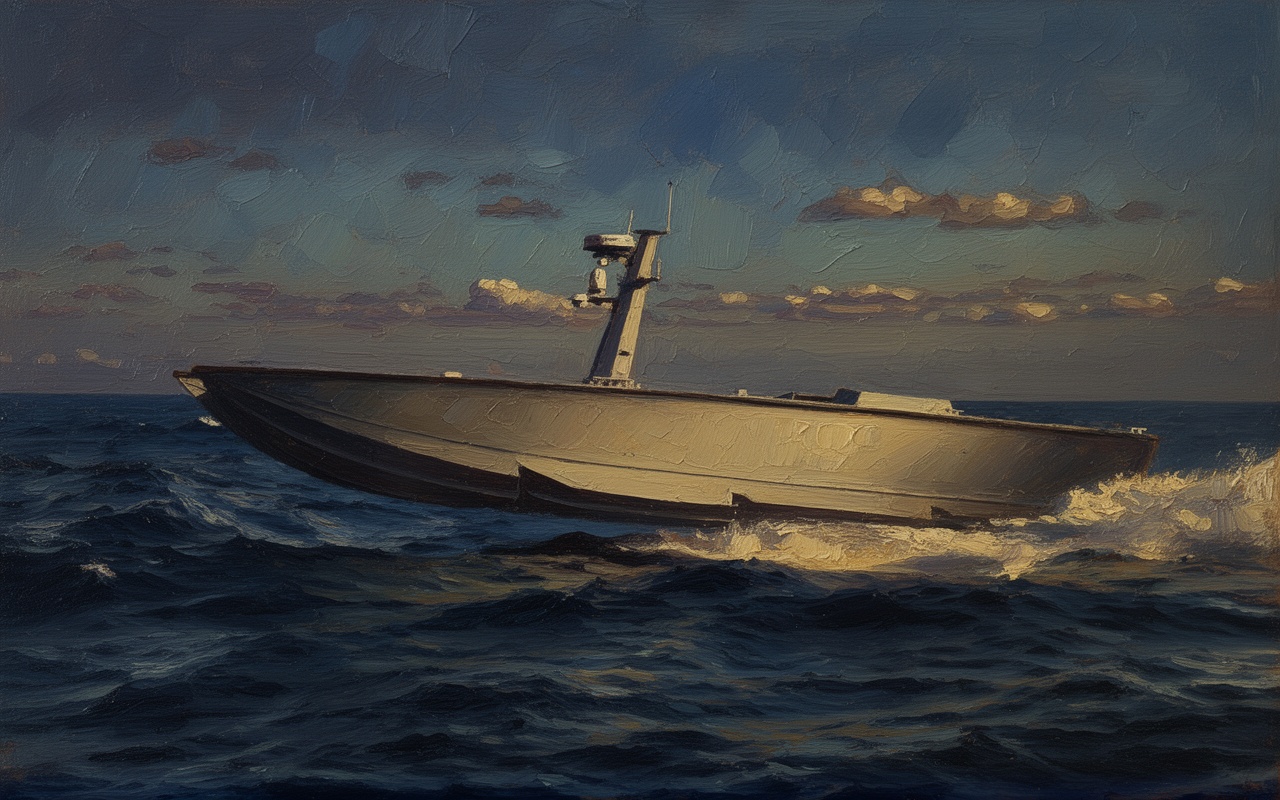
MARTAC T38 USV Completes 192-Hour Autonomous Mission
MARTAC's T38 Devil Ray has achieved a groundbreaking 400 NM autonomous mission, demonstrating advanced operational capabilities. This development could transform naval operations and surveillance strategies for maritime security.
MARTAC's T38 Devil Ray unmanned surface vessel (USV) has successfully completed a record-setting 192-hour autonomous mission off the coast of California, covering a distance of 400 nautical miles. This mission highlights the vessel’s endurance and operational reliability, which had not been achieved in its class prior to this event. The unmanned vessel was monitored by Naval Air Warfare Center personnel, showcasing advanced operational control.
The T38 Devil Ray's ability to operate autonomously for an extended duration emphasizes the growing capabilities within maritime unmanned systems. Designed to execute various missions, the T38 is expected to serve roles in surveillance, reconnaissance, and potentially combat scenarios, enhancing naval operational effectiveness. The mission took place without any human intervention, further demonstrating the technology's readiness for deployment in critical maritime operations.
This achievement represents a significant step forward in the development of unmanned surface vessels, particularly as navies worldwide look to integrate more autonomous systems into their fleets. The persistent presence of unmanned vessels offers strategic advantages in monitoring vast oceanic areas and responding to threats more effectively.
The T38's advanced systems include state-of-the-art navigation and communication technology, allowing it to operate independently while transmitting vital data in real time. Such capabilities set a new benchmark for operational potentials of unmanned maritime vessels, positioning MARTAC as a leader in the sector.
Looking forward, this successful mission could lead to increased investment in unmanned maritime technologies, as militaries seek to bolster their capabilities in an increasingly contested maritime domain. The implications for naval strategy are profound, shifting focus toward innovative, cost-effective solutions for security and surveillance operations.