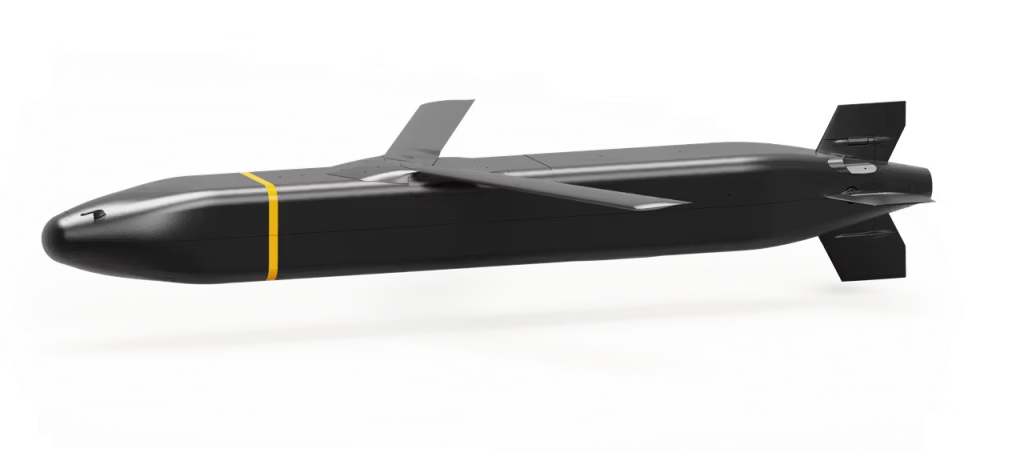
Massive U.S. Missile Order Expands Anti-Ship Arsenal Potential
The U.S. Pentagon's order of 10,000 Low-Cost Containerized Missiles may significantly enhance American maritime strike capabilities. This move is a direct response to the need for replenishing stocks and increasing anti-ship defenses amid growing maritime threats.
The Pentagon has placed a substantial order for over 10,000 Low-Cost Containerized Missiles (LCCM) to bolster its anti-ship arsenal. With designs from five awarded defense contractors, these missiles are designed to include dedicated maritime-launch and strike variants, enhancing U.S. naval capabilities on multiple fronts.
This procurement comes as the U.S. seeks to replenish missile stocks that have been significantly depleted during recent engagements in the Middle East. The LCCMs are expected to play a crucial role in U.S. maritime strategy, allowing the military to respond to evolving naval threats more effectively.
Strategically, expanding the anti-ship arsenal is vital for maintaining maritime superiority in contested waters. The integration of these missiles can help the U.S. deter potential adversaries while providing a more robust response capability in the face of escalating tensions.
Technically, the Low-Cost Containerized Missile systems are designed to be versatile, supporting land-based and naval deployment. By opting for containerized variants, the U.S. can facilitate rapid logistics and deployment, essential in dynamic operational environments.
In the long term, this procurement is likely to reshape U.S. naval capabilities, enhancing deterrent measures and preparing for increasingly sophisticated maritime conflicts. As global maritime dynamics shift, the U.S. aims to ensure its forces remain ahead of adversarial developments.