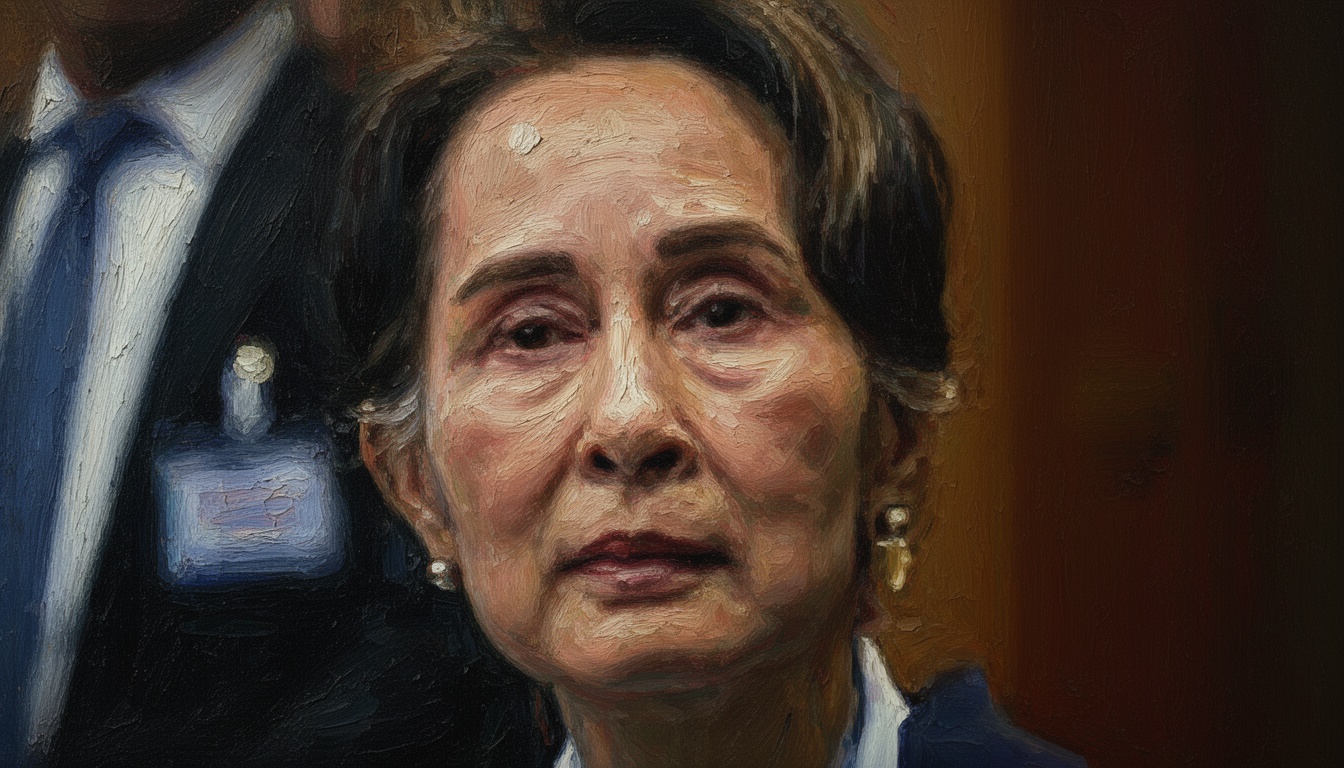
Myanmar's Aung San Suu Kyi Transferred to House Arrest
The relocation of Aung San Suu Kyi to house arrest raises concerns over Myanmar's political stability. Her detention since the 2021 coup has significant implications for the country's future.
Aung San Suu Kyi, the former leader of Myanmar and Nobel Peace Prize laureate, has been moved to house arrest according to military sources. Since being overthrown in a military coup in February 2021, she has remained in detention under controversial circumstances.
Suu Kyi's imprisonment is part of a wider crackdown on democratic leadership following the military's seizure of power. Her government had made significant strides toward democratisation before the coup, and her ongoing detention raises serious questions about the future of democracy in Myanmar.
The strategic significance of Suu Kyi's house arrest lies in the fact that she remains a symbol of resistance against military rule in Myanmar. Her status as a global figure has implications not only domestically but also internationally, as various countries watch the situation closely and respond with statements advocating for her release.
Operationally, the military junta has faced significant internal resistance since seizing power, leading to ongoing clashes with pro-democracy forces. Reports indicate a continuing increase in both armed clashes and civil disobedience movements across the country, which challenge the military's authority and complicate governance.
The relocation of Suu Kyi may have immediate consequences for negotiations between the military and opposition groups. Moving her to house arrest could be seen as an effort to control public perception while limiting her outreach, but it also risks further escalation of unrest among supporters who demand her freedom and restoration of the democratic process.