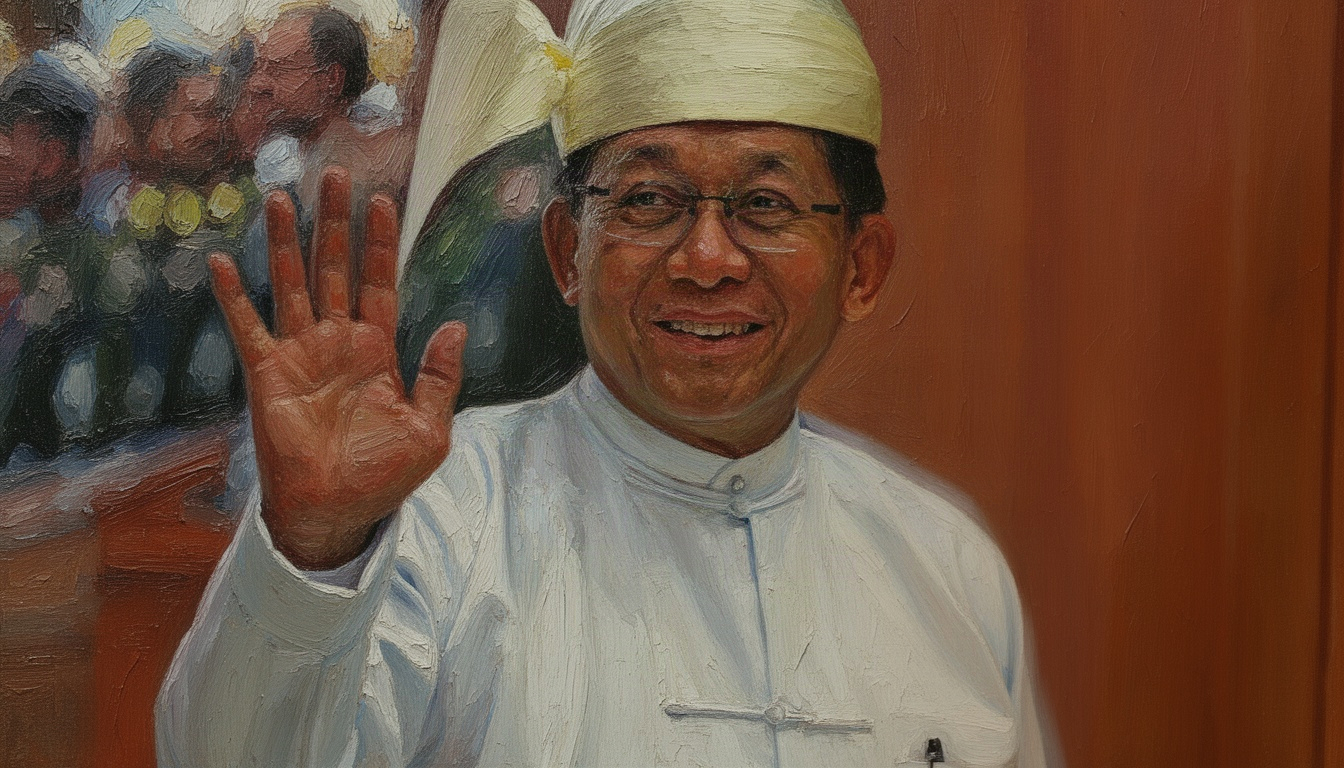
Myanmar's Min Aung Hlaing Receives Red-Carpet Welcome in Thailand
Myanmar leader Min Aung Hlaing, wanted for war crimes, aims for normalization with Thailand amidst ongoing civil conflict and international sanctions.
Min Aung Hlaing, Myanmar's leader and former general, is scheduled to receive a red-carpet welcome in Thailand. This visit marks a significant event as the diplomatic tension between Myanmar and neighboring countries shows signs of easing. The trip is seen as an attempt by Min Aung Hlaing to rehabilitate his international image despite being sanctioned and wanted for war crimes by multiple nations.
Contextually, Min Aung Hlaing seized power from Aung San Suu Kyi's democratically elected government in February 2021. This coup triggered a brutal civil war that has resulted in approximately 100,000 deaths, primarily among civilians, while severely damaging the economy. Continued military operations against various ethnic groups have intensified human rights violations and invited international condemnation.
The significance of this diplomatic thaw lies in potential economic benefits for Myanmar. Thailand is reportedly willing to engage in trade and investment discussions, signaling a shift in regional dynamics. As the ASEAN bloc seeks to facilitate dialogue with Myanmar, Min Aung Hlaing’s trip could be pivotal in reshaping Myanmar's future international relationships.
From a military standpoint, the Myanmar Armed Forces, known as the Tatmadaw, remain heavily involved in ongoing conflicts across the country. The continued international isolation has led to increased reliance on military resources and external support, especially from neighboring countries like China and Russia. This visit could provide an opportunity to secure more foreign investments and arms.
Looking ahead, Min Aung Hlaing’s reception in Thailand may indicate a shift in diplomatic posture from Southeast Asia towards Myanmar. However, the political realities of the internal conflict and ongoing human rights abuses present major hurdles. Future engagements will likely depend on how the international community responds to the ongoing situation in Myanmar and the effectiveness of regional diplomacy efforts.