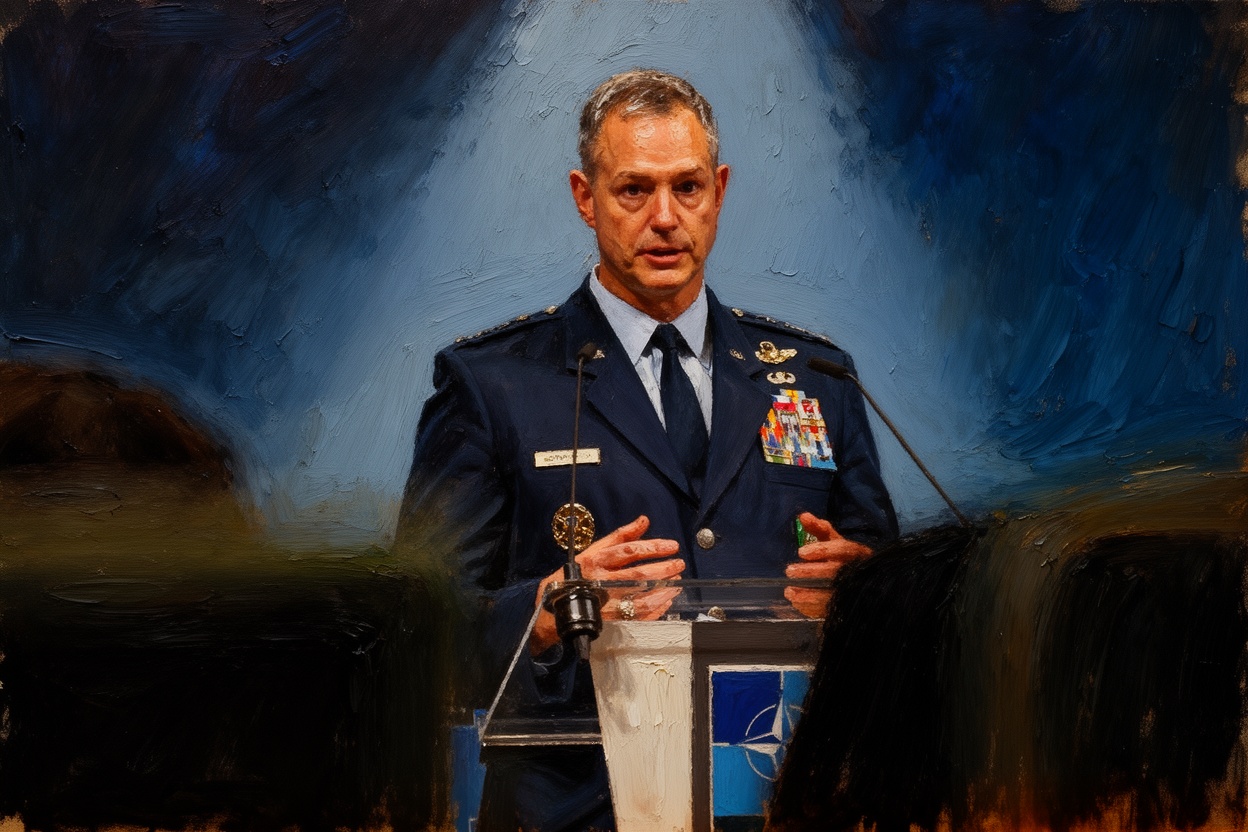
NATO Commander Anticipates More US Troop Withdrawals from Europe
US troop withdrawals from Europe are expected as NATO allies increase defense contributions. This shift reflects a growing reliance on European forces.
General Alexus Grynkewich, NATO's Deputy Commander, announced that Europe should "absolutely" prepare for additional U.S. military withdrawals. This expectation arises as NATO allies step up to provide a larger share of their own defense, potentially redefining the continent's security landscape.
Historically, the presence of U.S. troops in Europe has been a cornerstone of NATO's collective defense strategy. The alliance has benefited from the deterrent effect of American military capabilities, especially amid ongoing tensions with Russia. However, as European nations bolster their defense spending and capabilities, the dynamics of U.S. troop deployment are evolving.
The potential withdrawals signal a shift in the U.S.'s strategic posture in Europe, underlining an increasing expectation for European nations to independently enhance their military readiness. This comes in the wake of recent commitments from various NATO member states to increase their defense budgets and military capabilities.
While General Grynkewich did not specify timelines or numbers regarding troop reductions, he indicated that U.S. forces must adapt to a changing European defense landscape. The continuous enhancement of NATO's eastern flank and the commitment to mutual defense remain paramount, even as the U.S. recalibrates its military footprint.
In assessing the implications, an increased reliance on European forces may lead to a more self-sufficient and capable NATO. However, it also raises questions about the readiness and coordination of European nations in the face of external threats, particularly from adversaries conducting assertive military activities nearby.