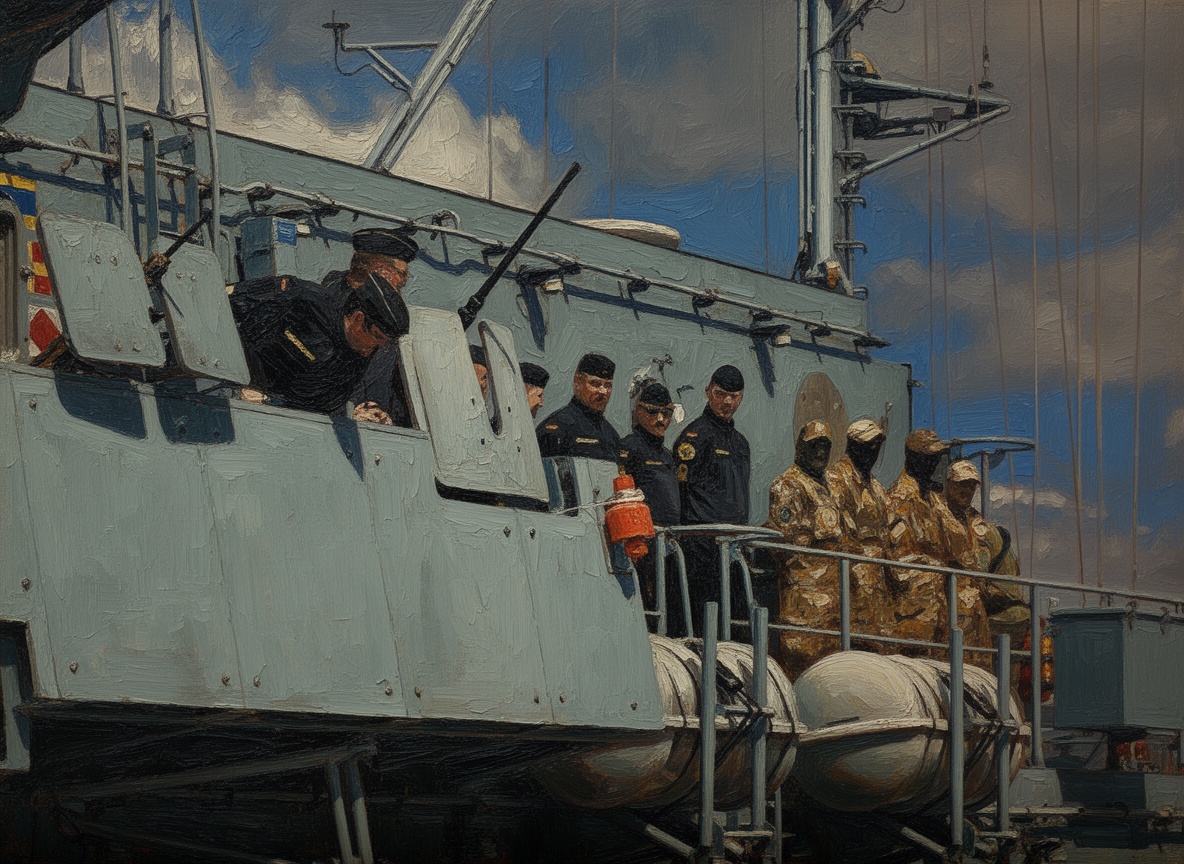
NATO's Presence in Hormuz Not Expanding Mission Scope
NATO’s strategic positioning in Hormuz reflects a broader approach to security beyond geography. This operational philosophy comes amidst rising tensions in regional maritime security.
NATO's ongoing engagement in the Strait of Hormuz is characterized as not representing mission creep. The alliance maintains that its presence is in alignment with its long-standing view that collective security cannot be confined to geographical boundaries. As tensions rise in the region, NATO's activities are seen as a proactive response to evolving maritime threats.
Historically, NATO has approached security from a comprehensive perspective, acknowledging that alliances must adapt to new challenges. The Strait of Hormuz, a strategic chokepoint for global oil supply, has significant implications for international stability and trade. NATO's involvement in the area may be seen as essential in countering potential threats from hostile state actors.
This strategic repositioning underscores NATO's commitment to deterrence and collective defense. By extending its operational scope, NATO aims to secure maritime routes and ensure the safety of member and allied vessels navigating through potentially dangerous waters. This move highlights a pivotal shift in the alliance’s defensive posture, emphasizing an interconnected view of security.
The operational specifics regarding NATO's assets in the region remain undisclosed, yet the alliance likely involves naval assets capable of rapid deployment. Collective maritime exercises have also been a feature of NATO's engagement strategy in the area, promoting interoperability among member fleets.
As NATO continues to navigate this complex maritime environment, the potential consequences involve deeper multi-national cooperation and enhanced deterrent capabilities. The alliance seeks to affirm its relevance in a changing geopolitical landscape, ensuring free navigation in critical maritime corridors while addressing threats posed by regional adversaries.