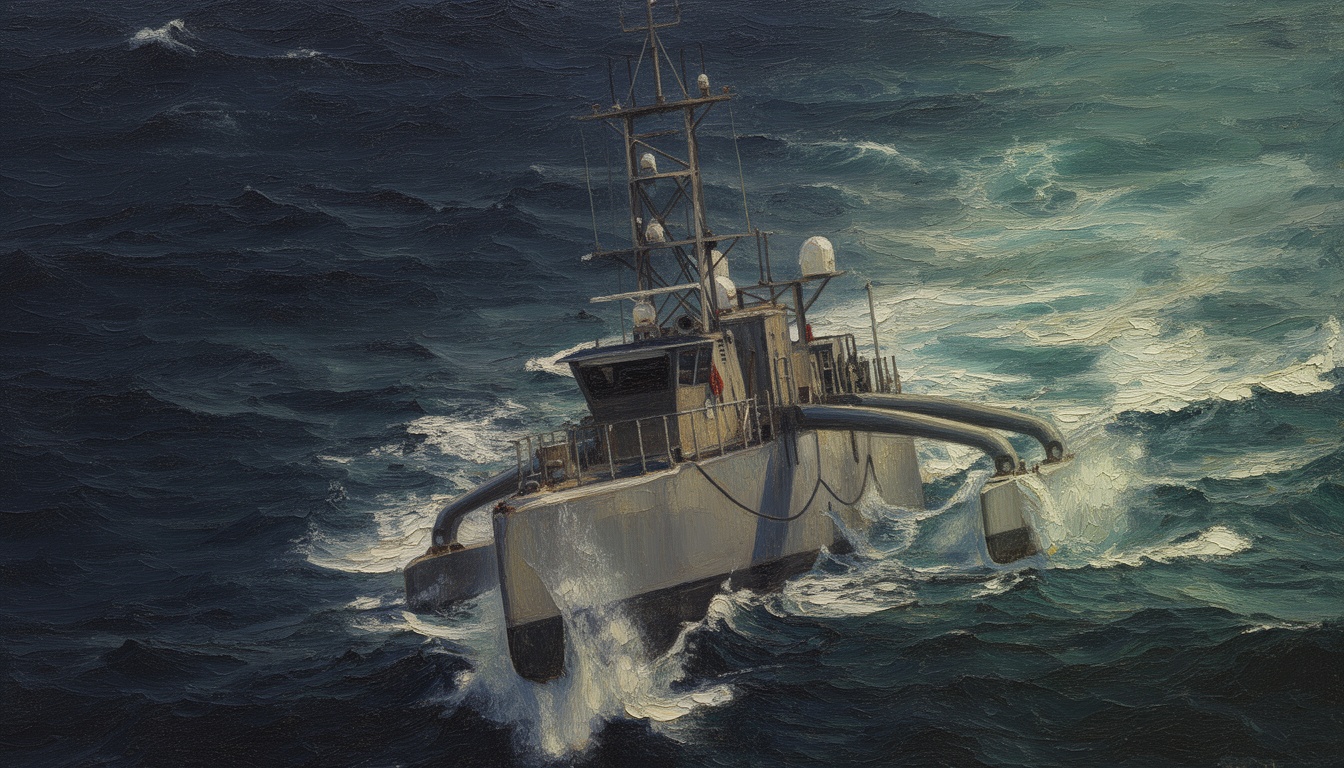
Navy Carrier Deployment with Autonomous Ship Could Revolutionize Operations
The upcoming deployment of a U.S. Navy aircraft carrier alongside an autonomous vessel may redefine naval operational strategies. Experts suggest this could signal a new era in unmanned naval systems.
The U.S. Navy is set to deploy an aircraft carrier equipped with an autonomous surface vessel for the first time, marking a significant evolutionary step in naval operations. This deployment is seen as a potential turning point in how unmanned systems are integrated into naval tactics and strategies.
Background context highlights the increasing strategic importance of unmanned systems in modern warfare, driven by advances in technology and the need for cost-effective solutions. The U.S. Navy's experimentation with autonomous ships illustrates its commitment to adapting to the changing landscape of maritime security.
Strategically, this deployment signals a shift in naval doctrine, emphasizing the role of autonomous platforms in enhancing fleet capabilities. The integration of autonomous vessels is aimed at improving situational awareness and operational effectiveness, potentially transforming the Navy’s approach to maritime conflicts.
Operationally, the autonomous vessel being deployed is designed for a variety of roles, including reconnaissance and logistical support. This represents a significant change in force composition, as traditional manned ships are supplemented by robotic counterparts, potentially increasing the Navy's overall combat readiness.
The implications of this deployment are profound. If successful, it may lead to a broader acceptance of unmanned systems within naval operations, influencing other branches of the military and allied maritime forces. This move could pave the way for more extensive use of robotic vessels in the future, further reshaping naval warfare and strategy.