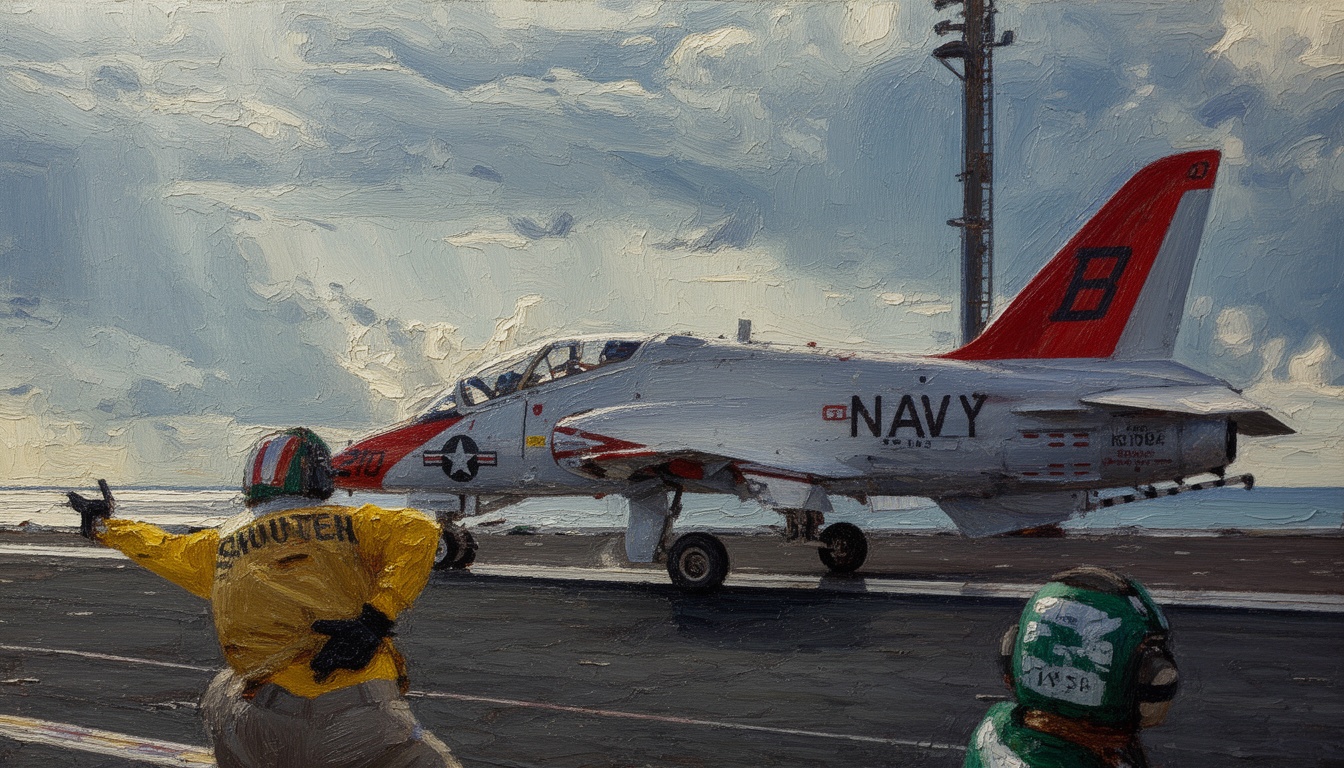
Navy Must Accelerate New Trainer Program As Competitors Withdraw
The U.S. Navy faces dwindling options for T-45 replacement as major contractors exit. Immediate action is required to ensure the program's success.
The U.S. Navy is under pressure to hasten the development of its new trainer aircraft following the withdrawal of Boeing and Lockheed Martin from the competition to replace the T-45 Goshawk. With limited alternatives remaining, Navy officials face a critical point in the training aircraft program.
The T-45 Goshawk has served as the Navy's primary jet trainer since the late 1990s. Its limitations have prompted a search for a more advanced replacement that can better meet the demands of modern combat training. Boeing's and Lockheed Martin's exit means the Navy’s options have significantly narrowed, emphasizing the urgency of finding a viable successor.
Strategically, the withdrawal of these two major aerospace companies could undermine the Navy's readiness and future pilot training capabilities. The Navy must not only find a suitable replacement but also do so in a timely manner to ensure that pilot training does not suffer as a result of the ongoing transition.
The Navy has previously invested in the T-45 program, which has faced various technical challenges. Future plans must focus on a platform that incorporates cutting-edge technology and training methodologies. A budget and timeline must be established promptly to attract new competitors or to utilize informal partnerships.
Should the Navy fail to advance the trainer program quickly, it risks leaving a gap in pilot training that could affect operational effectiveness. Stakeholders will be watching closely as decisions are made in the coming weeks, understanding the broader implications for naval aviation and preparedness.