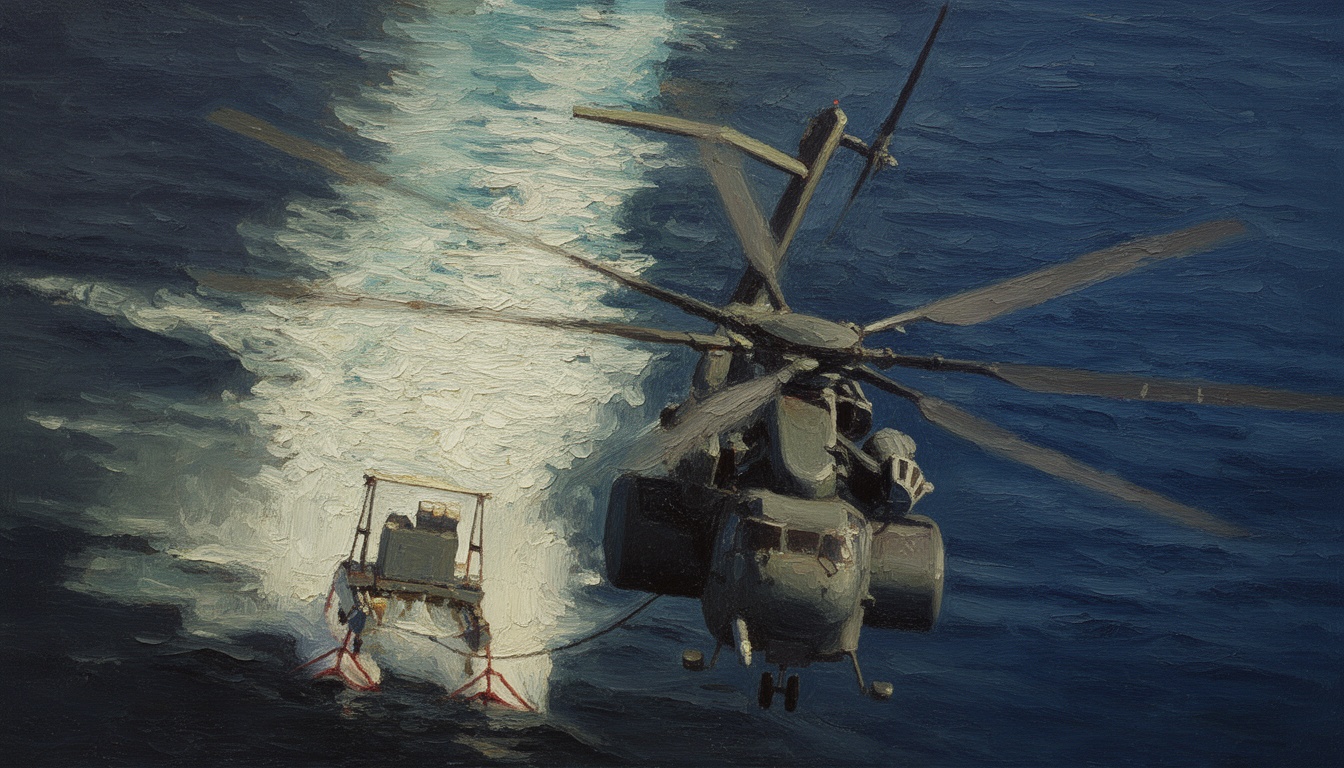
Navy Pilot Insights on MH-53E Sea Dragon Operations
A former Navy pilot reveals the challenges and experiences of flying the MH-53E Sea Dragon for mine-sweeping operations. This analysis highlights the strategic role of such aircraft in modern naval warfare.
A former pilot of the Navy's MH-53E Sea Dragon has provided valuable insights into the complexities of operating this advanced mine-hunting helicopter. The MH-53E is one of the largest and most versatile helicopters in the U.S. Navy's inventory, designed specifically for airborne mine countermeasures. With a wingspan of nearly 100 feet and powerful engines, the Sea Dragon can perform a variety of missions in challenging environments.
During operations, pilots face numerous challenges, including navigating difficult terrains and unpredictable weather conditions. The Sea Dragon is uniquely equipped with advanced sonar and mine-detection systems that allow it to sweep vast areas of water effectively. The combination of technology and skilled piloting is essential for successfully locating and neutralizing underwater mines that pose threats to naval vessels.
The strategic significance of mine-hunting efforts cannot be overstated. Mines can disrupt naval operations, making these efforts crucial for maintaining maritime security. The Sea Dragon contributes to a layered defense strategy, ensuring safe passage for allied naval forces. Its ability to operate in diverse environments enhances its utility for coalition operations around the globe.
From an operational perspective, the MH-53E is equipped with sophisticated radar systems and specialized mine-detection tools. These include the AN/AQS-14A sonar and the airborne laser mine detection system, which provide vital data to identify and categorize mines. The aircraft can lift heavy payloads, further increasing its capabilities in supporting anti-mine operations.
Looking ahead, the role of mine countermeasure helicopters like the MH-53E is expected to evolve as new technologies emerge. The continued investment in aerial mine warfare capabilities will be critical for maintaining a competitive edge in future naval conflicts. Continuous training and adaptation to modern threats will ensure that pilots remain effective in safeguarding vital maritime interests.