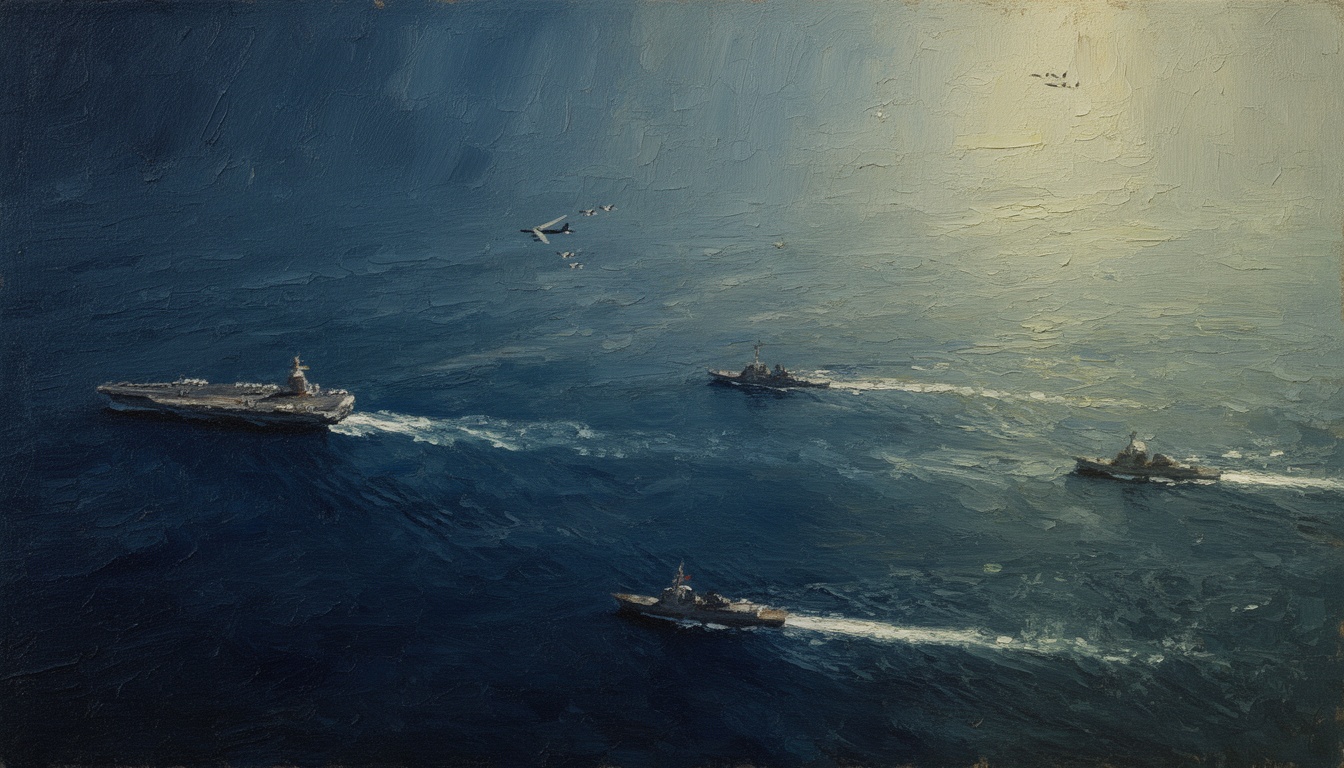
Navy Secretary Urged to Articulate Maritime Strategy
The US Navy faces pressure to develop a clear maritime strategy amid potential political support for expansion. Bruce Stubbs emphasizes the need for public communication to pursue a larger naval force.
The newly appointed Navy Secretary is tasked with a critical mission: to clearly articulate a maritime strategy for the United States Navy. As political conditions appear favorable for increasing naval capabilities, the absence of a coherent public strategy presents a significant challenge. Bruce Stubbs, a veteran of naval operations, stresses the urgency of this task, urging the department to communicate its vision effectively.
Historically, the US Navy has pivoted during times of strategic need, adapting to shifting geopolitical landscapes. With growing naval competition, particularly in the Indo-Pacific region, establishing a public maritime strategy is essential to justify and secure necessary funding for fleet expansion. Such clarity can galvanize public support and foster congressional backing as decisions regarding shipbuilding funding come to the forefront.
Strategically, the US Navy's ability to project power globally hinges on having a well-defined naval posture that aligns with national interests. A clear maritime strategy will allow the Navy to articulate its intended role in securing trade routes and addressing emerging threats like those posed by rival maritime nations.
On a technical level, the Navy's ongoing modernization programs, including the construction of Gerald R. Ford-class aircraft carriers and the Virginia-class submarines, highlight the urgency of defining operational requirements. Funding estimates for expanding the fleet require careful articulation as the Navy aims to balance current operational demands with future capabilities.
Moving forward, the lack of a public strategy could jeopardize the Navy's expansion ambitions. If the Navy Secretary cannot effectively communicate the need for a stronger naval presence, it may hinder national defense initiatives and ultimately affect global maritime stability.