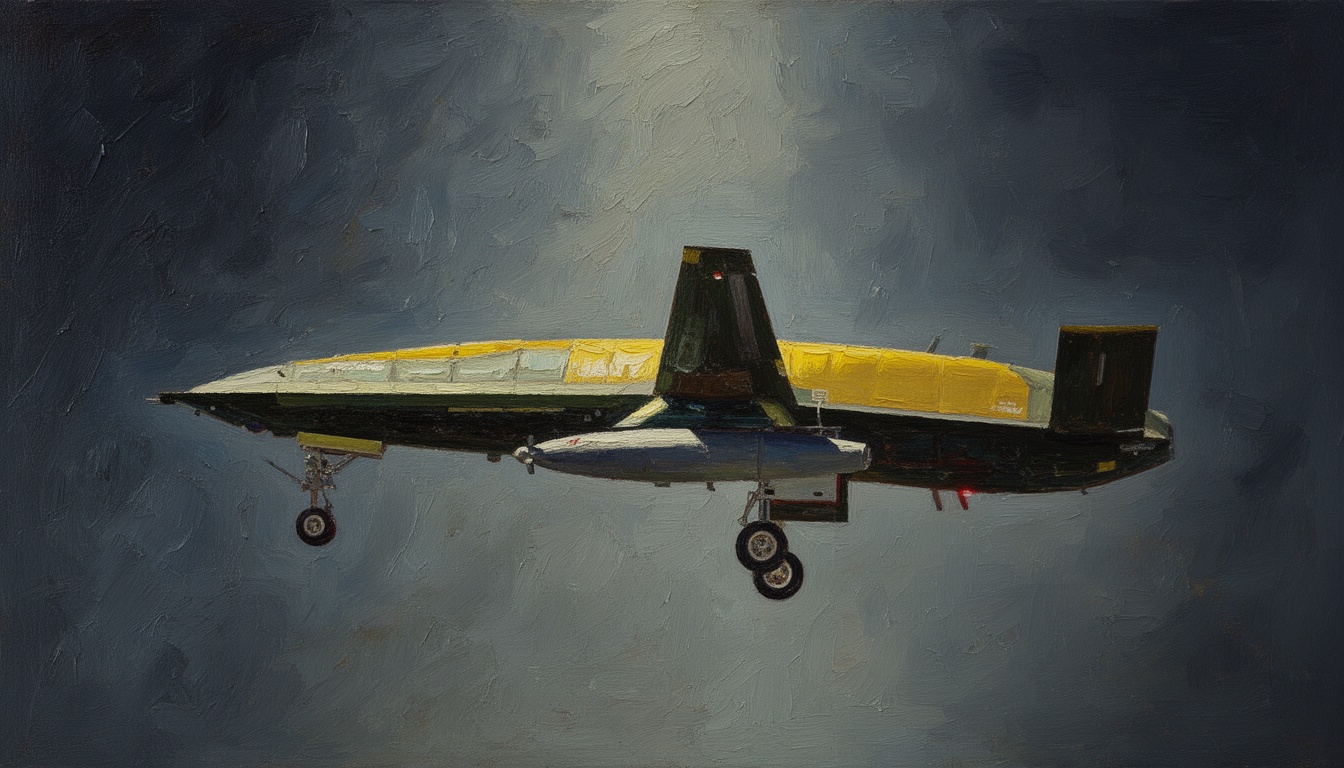
Navy’s MQ-25 Stingray Enters Low-Rate Initial Production
The U.S. Navy prepares to begin initial production of the MQ-25 Stingray UAV. This marks a significant advancement in naval aviation capabilities and aerial refueling technologies.
The U.S. Navy has announced that it is moving forward with low-rate initial production of the MQ-25 Stingray unmanned aerial vehicle (UAV). A contract for the production of three aircraft is anticipated to be awarded this summer, signaling a pivotal step in the Navy's modernization efforts.
The MQ-25 Stingray is designed to serve as a carrier-based aerial refueling drone. This aircraft not only extends the operational range of naval aircraft but also enhances flexibility in mission planning. The decision to enter production aligns with increasing demands for sustained naval air operations and improved fuel logistics.
Strategically, the MQ-25's development underscores the U.S. Navy's commitment to advancing its unmanned systems capabilities, which play a crucial role in contemporary maritime warfare. As peer competitors enhance their naval arsenals, the MQ-25 is expected to provide a significant force multiplier for carrier strike groups.
The MQ-25 features multiple capabilities, including autonomous flight operations, advanced sensor suites, and the ability to refuel various aircraft types. Its introduction into service is poised to reshape naval air operations and enhance the survivability of carrier strike groups in contested environments.
In conclusion, the impending production of the MQ-25 Stingray could mark a transformative phase for naval aviation, allowing the U.S. Navy to maintain a tactical edge against adversaries. The delivery of these aircraft will be closely monitored as the Navy prepares for expanded operational use in the coming years.