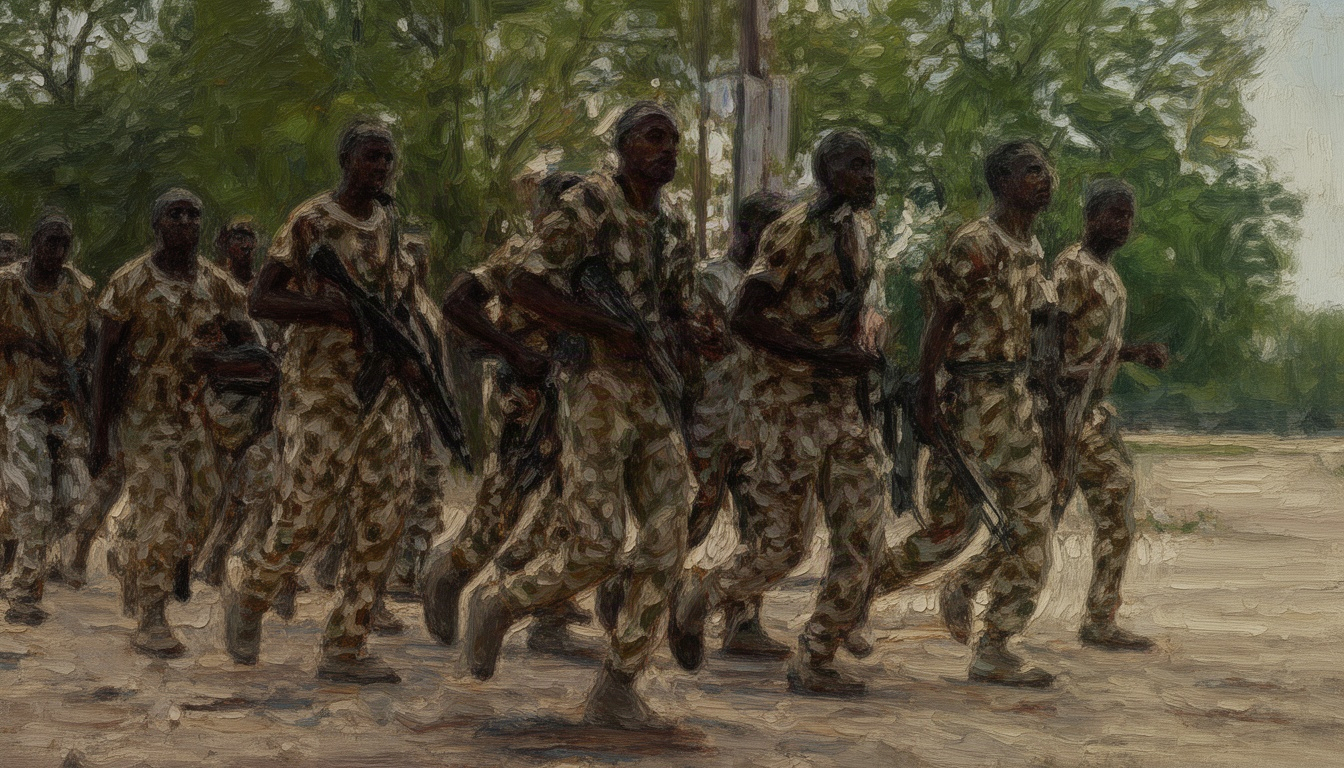
Nigeria's President Orders 80% Salary Increase for Junior Soldiers
This significant wage hike comes amid significant security challenges in Nigeria. The dramatic increase aims to bolster morale within the military amid ongoing threats.
Nigeria's President Bola Ahmed Tinubu has ordered an unprecedented 80% salary increase for junior soldiers. This decision was announced as the Nigerian security forces face mounting pressures from diverse threats, including terrorism and insurgency. The increase is expected to take effect immediately, reflecting the urgency of addressing the welfare of troops in the field.
The Nigerian military has been under significant strain as it confronts groups such as Boko Haram and increasingly sophisticated crime syndicates. Over the recent years, these threats have proliferated, challenging the capabilities of the armed forces. Against this backdrop, Tinubu's administration seeks to enhance troop morale and retention through improved compensation.
Strategically, this move is significant as it aims to stabilize Nigeria’s internal security forces while also enhancing the military's overall effectiveness. Experts have noted that financial incentives are critical in motivating personnel, particularly in high-risk environments. Given the multifaceted nature of the threats, a well-compensated military force may play a crucial role in countering these challenges.
Technically, the implementation of such a substantial salary adjustment will require careful budget planning by the Nigerian Ministry of Defense. The anticipated financial impact could significantly increase the military's personnel budget over the coming fiscal years. Observers will closely watch how this change in compensation influences both operational readiness and recruitment into the armed forces.
Moving forward, this salary increase might lead to improved performance and a higher retention rate among junior soldiers. However, the true test will be the effectiveness of these soldiers in addressing ongoing security threats. The government’s commitment to enhancing military welfare will likely influence future policy decisions related to national security and defense spending.