North Korea's Kim Reinforces Nuclear Capabilities Ahead of Xi Visit
Kim Jong-un's nuclear ambitions intensify in response to regional dynamics and security concerns. Increased trilateral dialogue among the US, Japan, and South Korea pressures Pyongyang.
North Korean leader Kim Jong-un has amplified the country's nuclear capabilities ahead of an expected visit from Chinese President Xi Jinping. This heightened focus on nuclear armament coincides with concerns stemming from recent discussions between Seoul and Washington regarding nuclear submarine cooperation. Analysts interpret this development as a strategic maneuver by Kim to assert Pyongyang's position amid regional tensions.
The KCNA (Korean Central News Agency) reported on Friday the significance of this timing, emphasizing that it relates to China's impending negotiations and North Korea's perception of threats in its sphere of influence. With the dynamics of the US-South Korea-Japan trilateral security conversations increasing, Kim appears determined to underline his regime's nuclear status as a counterbalance to perceived encroachments by neighboring nations.
Strategically, this move underscores Kim's priorities in the face of shifting power balances in Asia. As South Korea engages with the United States for advanced military technologies, including nuclear-equipped submarines, North Korea's response is likely aimed at deterrence. The request for military assistance from Washington may galvanize Kim's nuclear agenda, aiming to fortify his regime's security.
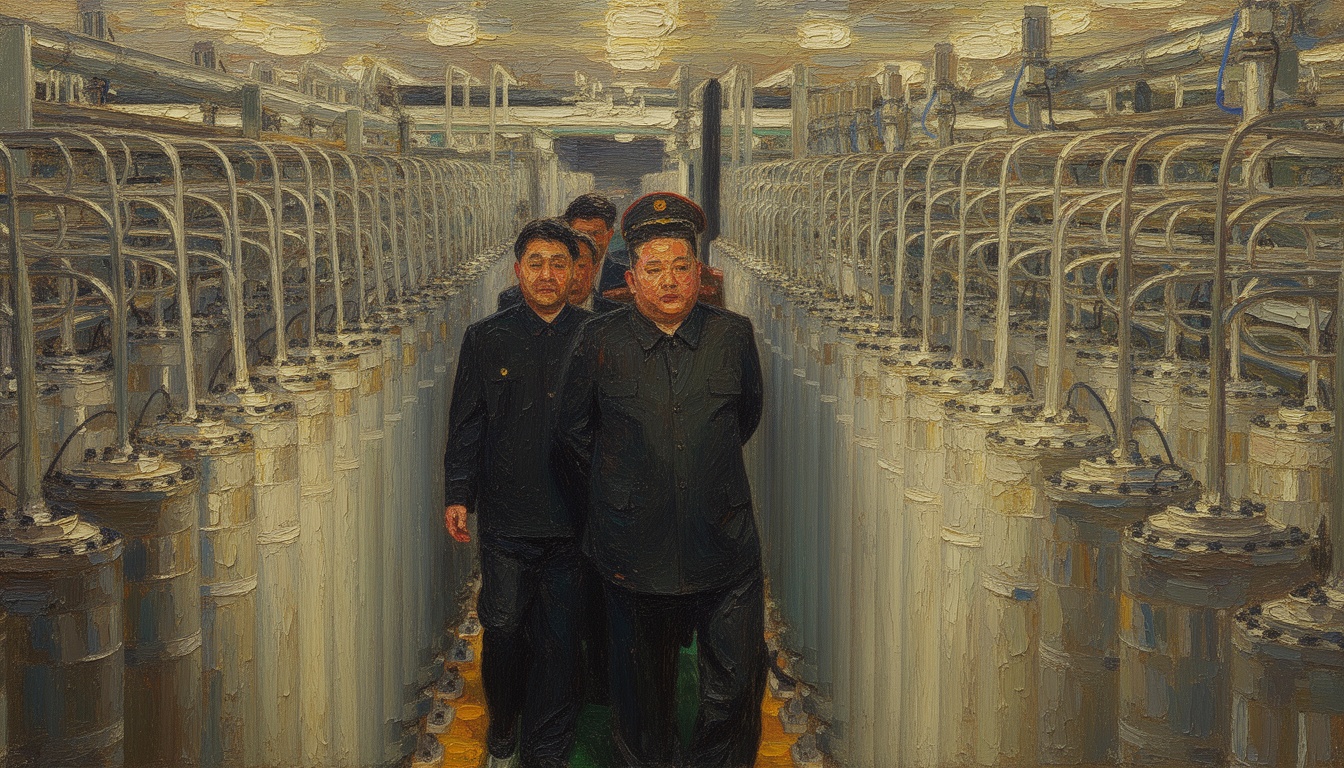
Operationally, North Korea's latest activities include enhanced missile tests and development of nuclear-processing facilities. Reports indicate that the country continues to invest in its strategic weapons systems, reinforcing capabilities that could threaten regional stability. With recent developments in missile technology and nuclear infrastructure, Kim's regime is significantly bolstering its military posture.
Given these advancements, the implications for international security are substantial. Should Kim's nuclear program continue to advance unfettered, the potential for increased military confrontation in the region rises. As North Korea positions itself more assertively, the international community must prepare for potential recalibrations in defense strategies from surrounding nations, particularly those engaged in trilateral security frameworks with the US.