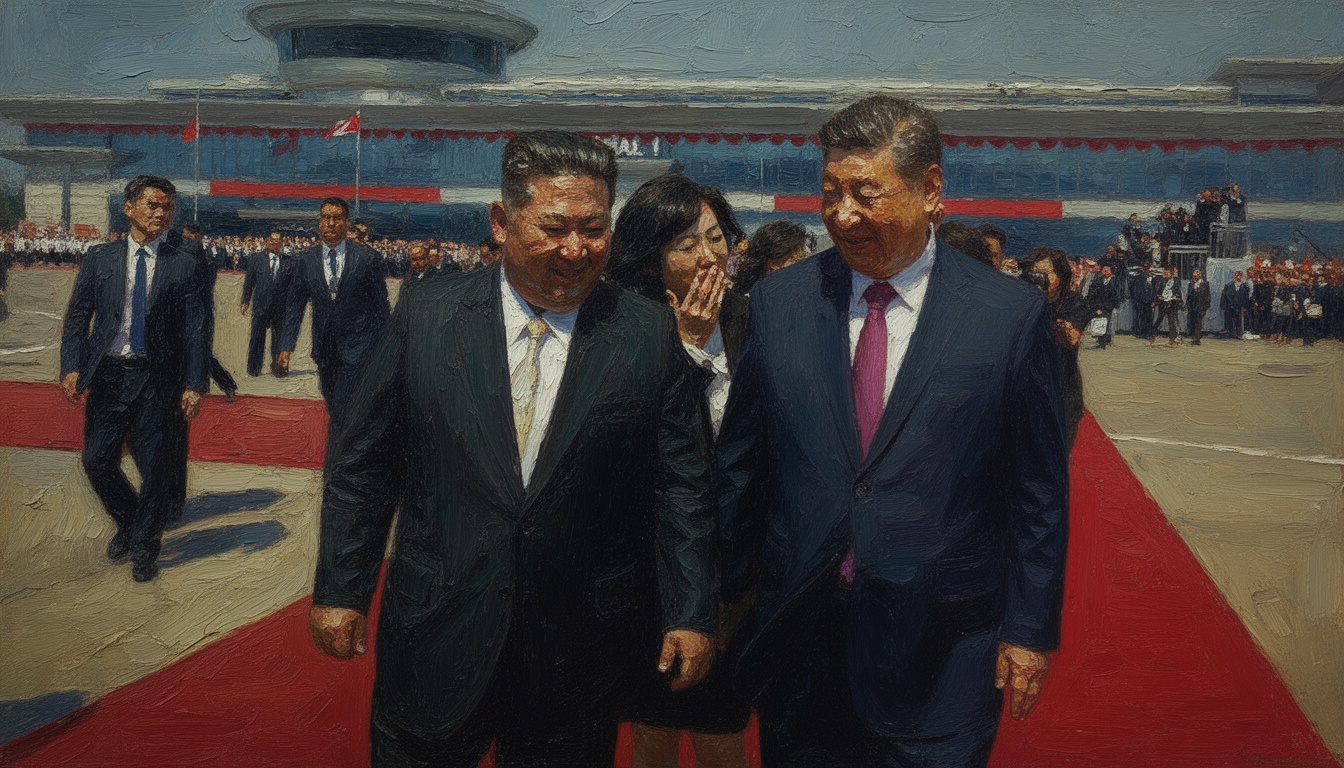
North Korea's Pak Thae-song Visits China for Defense Treaty Anniversary
The visit indicates strengthening ties between North Korea and China as both nations reaffirm their commitment to their treaty.
North Korean Premier Pak Thae-song is set to visit China on Friday for a three-day trip aimed at celebrating the 65th anniversary of the China-North Korea Treaty of Friendship, Cooperation, and Mutual Assistance. This event marks a significant period in which the two nations, traditionally allied, are showcasing their renewed partnership amidst global geopolitical changes.
The treaty, signed in 1961, serves as China's only formal defense agreement and has historically provided a framework for military and political cooperation between Beijing and Pyongyang. As North Korea faces ongoing sanctions and international isolation, this visit symbolizes a strategic alignment with China, strengthening their bilateral relations against external pressures, particularly from the United States and its allies.
This anniversary celebration comes at a time of observable thawing between the two countries, which have previously experienced fluctuations in their cooperation. With both nations seeking economic stability and security amidst regional tensions, the visit by Pak is likely to further solidify their military and economic ties, presenting a united front in response to external threats.
Pak Thae-song is expected to lead a high-level delegation that includes members from both the North Korean party and government. The focus of discussions will likely center around enhancing mutual defense strategies and addressing shared concerns over regional security dynamics. Detailed outcomes from the trip may include potential commitments for increased military cooperation and investment in joint projects.
Moving forward, the implications of this visit could have broader consequences not only for the Sino-North Korean alliance but also for regional stability in East Asia. As both nations reinforce their strategic partnership, the impact on their positioning in the context of US-China rivalries and the broader geopolitical landscape will warrant close monitoring.