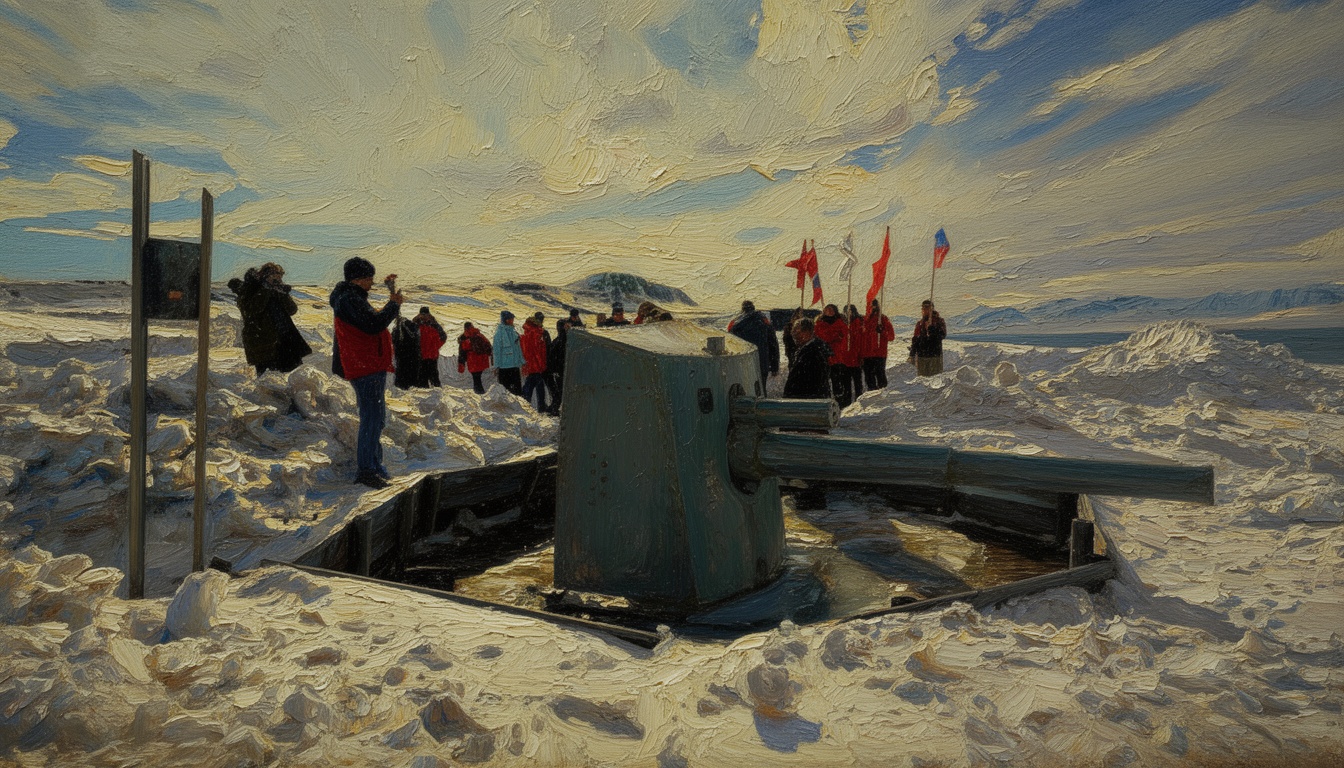
Norway's Svalbard Plays Key Role in Russian Strategy
The Svalbard archipelago highlights Russia's strategic interests near the North Pole. Two Russian settlements operate within NATO member Norway, raising security concerns.
The Svalbard archipelago, located between the Arctic Ocean and the Barents Sea, has become a focal point of Russian activity amidst rising geopolitical tensions. Within this Norwegian territory, two Russian settlements, known as Barentsburg and Pyramiden, have existed for decades, serving as outposts for Russian presence and influence deep within NATO territory.
Historically, Svalbard is of strategic importance due to its geographic location, lying just 1,000 kilometers from the North Pole. The presence of these Russian settlements allows Moscow to establish a foothold in the Arctic region, which has seen increased military and economic interest from multiple nations due to melting ice and potential natural resource exploitation.
The presence of Russian settlements in Svalbard stirs concerns about military activities and intelligence operations near NATO's northern flank. As the Arctic becomes a battleground for influence, the Russian government's investments in the region signal a commitment to maintain a substantial presence despite the icy and isolated conditions.
Barentsburg houses a population of roughly 450 people, mainly involved in coal mining and scientific research. The settlement boasts a Soviet heritage, and its operations represent a unique display of Russia’s endurance in remote areas. Pyramiden, once a thriving mining community, remains a ghost town, serving as a stark reminder of the past and a potential strategic asset for future operations.
The situation in Svalbard represents an evolving dynamic in Arctic geopolitics, where Russia’s actions provoke responses from NATO allies. As Norway continues to monitor Russian activity closely, future developments in this critical area could influence broader security frameworks in the Arctic region for years to come.