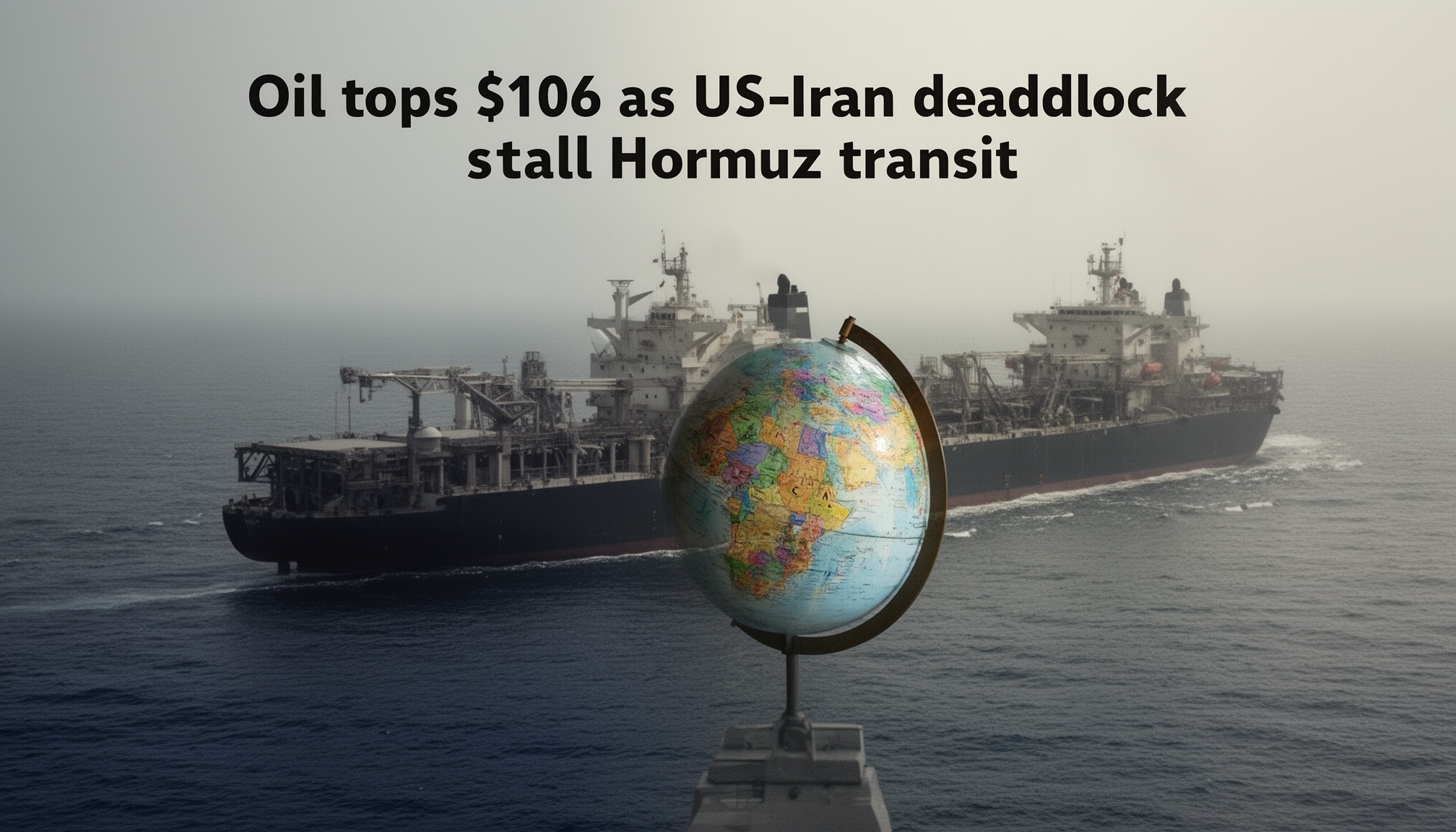
Oil tops $106 as US-Iran deadlock stalls Hormuz transit
Global energy markets spike as US-Iran tensions freeze transit through the Strait of Hormuz. No breakthrough in diplomacy risks supply disruptions and higher risk premiums. Analysts warn of implications for global supply chains, insurance costs, and long-term contracts.
Oil prices jumped above $106 per barrel as a fresh deadlock between the United States and Iran kept the Strait of Hormuz at the center of a volatile energy security tableau. Traders cited potential disruptions to one of the world's most critical chokepoints, where roughly one-third of global seaborne oil passes. The market response reflected concern that either side could escalate actions that constrain shipments through the narrow waterway. Prices moved amid shifting risk assessments and the prospect of punitive measures tied to maritime transit.
The background to the spike includes a long-standing pattern of friction around the Hormuz corridor, where maritime traffic has historically become a flashpoint during periods of heightened U.S.-Iranian tension. Regional actors and allied navies monitor movements with heightened sensitivity, ready to respond to signs of perturbation. Analysts warn that even verbal warnings or procedural hurdles could throttle flows, forcing buyers to seek alternative routes or substitute supplies.
Strategically, the Hormuz bottleneck remains a heat map for global energy security and deterrence calculations. A sustained standoff could prompt supply-side reallocation, pressure on tanker insurance, and shifts in term contracts across Asia and Europe. The risk premium embedded in crude futures could feed into broader inflation dynamics, complicating macroeconomic policy in importer nations.
Operationally, the market is watching for any authoritative signal about transit permissions, escort arrangements, or potential use-of-force incidents near the strait. The U.S. Navy and allied fleets have stressed freedom-of-navigation commitments, while Iran articulates red lines over sanctions regimes and regional influence. If the deadlock persists, tanker rerouting and port congestion could become persistent features of the energy landscape, with durable effects on benchmark spreads and refinery profitability.
Looking ahead, analysts expect volatility to persist as diplomatic channels test resilience and enforcement measures. A breakthrough remains contingent on a broader diplomatic framework, but the risk of inadvertent escalation in a high-stakes theater argues for prudent risk management by shippers and buyers alike until clarity returns on transit and diplomatic intent.