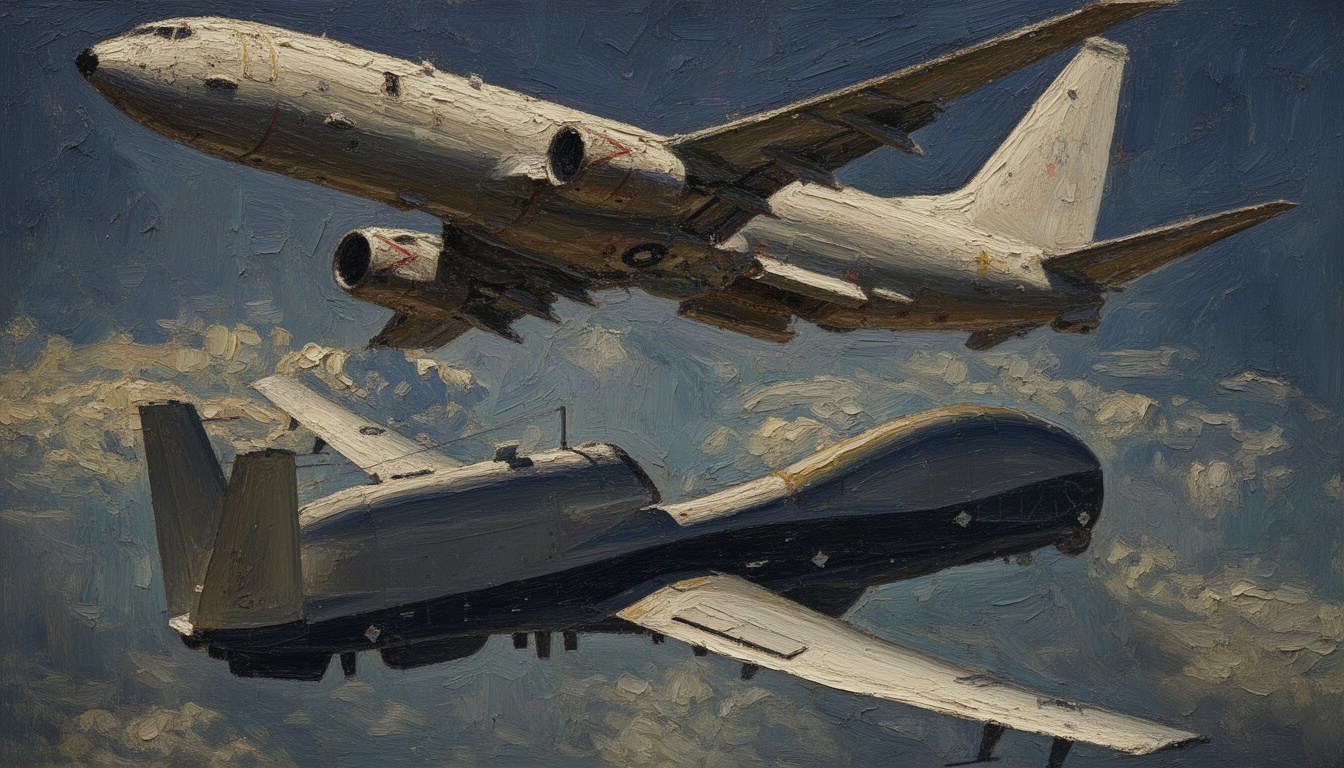
P-8A Poseidon to Directly Control MQ-4C Triton Drones
The integration of P-8A Poseidon and MQ-4C Triton enhances combat effectiveness. Direct control in flight may redefine maritime surveillance and operational capabilities.
The United States Navy is poised to elevate its maritime reconnaissance capabilities with the P-8A Poseidon aircraft gaining the ability to directly control MQ-4C Triton drones in flight. This significant advancement in naval aviation could transform the tactical dynamics of aerial operations, allowing for real-time data sharing and coordinated missions between manned and unmanned platforms.
Historically, the P-8A Poseidon has been primarily tasked with anti-submarine warfare and maritime domain awareness, whereas the MQ-4C Triton is designed for high-altitude, long-endurance surveillance missions. Both systems were developed with complementary roles in mind, but integrating direct control mechanisms positions the P-8A as a more versatile platform on the battlefield, enabling it to manage drone operations directly from the cockpit.
This capability has strategic implications, as it allows for heightened situational awareness and quicker response times, especially in contested maritime environments. The ability to control unmanned systems on-the-fly could enhance mission effectiveness, making the P-8A a pivotal asset in joint maritime security and operational scenarios.
Operationally, the P-8A Poseidon is equipped with advanced surveillance systems and sonobuoys, while the MQ-4C Triton features a suite of sensor technology, including synthetic aperture radar and electro-optical and infrared cameras. Together, they can cover vast areas of ocean with unprecedented detail and speed, significantly improving tactical decision-making in naval engagements.
In the long term, the realization of P-8A's direct control over MQ-4C Tritons will likely lead to an increase in naval force posture and deterrence capabilities, reinforcing the U.S. Navy's dominance in international waters. This integration could serve as a model for future unmanned and manned aircraft collaborations across other military branches worldwide.