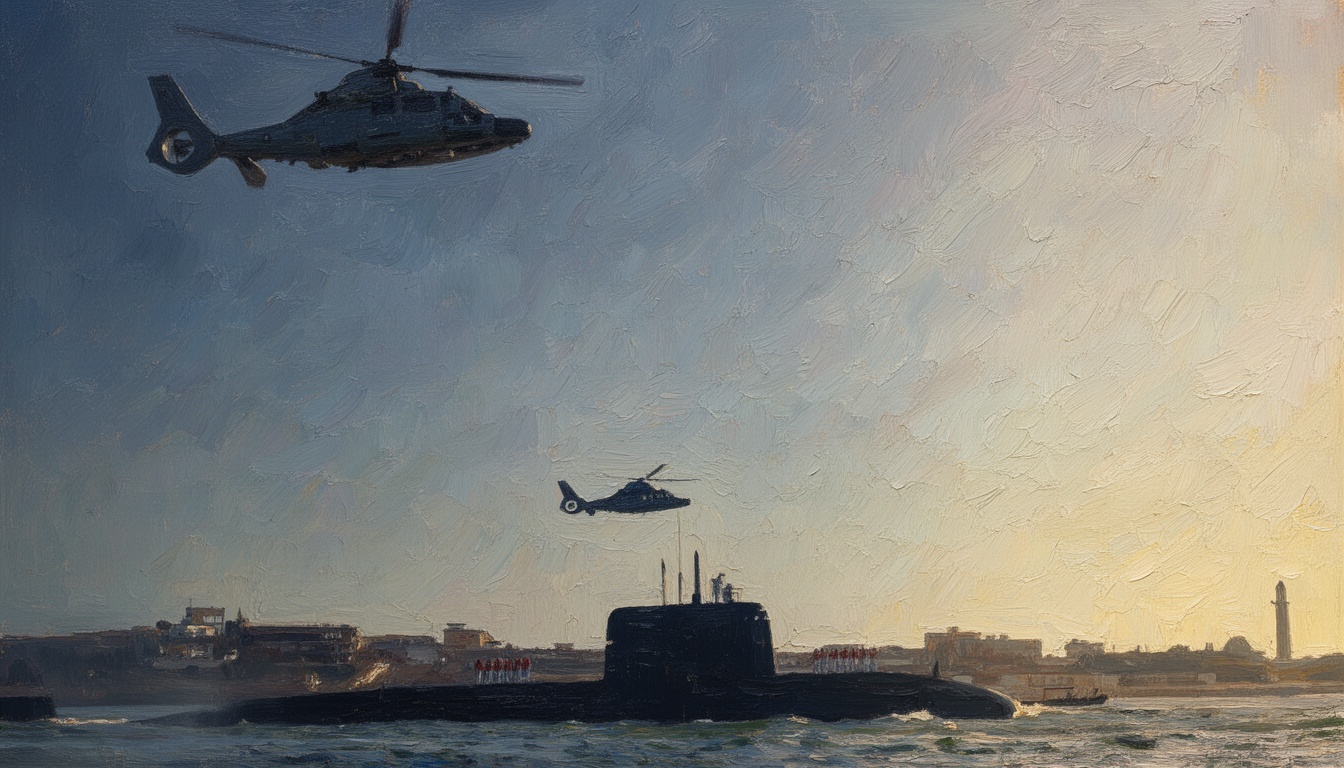
Pakistan Unveils Chinese-Built Stealth Submarine, Provoking India
Pakistan's new PNS Hangor submarine indicates an escalation in naval capabilities, bearing implications for regional security. The operational history of PNS Hangor evokes memories of past conflicts in the Bay of Bengal.
Pakistan's navy has recently showcased its new Chinese-built stealth submarine, the PNS Hangor, raising concerns in India regarding maritime security in the region. This vessel arrived in Karachi on June 11 and is part of a class of eight attack submarines, four of which are constructed in China and the remaining four to be built domestically in Pakistan. This development is particularly noteworthy considering Pakistan’s naval history, as the last submarine it operated in the Bay of Bengal was sank by India in 1971.
The significance of the PNS Hangor is twofold: it marks a significant advancement in Pakistan's naval capabilities and signals a renewed focus on undersea warfare. Pakistan aims to augment its maritime deterrent capabilities with this new submarine fleet amidst ongoing tensions with India. Given that the PNS Hangor is linked to the Daphne-class submarine that previously sank an Indian frigate, the historical context further intensifies the implications of this naval development.
Strategically, the introduction of these submarines comes at a time when both India and Pakistan are enhancing their military assets. The potential deployment of these submarines in the Bay of Bengal raises strategic concerns for India, especially considering the naval balance between the two nations. Islamabad's determination to develop its indigenous shipbuilding capacity, alongside its partnership with China, underscores the shifting dynamics within South Asia’s military landscape.
The PNS Hangor is designed with stealth features and advanced technology, aligning with modern naval warfare trends. This submarine includes capabilities characteristic of modern attack platforms, allowing for covert operations and strategic deterrence. The commitment by Pakistan to build the remaining submarines domestically indicates a long-term investment in military modernization aimed at enhancing overall defense capabilities.
Overall, the commissioning of the PNS Hangor could lead to increased military posturing in the region, further complicating an already tense security environment. The potential for escalation in naval encounters between India and Pakistan cannot be overlooked, and ongoing developments should be closely monitored by international observers as they assess stability in South Asia.