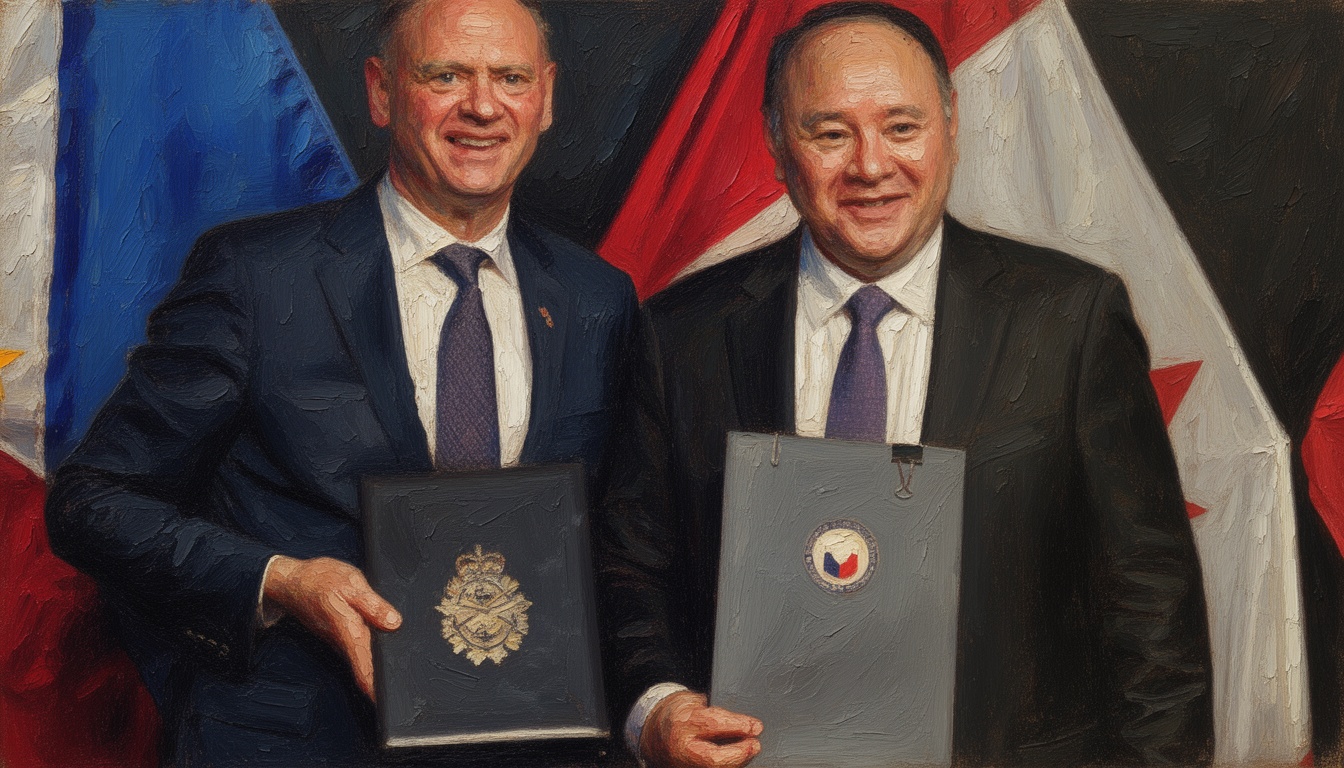
Philippine President's Canada Visit Signals Strategic Indo-Pacific Alignment
Philippine President Ferdinand Marcos Jr.'s visit signals strengthened ties with Canada, crucial for regional security cooperation. This development emphasizes Ottawa's ambitions in the Indo-Pacific region.
Philippine President Ferdinand Marcos Jr.'s four-day official visit to Canada, starting Wednesday, highlights an emerging partnership focused on enhancing defense and maritime cooperation. Scheduled meetings with Canadian Prime Minister Mark Carney aim to deepen bilateral relations through sectors such as trade, energy, labor, and tourism.
The deepening ties come as Canada seeks to establish a more strategic presence among middle powers in the Indo-Pacific, an area increasingly critical for global supply chains and security dynamics. Ottawa's intention to cultivate relationships in the region is underscored by its ambitions to strengthen economic and defense partnerships, echoing broader geopolitical shifts.
Strategically, the Philippines and Canada share common interests, particularly in countering regional threats and ensuring maritime security in the contested waters of the South China Sea. This partnership could enhance Manila's defense capabilities, particularly in light of increasing assertiveness from China in the region.
Marcos' itinerary includes discussions with Canadian business investors, aimed at attracting foreign direct investment in various sectors. This economic engagement aligns with the Philippines' pursuit of infrastructure development and modernization programs, which could bolster its defense readiness.
This visit marks a potential turning point in Canada-Philippines relations, suggesting a mutual commitment to not only economic cooperation but also a shared approach to regional security challenges. As both nations navigate an increasingly complex global landscape, this partnership may serve as a template for collaboration among other like-minded countries in the Indo-Pacific.