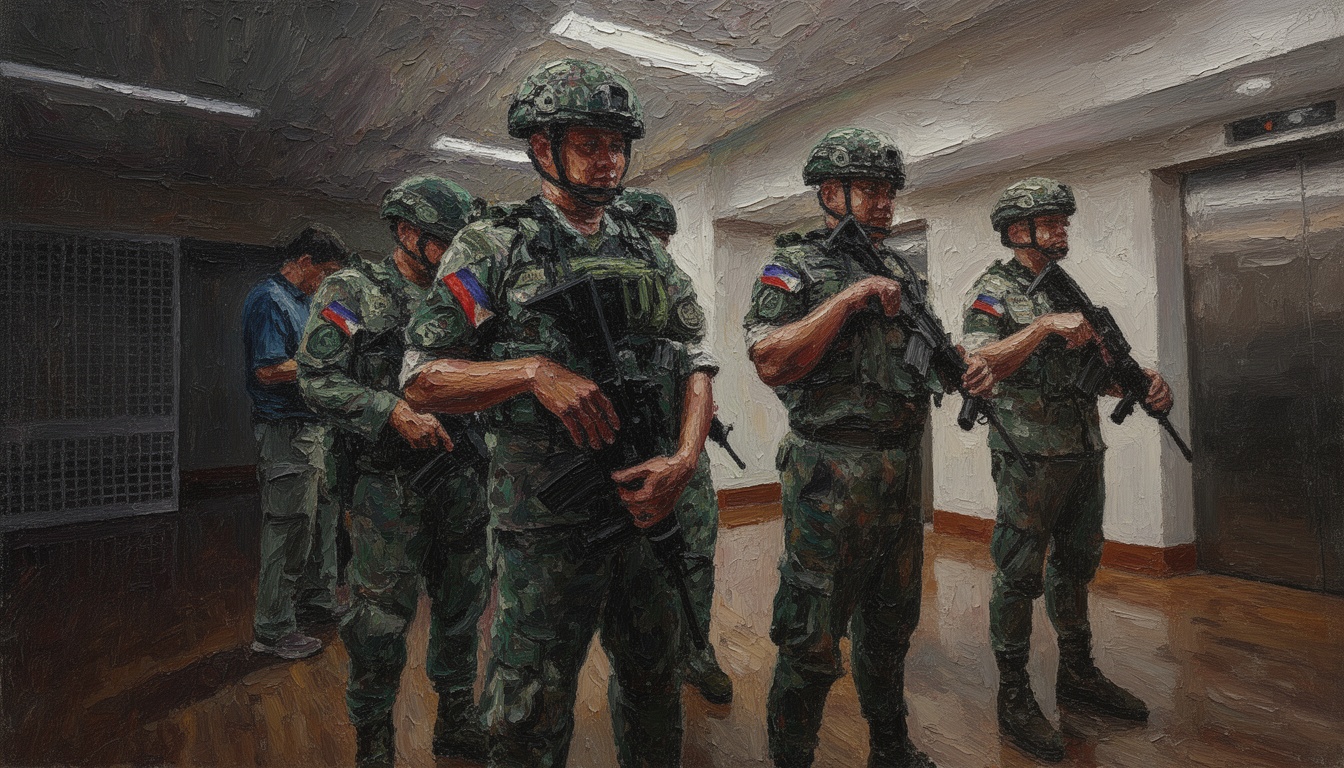
Philippine Senate Shoot-Out Escalates Amid Leadership Crisis
The Philippine Senate faced a shocking shoot-out as tensions soared following the ousting of its leader. The presence of Ronald dela Rosa, a wanted senator, added to the volatility and confusion within the legislative body.
On Wednesday night, a shocking shoot-out erupted in the Philippine Senate, unfolding amidst a backdrop of political turmoil. This incident occurred just days after lawmakers abruptly removed Senate President Juan Miguel Zubiri from his position, intensifying an already tense atmosphere. The situation escalated further when Senator Ronald dela Rosa, a former police chief wanted by the International Criminal Court, made a public appearance in the Senate after six months in hiding.
The incident began shortly after Dela Rosa, known for his controversial stance on crime, sang the alma mater song of the Philippine Military Academy. His presence was met with mixed reactions, heightening fears among lawmakers and staff alike. The constraints of the Senate building, coupled with the recently heightened tensions, set the scene for chaos as multiple shots were reportedly fired during the ensuing confrontation.
The strategic significance of this altercation extends beyond the immediate violence. The Philippine Senate holds critical responsibilities in governance, and such incidents can undermine the rule of law and legislative stability. The appearance of a wanted senator within the legislature tests the institutional integrity and poses challenges to maintaining order and coherence in government proceedings.
Operational details are still emerging, but initial reports indicate that security measures in the Senate were overwhelmed by the events. Witnesses described an atmosphere rife with panic as lawmakers sought to protect themselves from what became a volatile and dangerous situation. The local police reacted swiftly, reinforcing security personnel within the building as the shoot-out unfolded.
Looking ahead, the fallout from this incident could have profound implications for Philippine politics. As calls for accountability and a review of security protocols gain momentum, the incident may alter public perception of the legislative body's effectiveness. The crisis is likely to fuel further discussions regarding the balance of power and the capacity of Philippine institutions to manage internal conflicts and external pressures.