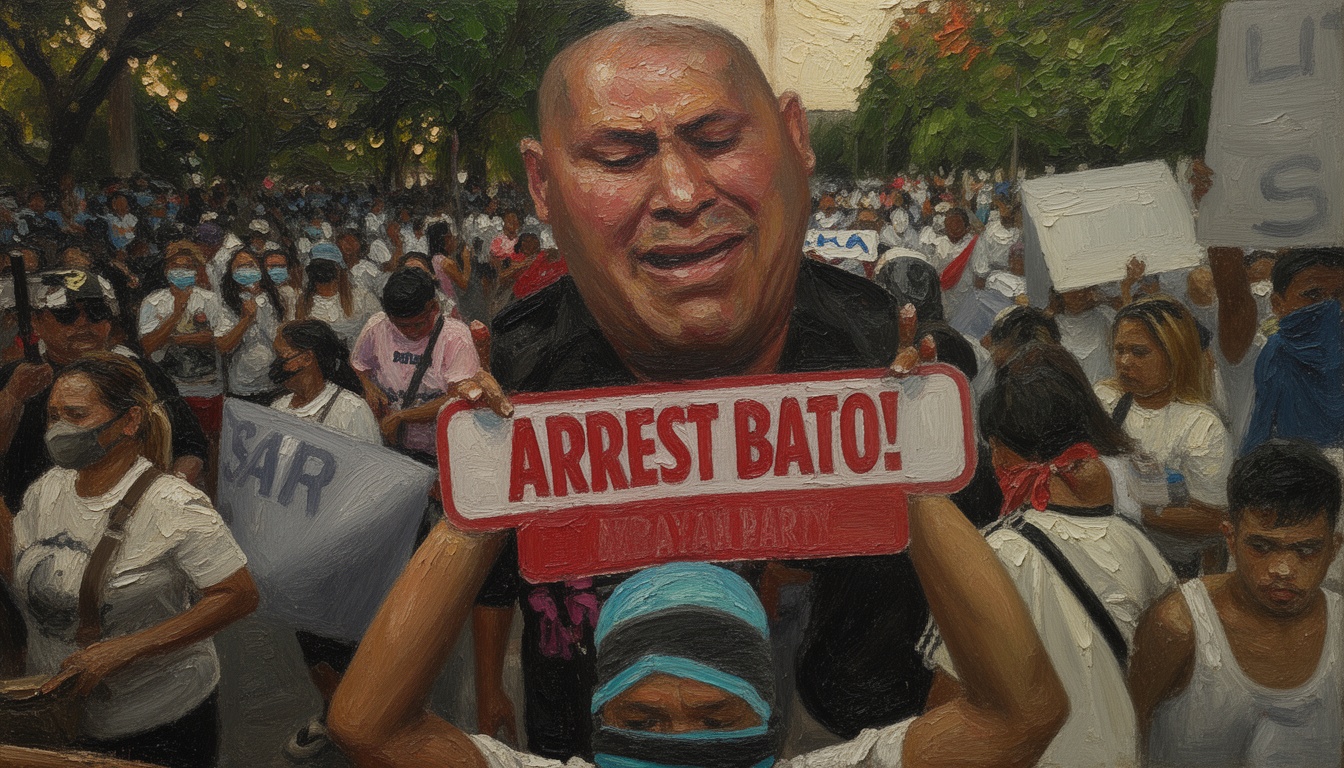
Philippine Senators Align with ICC Arrest Warrant for Dela Rosa
The case of Senator Ronald dela Rosa could impact international legal frameworks and human rights accountability in the Philippines.
Philippine government lawyers have officially requested the Supreme Court to dismiss Senator Ronald dela Rosa's attempt to prevent his arrest. Dela Rosa is a fugitive facing an arrest warrant issued by the International Criminal Court (ICC) for alleged crimes against humanity related to his involvement in the controversial anti-narcotics campaign initiated under former President Rodrigo Duterte. The push to reject his plea emphasizes the urgent need for accountability regarding human rights violations in the Philippines.
Dela Rosa, who formerly served as the chief of the Philippine National Police, was the architect of the brutal 'war on drugs' that resulted in thousands of extrajudicial killings. He has been in hiding since the ICC announced its probe into the actions taken during that period. The involvement of the ICC in this case highlights the increasing scrutiny on national actions concerning international human rights standards. Government officials argue that allowing Dela Rosa to evade justice would set a dangerous precedent.
The strategic implications of this case extend beyond the Philippines, impacting the global fight against impunity for human rights abuses. By supporting the ICC's warrant, the Philippine legal authorities are sending a message that accountability is a priority, especially as the international community calls for significant reforms in the country's approach to law enforcement and human rights.
Technically, Dela Rosa has claimed that the arrest warrant infringes upon his rights, asserting that he played a pivotal role in national security efforts, while the ICC maintains that the evidence suggests systematic violations of human rights during the anti-drug campaign. Philippine legal experts note that this confrontation between national sovereignty and international law could shape the future of both judicial practices within the country and its relations with international human rights entities.
Moving forward, the Supreme Court’s ruling on this matter could either reinforce or undermine the rule of law in the Philippines. As Dela Rosa remains at large, the urgency of this case continues to highlight the global implications of national legal decisions, especially regarding commitments to international human rights treaties, and the need for accountability for those who perpetrate alleged crimes against humanity.