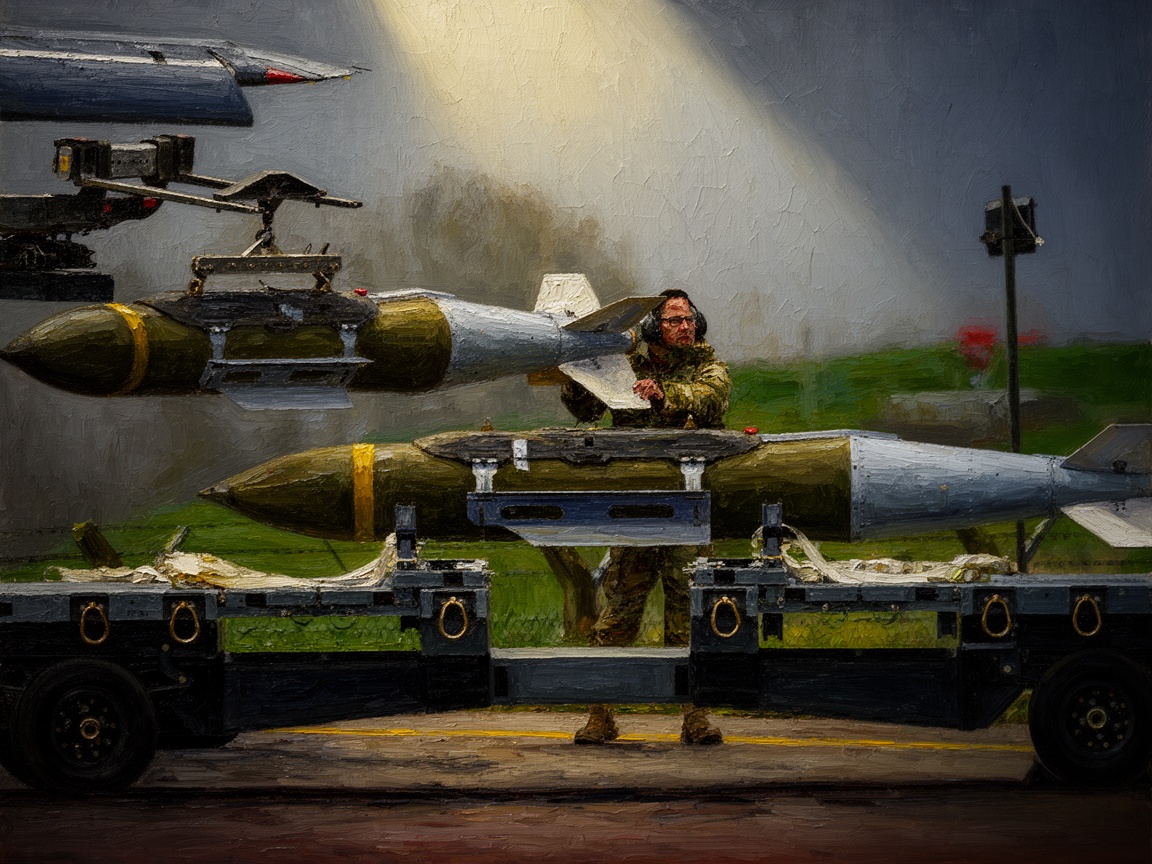
Rebuilding US Weapons Stockpile May Take Years After Iran War
The restoration of US weapons stockpiles will face significant delays following the Iran conflict, as estimated in a recent CSIS report. This situation poses implications for US military readiness and geopolitical stability.
A recent analysis by the Center for Strategic and International Studies (CSIS) highlights that rebuilding the US arsenal after the Iran war could take at least two years. The conflict has depleted the stockpiles of critical munitions, necessitating extensive efforts to restore pre-war levels. This situation arises amid the ongoing assessments of military capabilities needed for future engagements.
Historically, the US has relied on its vast stockpiles of various munitions, including precision-guided munitions and advanced artillery shells, to sustain its military operations globally. The Iran conflict, however, has exposed vulnerabilities in these reserves, leading to concerns about the ability to maintain operational readiness. As demands on US forces continue to rise, the slow replenishment of critical munitions will likely impact strategic planning.
The implications of these delays extend beyond logistics. A significant gap in munitions can hinder the US military's deterrence capabilities against adversaries in the Middle East and beyond. Without timely replenishment of stockpiles, planners may be forced to modify operational strategies and reduce force deployments in high-risk scenarios.
The US Department of Defense (DoD) must allocate additional funding and resources to expedite the process of restocking munitions. Requirements for inventory control and increased production capabilities will be critical in achieving desired operational readiness levels. This might necessitate collaboration with defense contractors for ramped-up production schedules.
As the DoD grapples with these challenges, the strategic landscape remains fluid. The US military's ability to respond effectively to conflicts hinges on the timely restoration of its munitions stockpile, reinforcing the importance of modernizing and maintaining robust supply chains.