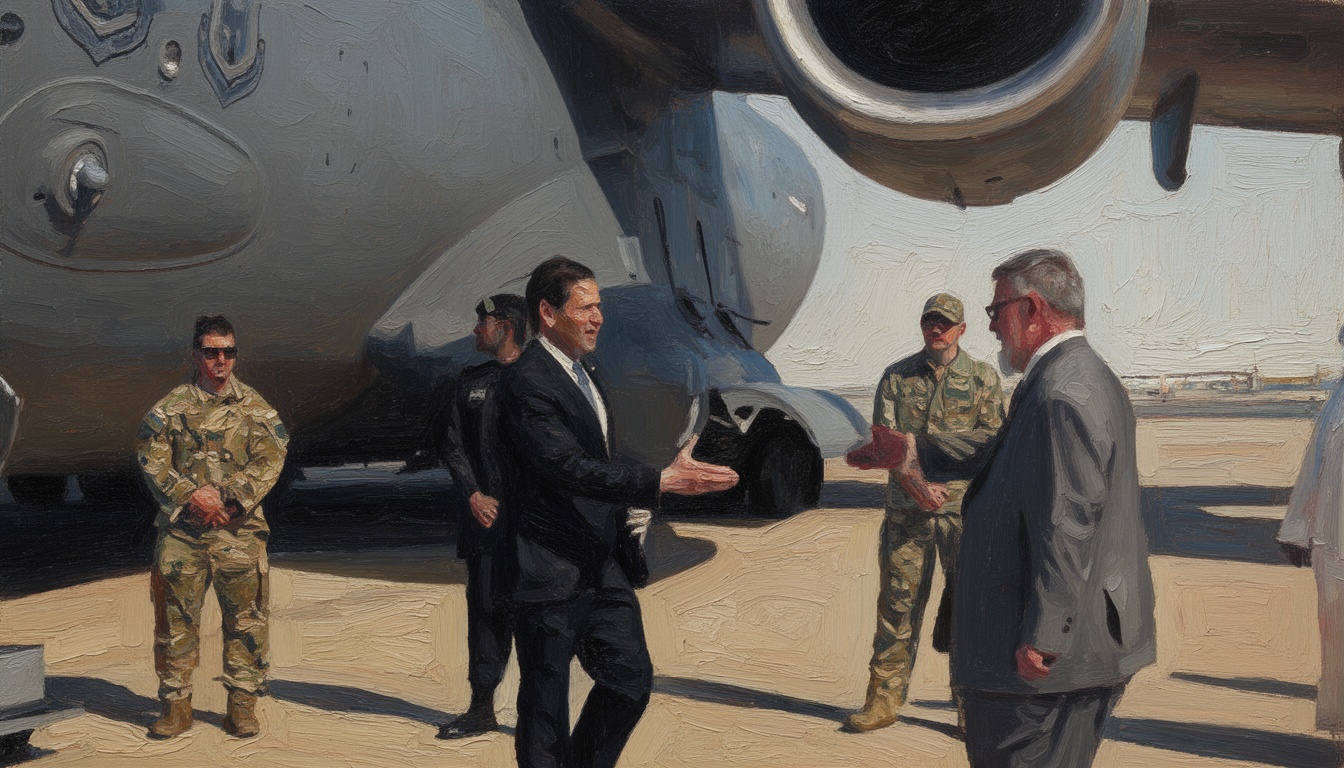
Rubio Aims to Reassure Gulf States About Iran Deal
US Secretary of State Marco Rubio reassured Gulf allies on military protection against Iranian threats while discussing a potential settlement regarding the Middle East war. This comes as tensions remain high due to Iranian missile strikes and blockades affecting oil shipments.
US Secretary of State Marco Rubio has reassured Gulf allies that Washington is committed to protecting their interests during ongoing discussions with Iran concerning a settlement of the Middle East war. During a regional tour on Wednesday, Rubio emphasized the United States' role in ensuring the security of Gulf states, which have been directly targeted by Iranian missile and drone strikes.
The backdrop of Rubio’s visit is marked by rising tensions between Iran and its Gulf neighbors. Tehran fired missiles and launched drone attacks that specifically threatened oil and gas infrastructure within these allied nations. Additionally, the Iranian blockade of the Strait of Hormuz has severely impacted vital oil and gas shipments critical to the regional economy and global energy supply, raising alarms among the Gulf states.
Strategically, this visit underscores Washington's commitment to maintaining its alliances in the face of Iranian aggressions. Gulf states like Saudi Arabia and the United Arab Emirates have expressed concerns that ongoing negotiations with Iran could overlook their security needs. Rubio's assurances pertain to bolstering military cooperation and ensuring that US military presence continues to act as a deterrent against potential Iranian offensives.
Operational capabilities of the United States in the region include significant naval assets and air support, with the US Navy's Fifth Fleet stationed in Bahrain. Recent enhancements to missile defense systems, as part of collective security initiatives, are crucial to protecting against Iranian threats. Rubio highlighted the importance of these systems during his discussions, reiterating the US commitment to ensure the safety of Gulf maritime operations.
Looking ahead, the consequences of these talks could influence not only the future of US-Iran relations but also the security architecture of the wider Middle East. If an agreement is reached, it may alter the balance of power in the Gulf and reshape alliances, while failing to address security concerns of the Gulf states could lead to increased regional tensions and a potential arms build-up.