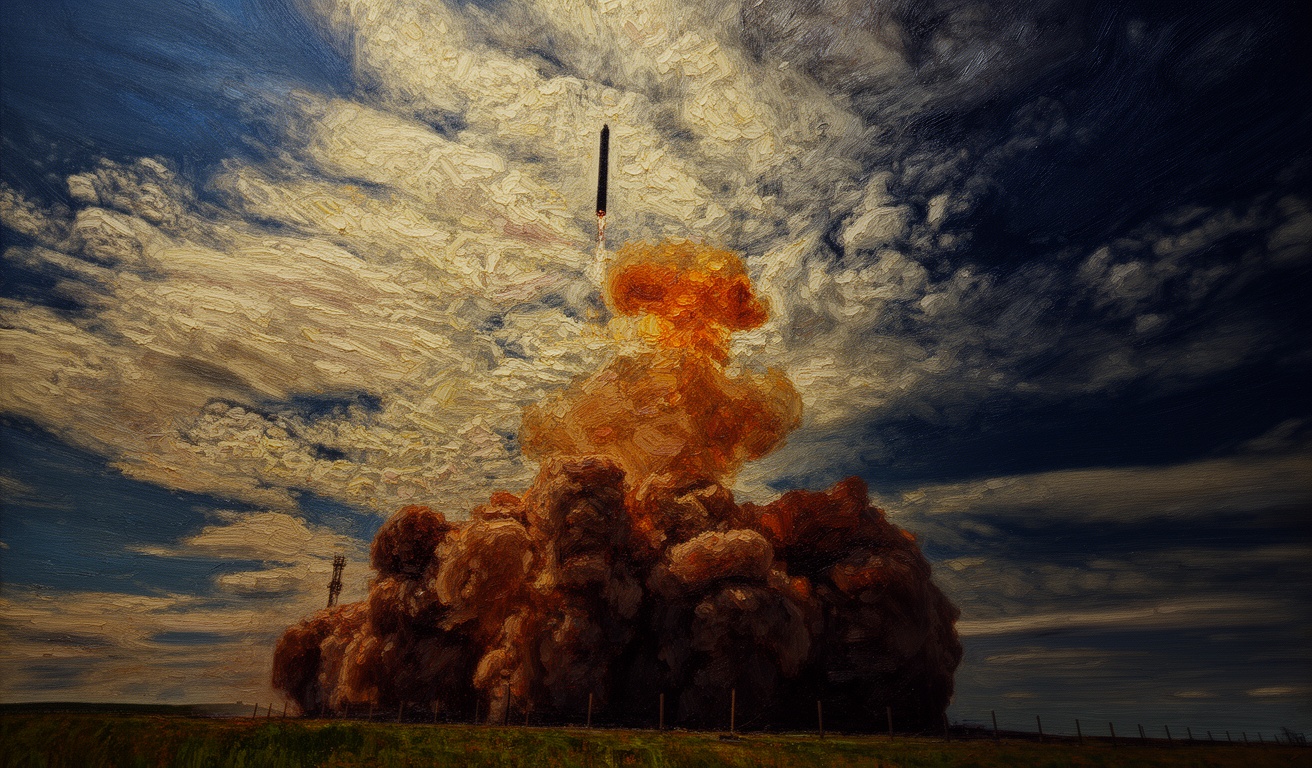
Russia Test-Fires RS-28 Sarmat Missile with Extended Range
The RS-28 Sarmat missile's capabilities challenge Western military assessments. Its potential strategic applications could significantly alter the global security landscape.
On Tuesday, Russia conducted a test launch of the RS-28 Sarmat intercontinental ballistic missile, a development touted by President Vladimir Putin as the most powerful missile in its arsenal. According to Putin, the missile's range exceeds Western estimates, underscoring Russia's advancements in missile technology and its deterrence capabilities against NATO.
The RS-28 Sarmat is designed to replace the aging R-36M missile system, which has been in service since the Soviet era. With a reported range of about 18,000 kilometers, the Sarmat can carry multiple warheads and is able to evade current missile defense systems. This test showcases Russia's commitment to modernizing its nuclear forces amidst heightening tensions with the West.
Strategically, the successful launch of the Sarmat may shift the dynamics of military power, allowing Russia to maintain offensive capabilities and project power globally. This missile not only represents a technological breakthrough but also serves as a message to other nuclear powers about Russia's intent to ensure its national security.
In operational terms, the RS-28 Sarmat is said to have various advanced features, including enhanced stealth and speed. Experts believe its deployment could begin within the next few years, reinforcing Russia's nuclear deterrent and complicating defense planning for NATO allies.
As global security paradigms evolve, the implications of the Sarmat missile will resonate internationally. Countries may seek to bolster their military readiness, prompting discussions around nuclear arms control and strategic stability in this new era of warfare and deterrence.